NATIONAL RESEARCH COUNCIL. COMMISSION ON INTERNATIONAL RELATIONS. BOARD ON SCIENCE AND TECHNOLOGY FOR INTERNATIONAL DEVELOPMENT
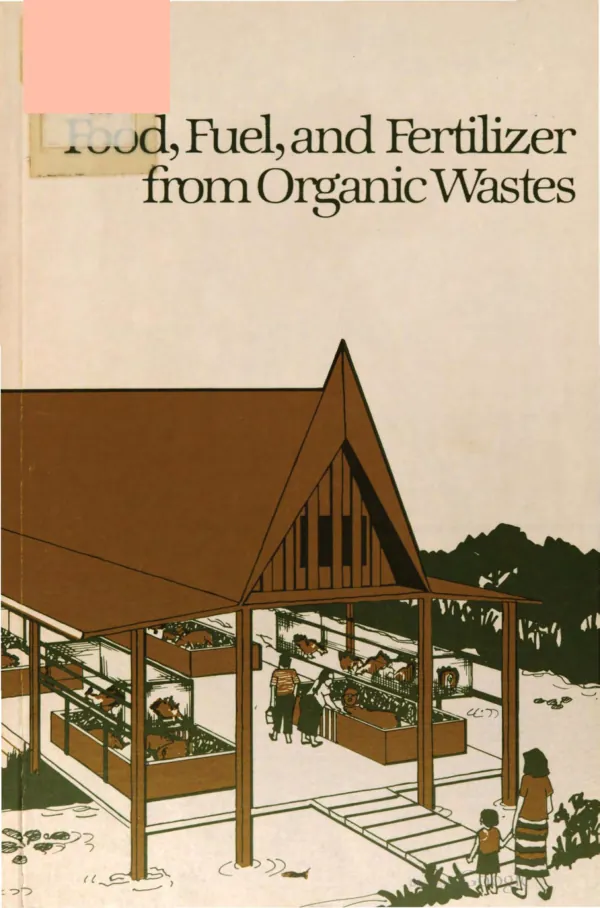
Food, fuel, and fertilizer from organic wastes
In an age of resource scarcity, waste materials from agriculture, agro-industrial processing, animals, and humans can help fulfill the world"s requirements for food, fuel, and fertilizer.
1970
Sign in to readA free account is required to download.
Abstract
This study, based on presentations and discussion at a panel meeting of the National Research Council"s Advisory Committee on Technology Innovation held August 6-8, 1979, in Airlie, Virginia, presents six alternatives for waste utilization. First, the use of animal and other farm wastes as feed can produce aquaculture yields dramatically higher than those achieved with current methods due to the use of polycultures and the nutrients generated by manure in the pond. Next, significant human food production from agricultural wastes include molds, fungi, yeasts, and bacteria. Because of health hazards, however, human food production from waste is less preferable on a large scale than the third type of waste utilization -- animal feed. The nutritional value of farm wastes (particularly straw) for animal feed is high and can be further supplemented, e.g., by treating straw with alkali. Fourth, many fuels may be obtained from human, animal, and agriculture wastes such as biogas (methane), ethanol (used in mixtures with gasoline), and pyrolysis, (heating of wastes in the absence of oxygen to produce solid, liquid, and gas fuels). Fifth, human and animal wastes, compost, and sewage have widespread use as fertilizers and soil conditioners. The water hyacinth, a prolific floating tropical plant, can be used in waste water purification. Sixth, for optimal use of resources, the use of integrated systems (where the wastes of one process serve as the raw material of another) are encouraged. Limitations of each of these waste-use technologies, suggestions for future research, and lists of references are provided at the end of each of the six sections. The study concludes that the success of waste reuse depends on well-developed technology as well as on non-technical considerations such as public health; the impact of a given technology on income distribution; the presence of institutional and technical resources (training, marketing, management, financing, etc.); and social acceptability of waste-use technologies.