INTERNATIONAL FOOD POLICY RESEARCH INSTITUTE (IFPRI)
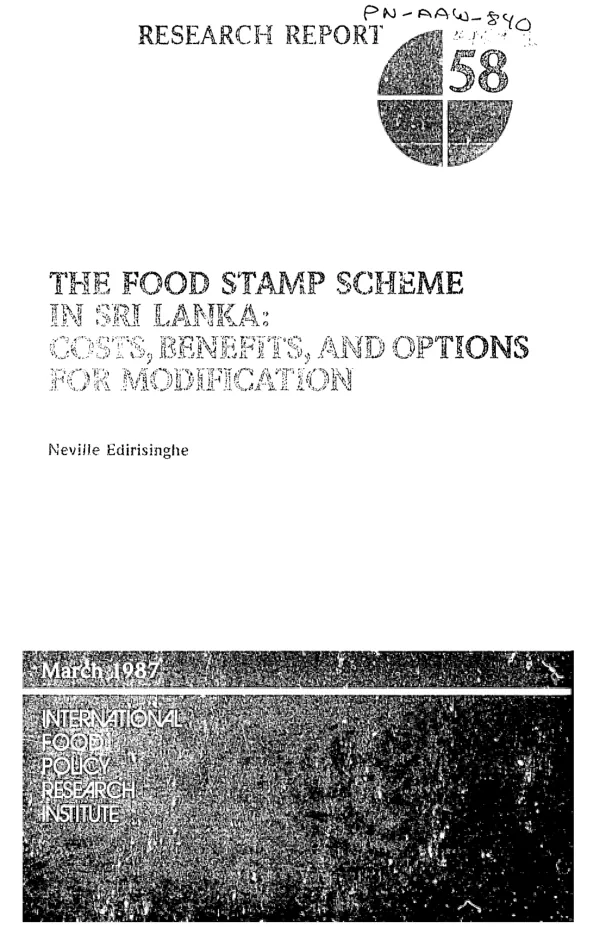
Food stamp scheme in Sri Lanka : costs, benefits, and options for modification
In 1979 Sri Lanka replaced its long-time policy of subsidizing food prices with a direct income transfer scheme, in the form of a food stamp program, aimed at a households earning under Rs.
Edirisinghe, Neville · 1987
Sign in to readA free account is required to download.
Abstract
3,600 annually. This report evaluates the new program and makes some suggestions for its improvement. The initial chapters examine the new program and its benefits (as compared with those of the old program), its effectiveness in avoiding "leakages" to unintended beneficiaries, and its effects on fiscal costs and income distribution. Discussed next are patterns of food consumption and nutrition under the new and old programs, the effect of inflation on the real value of food stamps, and the impact of food stamps on nutrition in general and on child nutrition in particular. Key findings are that the new program has led to a deterioration in the nutritional welfare of the households in the lowest income group and has been unable to mitigate the effect of inflation on these households. To help the poorest households, the program should adopt a specific calorie target (although this will vary with budgetary resources) and find suitable criteria for targeting beneficiaries. In any case, supplementary child welfare programs should be continued. Forty-seven tables, five appendices, and a 4-page bibliography are included.
Connected topics