USAID. MISSION TO PAKISTAN
Forestry planning and development
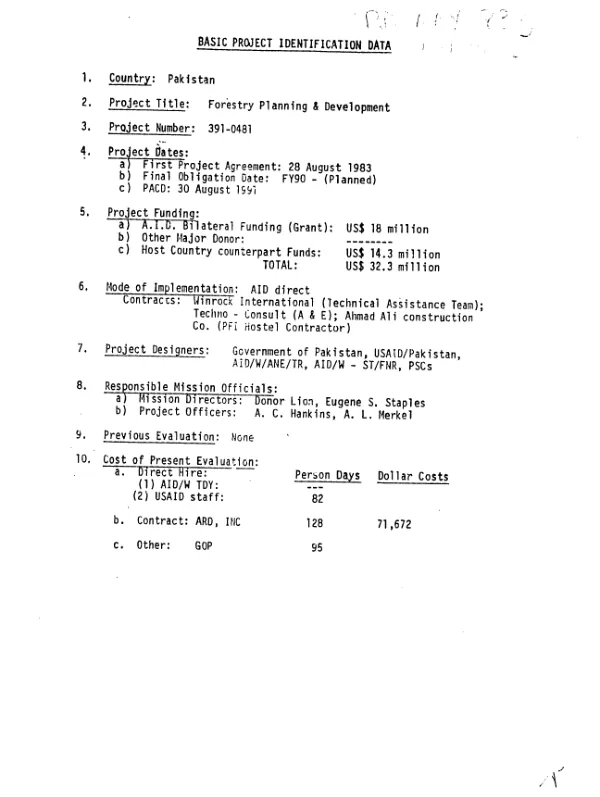
Summarizes evaluation (PD-AAX-834) of project to strengthen the capability of federal, provincial, and local institutions in Pakistan to design, implement, and evaluate farm-forestry and tree planting programs on private land.
1988
Sign in to readA free account is required to download.
Abstract
Mid-term evaluation covers the period 1984-87 and is based on document review, site visits, and interviews with project staff. The project as originally conceived remains extremely relevant to development needs and opportunities in Pakistan, but implementation was initially delayed for 2 years by the Government of Pakistan"s (GOP) internal review, and has been further slowed by the GOP"s lack of budgetary support (less than 20% of planned GOP funds have been allocated to the project) and by the failure of project staff - both GOP and TA personnel - to understand project goals and activities. Helping farmers take advantage of the income earning opportunities associated with tree planting is one of the best investment strategies in the agricultural sector, but successful implementation requires developing procedures to work with farmers and training foresters in these procedures. The TA team (from Winrock International) needs to understand that its primary role is to help counterpart GOP agencies reach the large audience of farmers that are receptive to tree planting. This activity, at this point, is more important than establishing additional nurseries and plantations. A major project need is to revise the GOP project document (PC-I) and the A.I.D. Project Paper to reconcile targets and goals. Other recommendations are: (1) a comprehensive planning exercise is necessary to cope with implementation problems, most particularly PC-1 targets, field staff capability, and budget shortfalls; (2) GOP funding problems must be resolved; (3) The TA team, in consultation with the GOP units, should complete a full draft of the comprehensive training plan; (4) the GOP should appoint an Additional Inspector General of Forests to oversee day-to-day project management; (5) the TA team should add an advisor capable of demonstration farm forestry in the field and a senior Pakistani forester to help coordination with the GOP; and (6) the training program for foresters and farmers should begin as soon as possible. Since the next 18-24 months will be crucial, the next evaluation should occur then. The project teaches that: A.I.D. and host government project documents should agree, and should have realistic mobilization schedules; activities in forestry projects should be keyed to the biological calendar; monitoring and evaluation continues to be essential in good project management; conditions precedent and covenants should be both realistic and essential to project goal achievement or they should not be imposed.
Related documents