USAID. DIRECTORATE FOR POLICY. CENTER FOR DEVELOPMENT INFORMATION AND EVALUATION (CDIE)
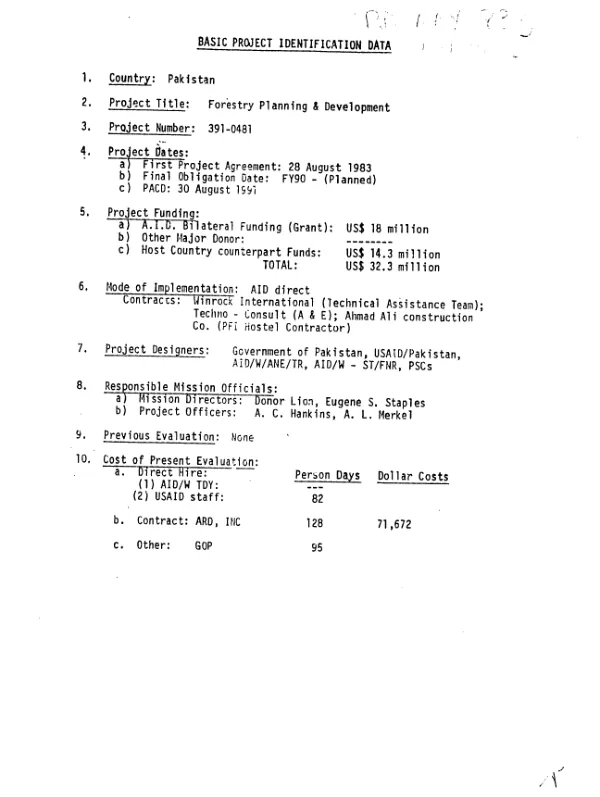
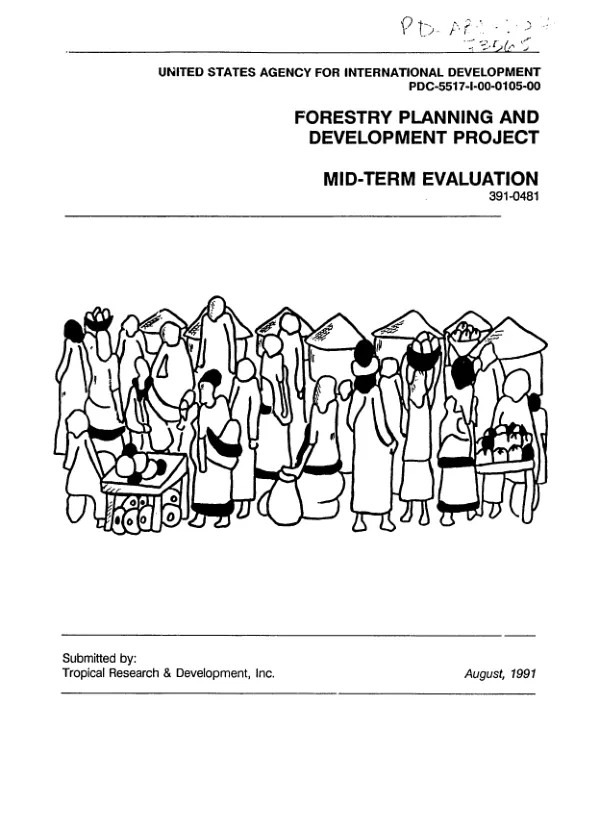
Farm forestry in Pakistan : an evaluation of AID assistance
With forest cover at only 5% of total land area, Pakistan faces severe deforestation problems ranging from inadequate fuelwood for its burgeoning population to increased soil erosion, which in turn intensifies flooding.
1993
Sign in to readA free account is required to download.
Abstract
Assisted by USAID"s Forestry Planning and Development (FP&D) project, the Government of Pakistan (GOP) has adopted farm forestry, or private tree planting on agricultural lands, as one response to the problem. This report summarizes an evaluation of the farm forestry model. In distributing tree seedlings for planting on private farmlands, the program: (1) uses private sector incentives to sustain its activities; (2) employs an emerging partnership between the GOP and independent farmers to accomplish its objectives; (3) introduces basic, low-cost technologies with quick and visible pay-offs to attract and hold the interest of participants; and (4) produces environmental benefits that help the entire country. The evaluation found that farmers are interested in planting trees where they perceive tangible benefits, and appreciate access to free tree seedlings. More than 100 million seedlings have been distributed to more than 120,000 recipients. Beyond supplying their own domestic needs for tree products, farmers enjoy strong local market demand for fuelwood and construction materials, leading to a commercial focus in the program. The FP&D project has succeeded in advancing awareness of environmental issues, but these impacts are secondary to the program"s market and profit orientation. Lessons learned include the following. (1) Markets supply powerful forces capable of driving individual and institutional participation in farmer forestry programs, but regulations may be required to ensure adequate attention to equity and environmental issues. (2) Tree farming is an effective strategy where there is land and tree tenure security. (3) Farm forestry works best when participants have access to low-cost technologies with reasonable pay-back periods. (4) Flexible project design permits program managers to respond effectively to new conditions and opportunities.
Related documents