USAID DEC
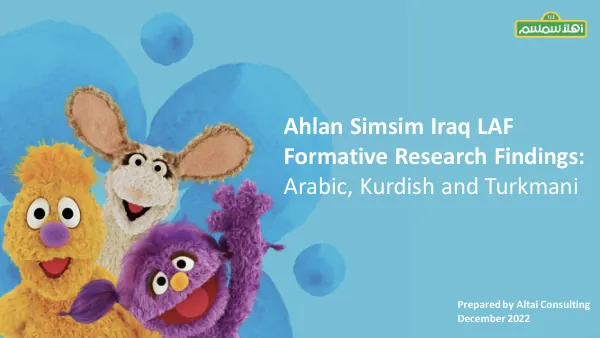
Formative Research Findings: Ahlan Simsim, Kurdish and Turkmani
The formative research study in Iraq aimed to understand engagement, appeal, and comprehension of content with children, as well as the engagement and comprehension of content with caregivers.
2022 · 93 pages
Sign in to readA free account is required to download.
Abstract
The study focused on three languages: Arabic, Kurdish, and Turkmen. A total sample of 225 children was selected, with 75 children from each language group. The sample was distributed equally across the three language groups, with 54% female and 46% male participants. The study also included children from urban and rural areas, with 63% of participants from urban areas and 37% from rural areas. The study was conducted in six governorates: Anbar, Baghdad, Basra, Erbil, Kirkuk, and Sulaymaniyah. Data collectors were an all-female team of native speakers with experience in data collection. Each data collector received a training in Erbil on September 2022, and they conducted pilot interviews in their respective locations. The analysis of the pilot interviews led to slight changes in the research tools. The data collection process involved one-on-one sessions with children and their caregivers, with each interview divided into three parts. The interviews were conducted in a staggered manner, with the first interviews starting on October 9, 2022, in Baghdad, Basra, and Anbar, and the subsequent interviews starting on October 16, 2022, in other governorates. The interviews were audio-recorded, and consent was obtained from the respondents before the interview started. The study aimed to test the Teaching and Learning Materials (TLM) content for facilitators and to provide specific recommendations to improve the appeal, engagement, and engagement of content. The study also aimed to understand the applicability and applicability of content for target beneficiaries. The study's methodology involved data collection, analysis, and analysis of the research instruments. The study's findings are based on the analysis of the data collected from the 225 children and their caregivers. The study's results will inform the development of the SW content for resilience, which will be used to support the development of the content. The study's recommendations will be used to improve the appeal, engagement, and engagement of the content. The study's methodology involved the use of research instruments, which were translated into the native languages of the data collectors. The data collectors conducted pilot interviews in their respective locations, and the analysis of the pilot interviews led to slight changes in the research tools. The study's findings are based on the analysis of the data collected from the 225 children and their caregivers.