ROBERT R. NATHAN ASSOCIATES, INC.
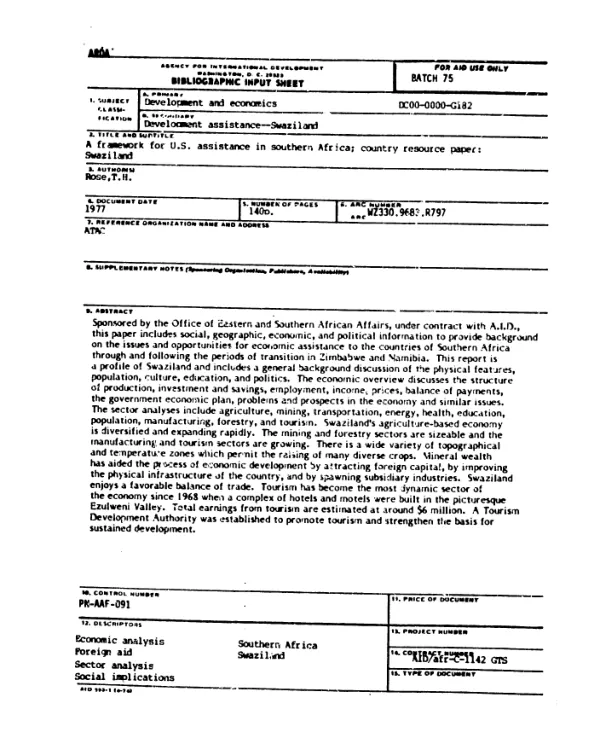
Framework for US assistance in southern Africa; country resource paper : Zambia
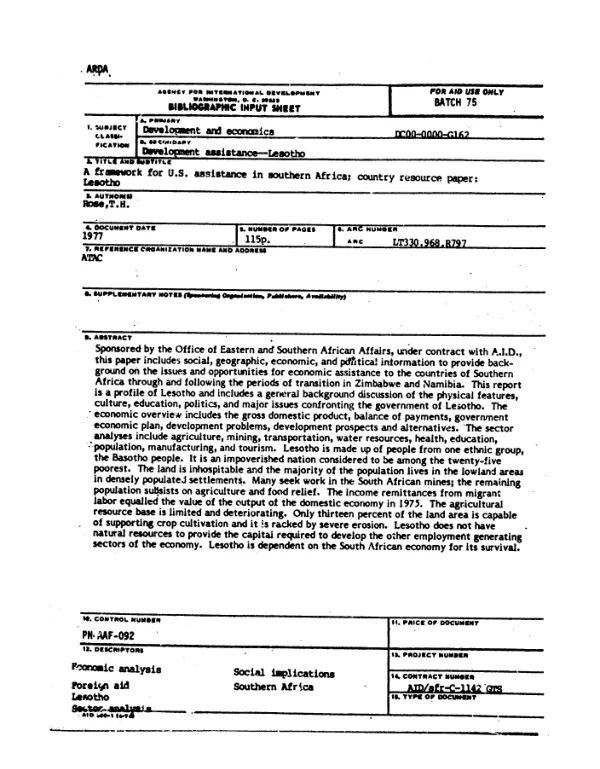
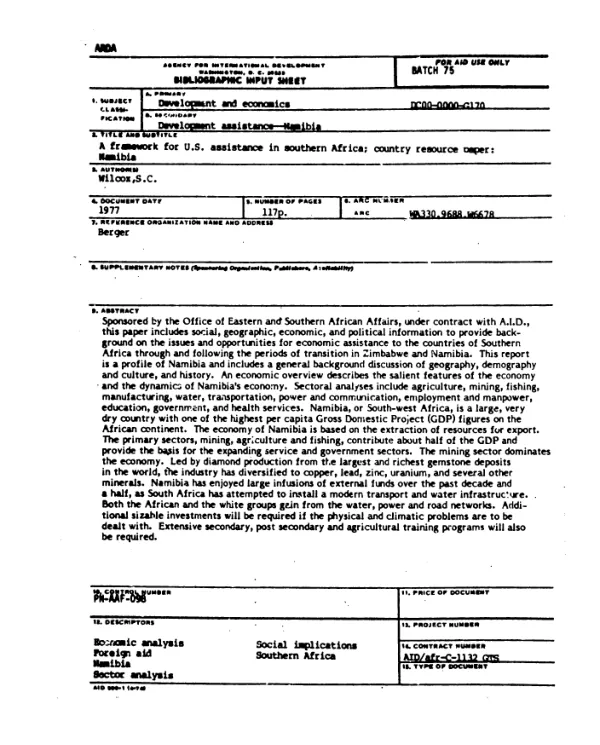
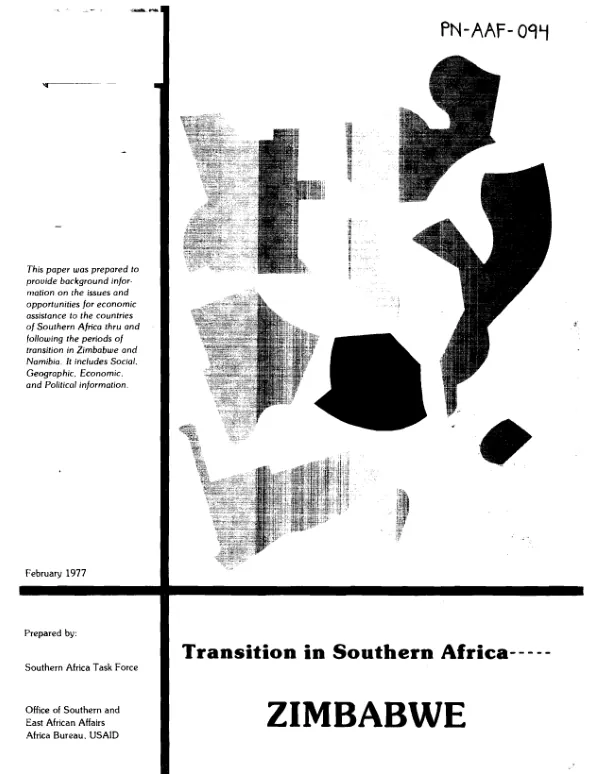
This paper includes social, geographic, economic, and political information to provide background on the issues and opportunities for economic assistance to the countries of Southern Africa through and following the periods of transition in Zimbabwe and Namibia.
Sedjo, R. A. · 1970
Sign in to readA free account is required to download.
Abstract
This report is a profile of Zambia and includes a general background discussion of the physical features, politics, demography, population, tribes, education and role of the expatriate. The economic overview discusses setting, developmental problems, and macroeconomic performance. A section on foreign donor assistance includes a history, balance of payments assistance, recent donors and programs, and assistance from the World Bank. Sectoral analyses are on agriculture, mining, transportation, power, water, health, education, manufacturing, and the urban sector. The growth of the Zambian economy has been poor; the development of the rural and agricultural sector away from mining has been limited. Sixty-five percent of the rapidly growing population is rural. The potential for employing the growing labor force in the labor intensive segments of the agricultural sector is far greater than the potential for employment within the basically capital intensive industrial sector. Normalization of trade relations with Zimbabwe is likely to have an adverse effect upon Zambia"s industrial sector. These conditions, together with the favorable physical environment for agriculture imports, suggest the appropriateness of a strategy that involves a major role for the agricultural sector.