AVENIR HEALTH
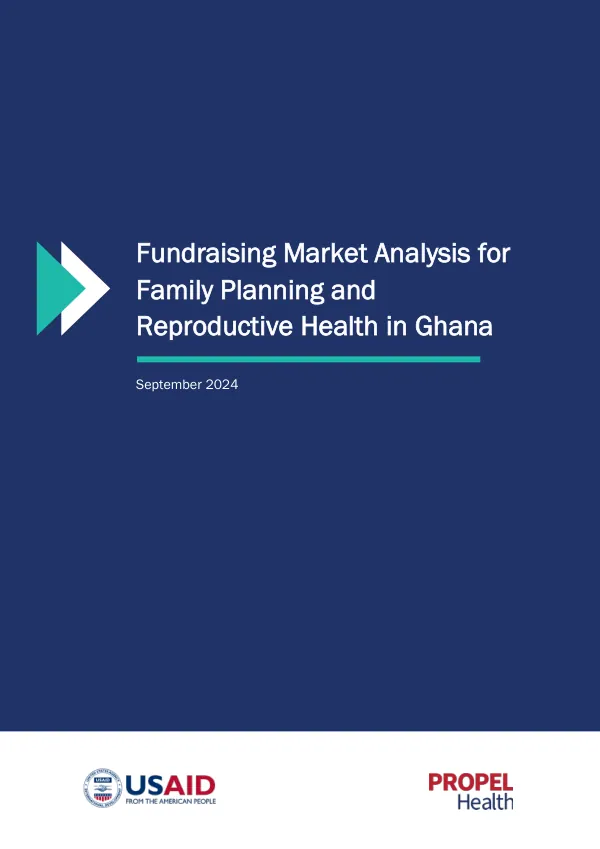
Fundraising Market Analysis for Family Planning and Reproductive Health in Ghana
Family planning and reproductive health (FP/RH) in Ghana face significant funding gaps, hindering the delivery of essential services.
2024 · 76 pages
Sign in to readA free account is required to download.
Abstract
The country's commitment to improving reproductive health is evident in its alignment with global initiatives, such as the United Nations' Sustainable Development Goals (SDGs). Ghana's government has pledged to increase access to modern family planning methods, with a focus on reducing unmet needs. The PROPEL Health project, a five-year cooperative agreement funded by the U.S. Agency for International Development (USAID), aims to address these challenges. PROPEL Health is implemented by Palladium in collaboration with several organizations, including African Economic Research Consortium, Avenir Health, Population Reference Bureau, RTI International, Samasha Medical Foundation, and the White Ribbon Alliance. The project's objectives include identifying opportunities for private sector fundraising and developing strategies to leverage these resources. A fundraising market analysis was conducted to inform the development of a private sector fundraising platform for FP/RH in Ghana. The research involved a mixed-methods approach, combining quantitative and qualitative data collection and analysis. The study focused on the current fundraising landscape in Ghana, potential private philanthropic market opportunities, and the focus of private donations in the health sector. Key findings from the research indicate that the private philanthropic market in Ghana has significant potential for supporting FP/RH initiatives. However, several barriers, including lack of awareness and understanding of FP/RH issues, limited knowledge of family planning initiatives, and concerns about the effectiveness of FP/RH programs, hinder private sector fundraising. The study also identified potential philanthropic organizations and private donors who may be interested in supporting FP/RH initiatives in Ghana. A proposed structure for private sector fundraising for FP/RH in Ghana involves a decentralized platform that enables multiple organizations to collaborate and leverage resources. The recommended fundraising platforms include online platforms, social media, and partnerships with corporate social responsibility (CSR) leads and high-net-worth individuals. Effective communication strategies for fundraising were also identified, including the development of tailored messages for different types of funders and the use of case studies to demonstrate the impact of FP/RH initiatives. The study highlights the importance of government, civil society, and media in supporting private sector fundraising for FP/RH in Ghana. Preconditions for successful fundraising include a clear understanding of the FP/RH needs, a well-defined fundraising strategy, and effective communication with potential funders. A structured plan of action for pursuing prioritized opportunities or donors was also developed, outlining key activities and timelines for implementation. Overall, the fundraising market analysis provides valuable insights into the potential for private sector fundraising to support FP/RH initiatives in Ghana. The study's findings and recommendations can inform the development of a private sector fundraising platform that leverages resources from multiple stakeholders to improve access to family planning and reproductive health services in Ghana.