AVENIR HEALTH
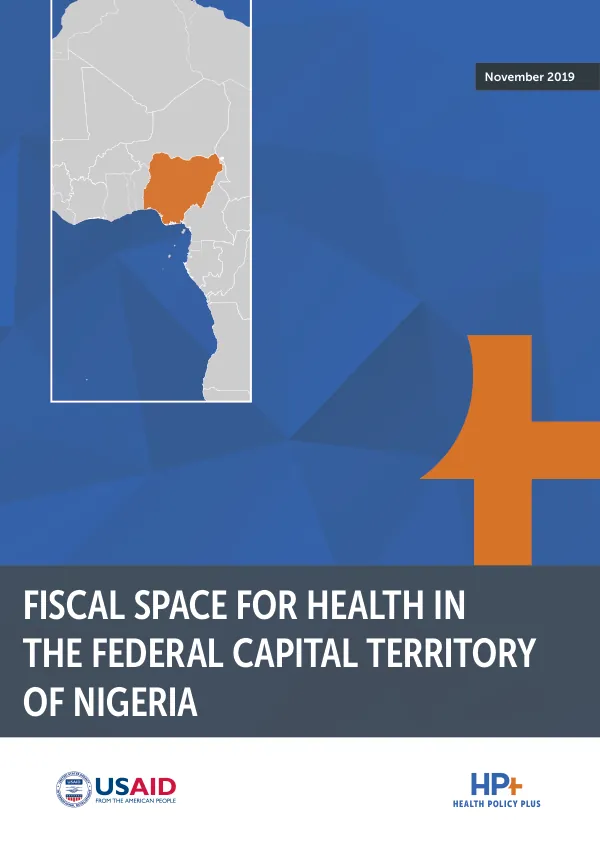
Fiscal Space for Health in the Federal Capital Territory of Nigeria
The Health and Human Services Secretariat (HHSS) of the Federal Capital Territory (FCT) of Nigeria produced the Strategic Health Development Plan II (FCT SHDPII) in 2017 to be implemented over 2018-2022.
2019 · 35 pages
Sign in to readA free account is required to download.
Abstract
The plan aims to align all FCT health interventions and programs with the National Strategic Health Development Plan II (NSHDPII) framework and significantly improve the health of all residents. The FCT SHDPII has 47 strategic objectives spanning 208 interventions and 747 activities over the implementation period, distributed among the strategic pillars and priority areas. The HHSS estimated the implementation costs of the FCT SHDPII using the One Health Tool. Three implementation cost scenarios were developed: 1) baseline, which assumes no improvement in health coverage nor health system strengthening; 2) the essential service-moderate scenario, wherein improvements in coverage and health system strengthening would be in alignment with the primary health revitalization agenda while striving to achieve universal health coverage; and 3) the essential service-aggressive scenario, involving the implementation of additional interventions while attaining greater progress on universal health coverage. For preparation of their SHDPII, FCT stakeholders resolved to implement the set of health interventions required to realize the essential service-moderate scenario; the estimated resource requirement is summarized in Table 1. The major cost drivers under the essential service-moderate scenario are human resources and medicines, commodities, and supplies—corresponding to 46 percent and 30 percent of the five-year cost requirement, respectively. To meet the estimated resource requirement, FCT HHSS committed to developing a Resource Mobilization Plan. The Resource Mobilization Plan serves as HHSS’ blueprint for strategic action to guide resource mobilization efforts in support of the five-year SHDPII. The Health Policy Plus (HP+) project, funded by the U.S. Agency for International Development (USAID), helped FCT HHSS to conduct a fiscal space analysis to identify the primary current and potential resources of financing for the health sector. The analysis was to serve as the main input in the development of the Secretariat’s Resource Mobilization Plan. The fiscal space analysis aimed to provide a comprehensive understanding of the current and potential resources available for financing the health sector in the FCT. The FCT SHDPII has five strategic pillars: Enabled environment for attainment of sector outcomes, Increased utilization of Essential Primary Health Services (EPHS), Strengthened health system for delivery of the EPHS, Protection from health emergencies and risks, and Predictable financing and risk protection. The plan also has 15 priority areas, including Leadership and Governance, Community Participation and Ownership, and Partnerships and Collaboration. The estimated annual requirement for the essential service-moderate scenario grows from naira (NGN) 29 billion (US$80 million) in 2018 to NGN 47 billion in 2022, a two-thirds increase over the period. The Resource Mobilization Plan serves as a blueprint for strategic action to guide resource mobilization efforts in support of the five-year SHDPII. The plan aims to mobilize resources from various sources, including government, private sector, and international partners, to support the implementation of the FCT SHDPII. The fiscal space analysis identified various current and potential resources of financing for the health sector in the FCT. These resources include government funding, private sector investment, and international assistance. The analysis also highlighted the need for efficient and effective use of resources to achieve the goals of the FCT SHDPII. The Resource Mobilization Plan aims to ensure that the resources mobilized are used efficiently and effectively to support the implementation of the FCT SHDPII.
Related documents