WORLD VISION
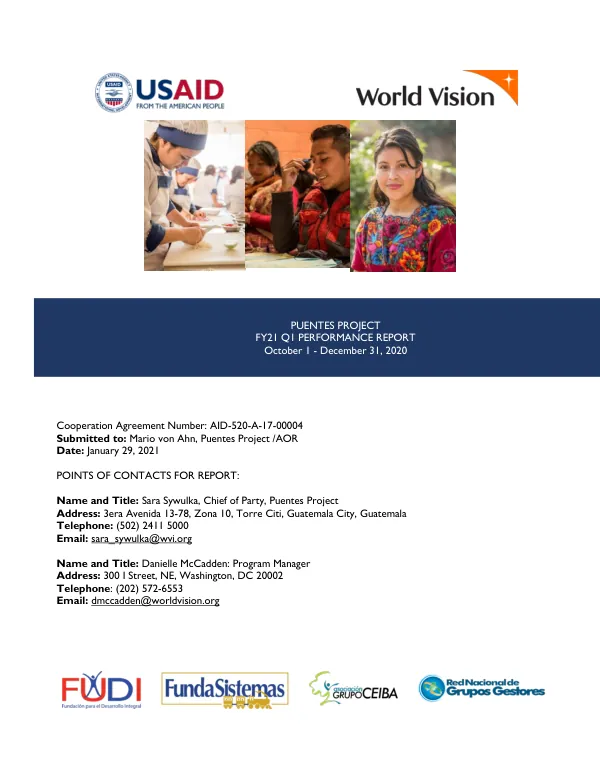
FY21 Q1 Performance Report: Puentes Project
The Puentes Project is a USAID-funded initiative aimed at improving the lives of youth in Guatemala.
2021 · 63 pages
Sign in to readA free account is required to download.
Abstract
The project's primary objective is to enhance the basic, work, and entrepreneurship competencies of youth, thereby increasing their employability and economic opportunities. The project's scope encompasses the development of education and vocational skills, as well as the provision of employment and entrepreneurship bridging support. The project's progress during the first quarter of FY21 is reported in the document. Key findings indicate that the quality of education provision increased, with 100% of the target schools implementing the Core Skills Curriculum. The number of technical courses developed also increased, with 15 new courses added to the curriculum. Furthermore, the project trained 250 service providers in core skills, education, and vocational skills, and 150 facilitators and tutors were trained to deliver the Puentes Core Skills program. The project's employment and entrepreneurship bridging support also showed significant progress. The number of material packages developed increased, and 500 youth gained access to information on financial, technical support, and linkages to employment. Additionally, 200 individuals accessed an Employment Portal, and 100 communications campaigns were developed to promote the project's activities. The project's geographic focus is on Guatemala, with a specific emphasis on the regions of Alta Verapaz, Baja Verapaz, and Petén. The project's timeframes are quarterly, with the first quarter of FY21 spanning from October 1 to December 31, 2020. The project's recommendations for future implementation include increasing the number of technical courses developed and expanding the project's reach to more youth in Guatemala. The project's results are measured through a set of indicators, which track progress in areas such as education provision, employment and entrepreneurship opportunities, and social services. The indicators include metrics such as the number of learners reached with USG education assistance, the number of individuals accessing employment and entrepreneurship bridging support, and the number of vulnerable persons benefiting from USG-supported social services. The project's implementation details are outlined in the document, including the development of education and vocational skills, the provision of employment and entrepreneurship bridging support, and the establishment of a youth-friendly business environment. The project's methodology involves a combination of training, capacity building, and technical assistance, as well as the provision of financial and material resources to support the development of youth skills and entrepreneurship. The project's geographic context is characterized by a high level of poverty and inequality, with many youth facing significant barriers to education, employment, and economic opportunities. The project's focus on improving the lives of youth is critical to addressing these challenges and promoting sustainable development in Guatemala.
Related documents