USAID DEC
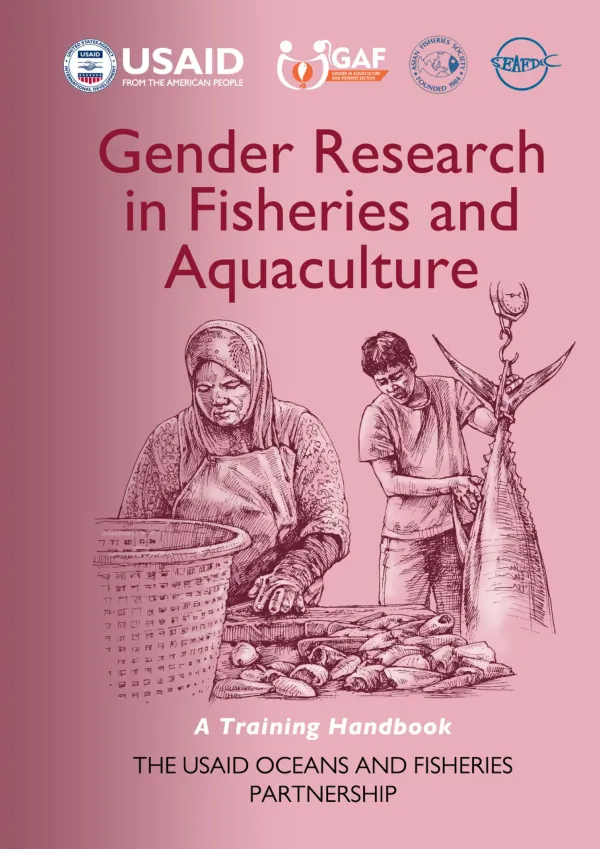
Gender Analysis in Philippine Fisheries: The Oceans and Fisheries Partnership
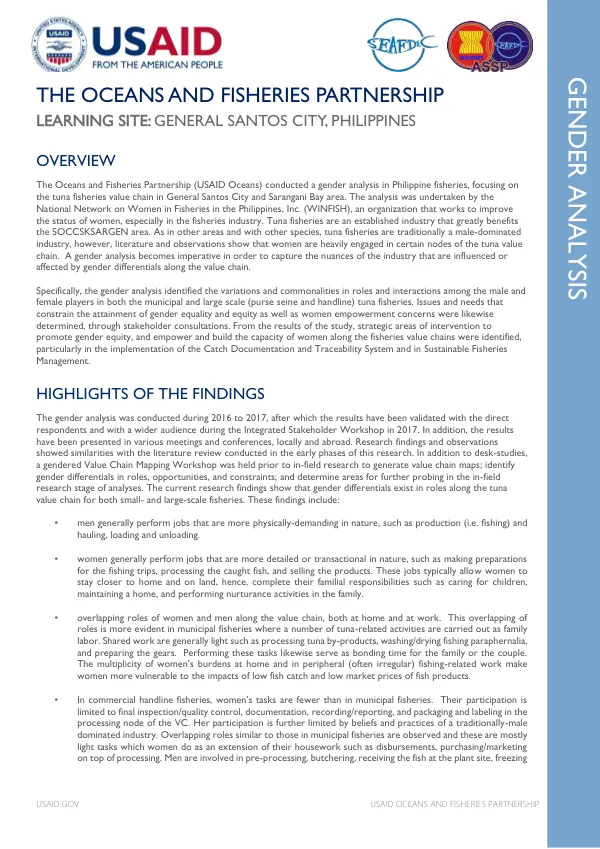
The Oceans and Fisheries Partnership conducted a gender analysis in Philippine fisheries, focusing on the tuna fisheries value chain in General Santos City and Sarangani Bay area.
2018 · 3 pages
Sign in to readA free account is required to download.
Abstract
The analysis was undertaken by the National Network on Women in Fisheries in the Philippines, Inc. (WINFISH), an organization that works to improve the status of women, especially in the fisheries industry. Tuna fisheries are an established industry that greatly benefits the SOCCSKSARGEN area. The industry is traditionally male-dominated, but literature and observations show that women are heavily engaged in certain nodes of the tuna value chain. The gender analysis identified variations and commonalities in roles and interactions among male and female players in both municipal and large-scale tuna fisheries. Issues and needs that constrain the attainment of gender equality and equity, as well as women's empowerment concerns, were determined through stakeholder consultations. Strategic areas of intervention to promote gender equity and empower women along the fisheries value chains were identified, particularly in the implementation of the Catch Documentation and Traceability System and in Sustainable Fisheries Management. Research findings showed that gender differentials exist in roles along the tuna value chain for both small- and large-scale fisheries. Men generally perform physically demanding jobs, such as production and hauling, while women perform more detailed or transactional jobs, such as making preparations for fishing trips, processing caught fish, and selling products. Overlapping roles of women and men along the value chain were observed, particularly in municipal fisheries where family labor is common. In commercial handline fisheries, women's tasks are limited to final inspection/quality control, documentation, recording/reporting, and packaging and labeling in the processing node of the value chain. Women's participation is further limited by beliefs and practices of a traditionally male-dominated industry. Addressing women's practical gender needs, such as providing protective gears, IEC for reproductive health, and hazard pay for risky jobs, is essential to promote women's health and well-being. Addressing women's strategic gender needs, such as designing woman-friendly boat facilities, driving lessons for women, and provision of machineries/equipment that may allow women to do fish hauling, is necessary to promote women's status and empowerment in the industry. The study employed both qualitative and quantitative research methods to capture the roles and relationships of women and men in the tuna value chain. A gender-responsive value chain framework was used to analyze gender differentials, and a comprehensive review of related literature and ocular visits were conducted prior to field work. Primary data collection was conducted among 225 respondents, representing producers, processors, and traders, as well as value chain enablers such as government units and development organizations. A survey among producers, processors, and traders was conducted, and key informant interviews and focus group discussions were also conducted to gather data. The study provides valuable insights into the gender dynamics of the tuna fisheries value chain in the Philippines and highlights the need for interventions to promote gender equity and women's empowerment in the industry.