ACDI/VOCA
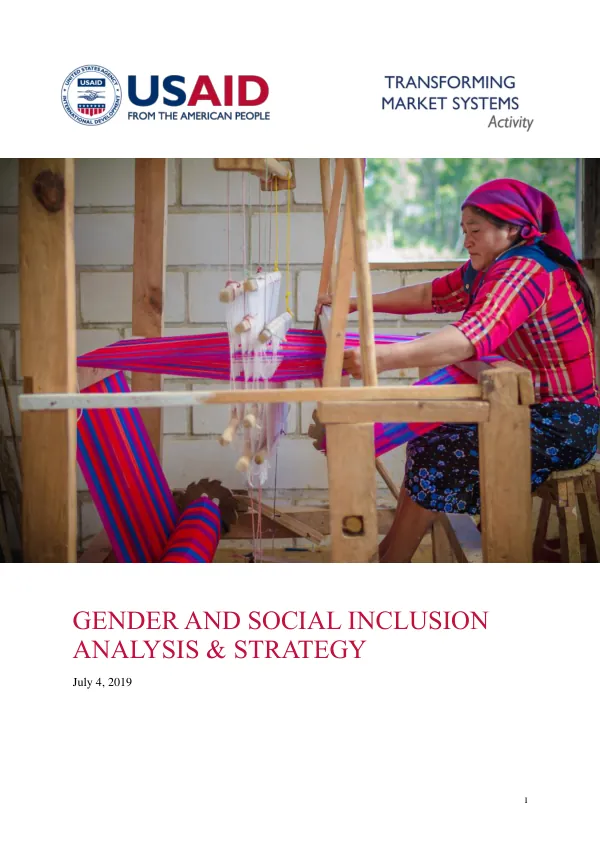
GENDER AND SOCIAL INCLUSION ANALYSIS & STRATEGY
The Transforming Market Systems (TMS) Activity's Gender and Social Inclusion Strategy (GESI) was developed based on a comprehensive analysis of gender and social inclusion issues in Honduras.
2019 · 37 pages
Sign in to readA free account is required to download.
Abstract
The analysis gathered secondary data from literature reviews, project documents, and government statistics, as well as primary data through Key Informant Interviews and Focus Group Discussions with over 137 individuals in five cities and six departments across western Honduras. The GESI Analysis aimed to inform the design and implementation of the TMS Activity to reduce gender inequality and inclusion gaps, reduce gender-based violence, and promote the empowerment of disadvantaged groups. The objectives of the GESI Analysis included understanding how gender and other social roles, constraints, and inequalities might affect TMS's ability to achieve its objectives and advising the project work plan on how to respond to and address these gender and social dynamics for optimal project outcomes. The TMS Activity is a collaboration between the Government of Honduras and the United States Agency for International Development (USAID) to address the root causes of irregular migration and contribute to a more prosperous, secure, and inclusive Honduras. The purpose of TMS is to foster competitive, resilient, and inclusive market systems that provide increased economic opportunities for poor, marginalized Hondurans and reduce incentives to migrate. The TMS Activity works across USAID's development objectives to increase citizen security, improve economic growth and governance, and reduce poverty and inequality. The Activity will tackle the root causes behind the vicious cycles that marginalize people and businesses, and identify leverage points that result in virtuous new ways of doing business and expanded economic opportunities. The GESI Strategy provides the framework, specific activities, and indicators to address key barriers that prevent vulnerable populations such as women, youth, lesbian, gay, bisexual, trans, and/or intersex (LGBTI), returned migrants, persons with disabilities (PwDs), and ethnic groups from participating in market systems. The Strategy aims to promote the empowerment of disadvantaged groups, reduce gender-based violence, and increase economic opportunities for marginalized populations. The TMS Activity will implement a range of interventions to address the root causes of irregular migration and promote inclusive market systems. These interventions will include entrepreneurship services, business enabling environment, and value-added agriculture, among others. The Activity will also establish a monitoring and evaluation system to track progress and identify areas for improvement. The GESI Strategy will be implemented over the next two years, with a focus on addressing the key barriers that prevent vulnerable populations from participating in market systems. The Strategy will provide a framework for the TMS Activity to promote inclusive market systems, reduce gender inequality and inclusion gaps, and increase economic opportunities for marginalized populations. The TMS Activity will work closely with the Government of Honduras, civil society organizations, and the private sector to implement the GESI Strategy and promote inclusive market systems. The Activity will also establish partnerships with international organizations and donors to leverage resources and expertise. The GESI Strategy will be monitored and evaluated regularly to track progress and identify areas for improvement. The Strategy will be reviewed and updated annually to ensure that it remains relevant and effective in promoting inclusive market systems and reducing gender inequality and inclusion gaps. The TMS Activity will contribute to a more prosperous, secure, and inclusive Honduras by promoting inclusive market systems, reducing gender inequality and inclusion gaps, and increasing economic opportunities for marginalized populations. The Activity will also help to address the root causes of irregular migration and reduce incentives to migrate.
Related documents