USAID DEC
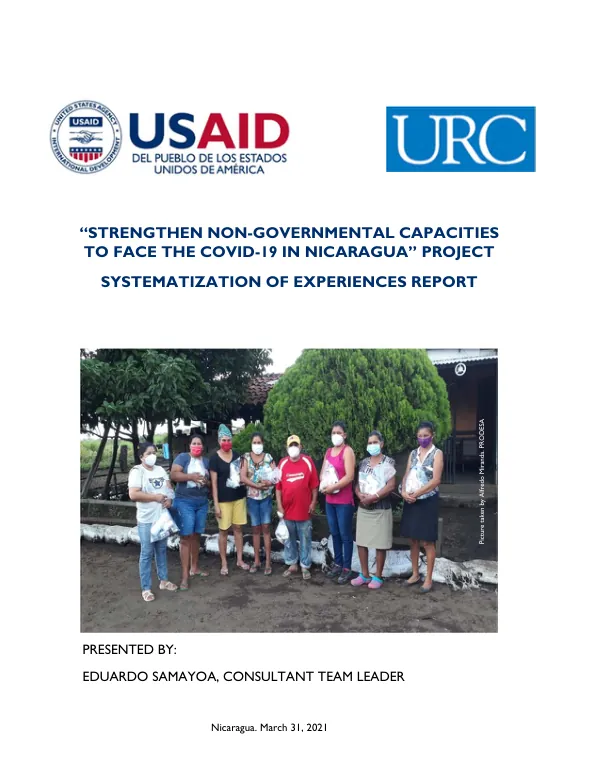
Systematization of Experiences Report: Strengthen Non-Governmental Capacities to Face the COVID-19 in Nicaragua
Sign inMINISTRY OF HEALTH
Systematization of Experiences Report: Strengthen Non-Governmental Capacities to Face the COVID-19 in Nicaragua
The project "Strengthen Non-governmental Capacities to Face the COVID-19 in Nicaragua" aimed to enhance the capacity of civil society organizations (CSOs), medical associations, and the private sector to respond to the COVID-19 pandemic in Nicaragua.
2021 · 80 pages
Sign in to readA free account is required to download.
Abstract
Implemented from July 1, 2020, to March 31, 2021, the project focused on strengthening coordination and response among CSO leaders and medical associations, implementing a risk communication strategy, and training CSO health staff in infection prevention and control and community case management. The project's methodology involved a combination of technical assistance, training, and capacity-building activities. The project team worked closely with CSOs, medical associations, and the private sector to design and implement interventions that addressed the specific needs of vulnerable populations. The project also conducted monitoring and evaluation activities to assess the impact of the interventions and identify areas for improvement. One of the key objectives of the project was to strengthen coordination and response among CSO leaders and medical associations working on COVID-19 pandemic response. The project team worked with these stakeholders to develop a coordinated response plan, which included the establishment of a network of CSO leaders and medical associations to share information and resources. The project also implemented a risk communication strategy focused on the most vulnerable populations. The team developed a communication plan that included the use of social media, community outreach, and mass media to disseminate accurate and timely information about COVID-19 prevention and control measures. The project also trained CSO health staff in infection prevention and control and community case management to ensure that they had the necessary skills and knowledge to respond to the pandemic. The project's results showed that the interventions were effective in strengthening the capacity of CSOs, medical associations, and the private sector to respond to the COVID-19 pandemic. The project team reported that the network of CSO leaders and medical associations was established, and the risk communication strategy was implemented successfully. The project also reported that the training of CSO health staff in infection prevention and control and community case management was completed, and the participants demonstrated improved knowledge and skills. The project's conclusions highlighted the importance of strengthening the capacity of CSOs, medical associations, and the private sector to respond to public health emergencies like the COVID-19 pandemic. The project team recommended that future projects focus on building local capacities, promoting technological innovation, and ensuring citizen participation with a gender and social inclusion approach. The project's recommendations included the establishment of a permanent network of CSO leaders and medical associations to continue working together to respond to public health emergencies. The project team also recommended the development of a risk communication strategy that is tailored to the specific needs of vulnerable populations. Additionally, the project team recommended the continuation of training and capacity-building activities for CSO health staff in infection prevention and control and community case management. The project's results and recommendations have implications for future projects aimed at strengthening the capacity of CSOs, medical associations, and the private sector to respond to public health emergencies. The project's experience highlights the importance of building local capacities, promoting technological innovation, and ensuring citizen participation with a gender and social inclusion approach.