USAID DEC
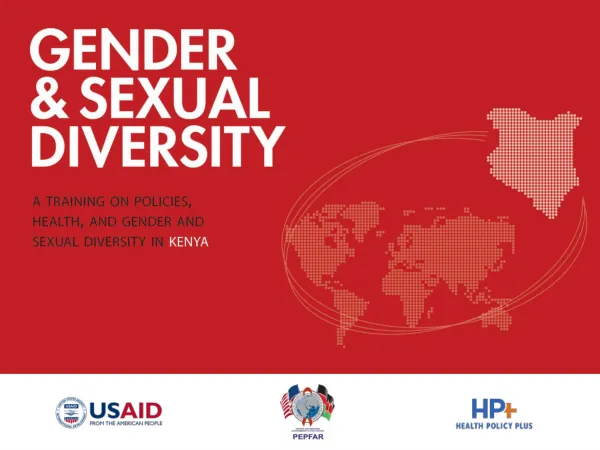
Gender & Sexual Diversity: A Training on Policies, Health, and Gender and Sexual Diversity in Kenya
Sign inHEALTH POLICY PLUS
Gender & Sexual Diversity: A Training on Policies, Health, and Gender and Sexual Diversity in Kenya
The concept of sex and gender is fundamental to understanding gender norms and health.
2018 · 62 pages
Sign in to readA free account is required to download.
Abstract
Sex refers to the chromosomal, hormonal, and anatomical characteristics that classify an individual as female, male, or intersex. Gender, on the other hand, encompasses the roles, responsibilities, rights, behaviors, feelings, and obligations associated with being a girl, boy, woman, man, or other gender, as well as the power relationships between people of different genders. Gender and sexual minorities (GSMs) are individuals whose gender, sexual orientation, or biological sex characteristics differ from what is typically expected by a particular culture or society. This includes people who identify as lesbian, gay, bisexual, transgender, or intersex. Understanding GSMs is crucial for HIV and health programming, as they often face unique challenges and barriers to accessing healthcare services. In Kenya, for example, only 21.5% of sexual minorities visit a healthcare provider when they have sexual and reproductive health problems.
Connected topics