THE HEALTH POLICY PROJECT
Ghana Central Region RAPID
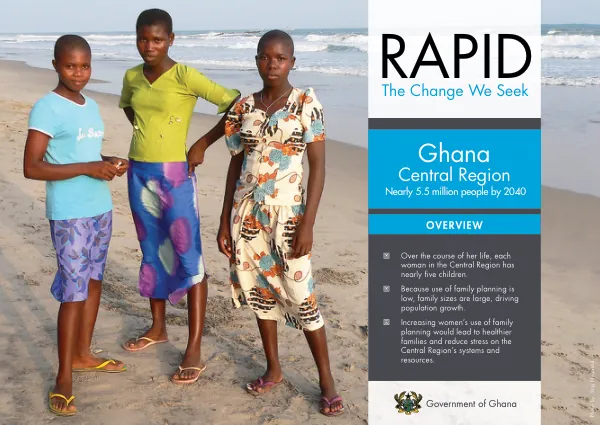
The Central Region of Ghana is expected to experience rapid population growth, with nearly 5.5 million people projected to reside in the area by 2040.
2015 · 2 pages
Sign in to readA free account is required to download.
Abstract
This growth is largely driven by large family sizes, with each woman in the region having nearly five children on average. The low use of family planning contributes to this trend, placing significant strain on the region's systems and resources. Forty percent of the Central Region's population is under the age of 15, and if contraceptive use remains low, population growth could accelerate rapidly, further challenging the region's development. The current Contraceptive Prevalence Rate in the Central Region is 29.1 percent, which is lower than the national average. This rate is unlikely to slow, and if women in the region continue to have nearly five children each, the population could double by 2040. The rapid population growth in the Central Region will hinder the region's development progress, but strengthening its commitment to family planning could greatly improve its prospects. Smaller family sizes through increased use of family planning could relieve pressure on the provision of primary education and public health services, alleviate food insecurity, unemployment, and underemployment, and ultimately improve the region's development potential. To achieve its development potential, investments in family planning must become a priority in the Central Region. A regional-level family planning/population strategy, accompanied by a costed implementation plan, should be developed and implemented. Additionally, resources should be committed for regional-level family planning commodity storage and distribution to ensure universal access in both urban and rural areas. The district assemblies should be lobbied to allocate 0.5 percent of their District Assemblies Common Fund to support family planning activities, and the supply of region-sponsored family planning providers should be expanded to enhance access to services at the community level and in rural areas. The benefits of investing in family planning in the Central Region are substantial. By 2040, the region could save 4.7 million Cedis in primary education, 33.4 million Cedis in the health sector, and create 31.1 thousand fewer new jobs. These savings and reduced pressure on the health system will enable the region to invest in a better economy, improve health and education, and reduce strain on its infrastructure and resources.
Related documents