GOVERNMENT OF GHANA
Ghana Northern Region RAPID
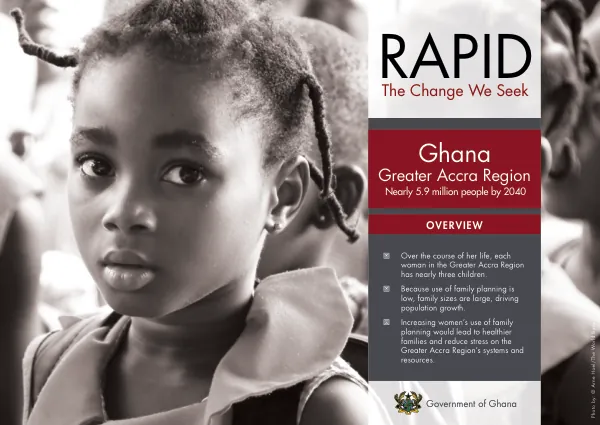
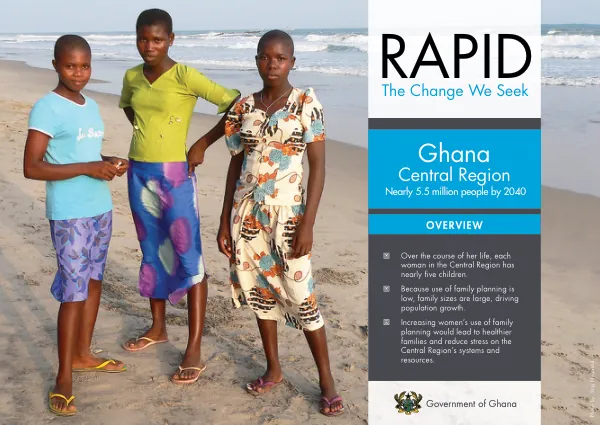
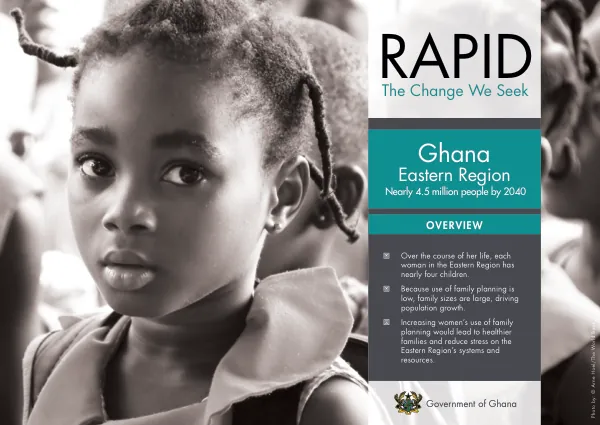
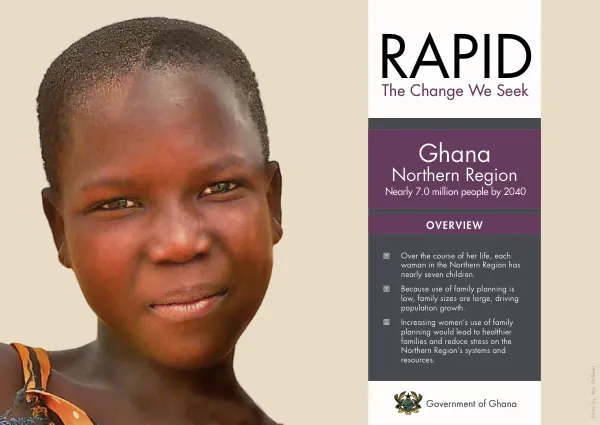
The Northern Region of Ghana is expected to experience rapid population growth, with nearly 7.0 million people projected by 2040.
2015 · 2 pages
Sign in to readA free account is required to download.
Abstract
This growth is largely driven by low use of family planning, resulting in large family sizes. Women in the region have an average of nearly seven children throughout their lives, placing significant strain on the region's systems and resources. The region's population is predominantly young, with over 40 percent of the population under the age of 15. If contraceptive use remains low, population growth could accelerate, further challenging the region's development. The current Contraceptive Prevalence Rate in the Northern Region is 13 percent, which is significantly lower than the national average. This low rate of contraceptive use is likely to lead to continued population growth, hindering the region's development progress. Smaller family sizes through increased use of family planning could alleviate pressure on the provision of primary education and public health services, as well as alleviate food insecurity, unemployment, and underemployment. In fact, estimates suggest that with a smaller population, the region could save 164.6 million Cedis in primary education by 2040, 82.1 million Cedis in the health sector, and 59.6 thousand new jobs. To achieve its development potential, the Northern Region must prioritize investments in family planning. This includes developing and implementing a regional-level family planning/population strategy, committing resources for commodity storage and distribution, and lobbying district assemblies to allocate funds for family planning activities. Additionally, expanding the supply of region-sponsored family planning providers and reaching citizens and traditional leaders with family planning messages and education are crucial steps towards dispelling myths and misconceptions. The Ghana Demographic and Health Survey 2003, 2008, Multiple Indicator Cluster Survey 2011, and the Resources for the Awareness of Population Impacts on Development (RAPID) Model for Northern Region 2015 provide valuable insights into the region's population dynamics and the potential benefits of increased family planning use. By prioritizing family planning, the Northern Region can improve health and education, invest in a better economy, and reduce strain on its infrastructure and resources.
Related documents