USAID
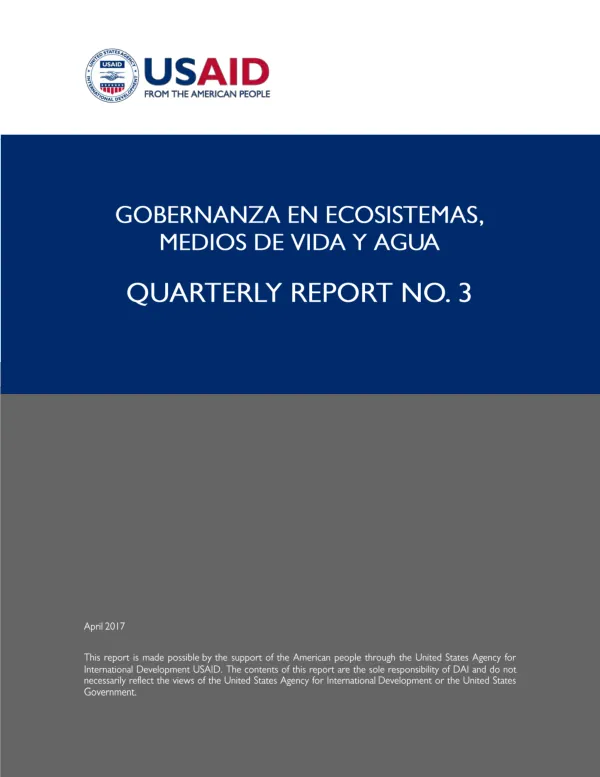
Gobernanzas en Ecosistemas, Medios de Vida y Agua
Gobernanza en Ecosistemas, Medios de Vida y Agua is a comprehensive framework for managing ecosystems, livelihoods, and water resources.
87 pages
Sign in to readA free account is required to download.
Abstract
The framework emphasizes the importance of integrated and participatory approaches to governance, recognizing the interconnectedness of social, economic, and environmental systems. The framework identifies three key components: ecosystems, livelihoods, and water resources. Ecosystems are considered critical for maintaining biodiversity, regulating climate, and providing essential services such as air and water filtration. Livelihoods are defined as the means by which people earn a living, including agriculture, fishing, and other activities that depend on ecosystem services. Water resources are essential for human consumption, agriculture, and industry, and are often closely linked to ecosystem health. Effective governance of these components requires a holistic approach that takes into account the needs and perspectives of multiple stakeholders, including local communities, governments, and private sector actors. This involves establishing clear policies and regulations, promoting transparency and accountability, and ensuring that decision-making processes are inclusive and participatory. The framework also emphasizes the importance of adaptive management and learning, recognizing that ecosystems and livelihoods are dynamic and subject to change. This requires ongoing monitoring and evaluation of governance systems, as well as a willingness to adjust policies and practices in response to new information and changing circumstances. Implementation of the framework is expected to have significant benefits for ecosystems, livelihoods, and water resources. By promoting sustainable use of ecosystem services, improving livelihoods, and ensuring equitable access to water resources, the framework can help to reduce poverty, improve human well-being, and promote environmental sustainability.
Related documents