USAID
Gomal Zam Multipurpose Dam (Energy Component)
The Gomal Zam Multipurpose Dam project was a collaborative effort between the US Agency for International Development (USAID) and the Water and Power Development Authority (WAPDA) to complete the dam in South Waziristan, Pakistan.
2015 · 1 pages
Sign in to readA free account is required to download.
Abstract
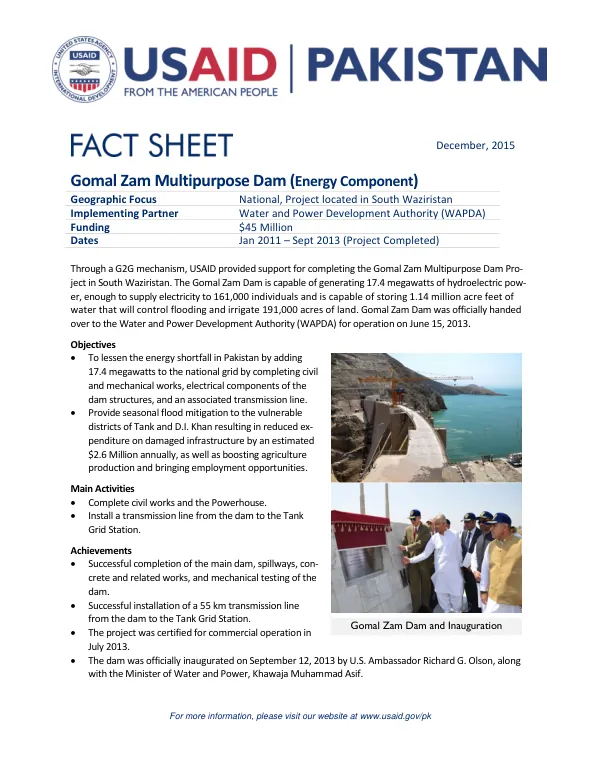
The project's geographic focus was national, with a specific location in South Waziristan. USAID provided funding of $45 million through a Government-to-Government (G2G) mechanism. The Gomal Zam Dam is a multipurpose facility capable of generating 17.4 megawatts of hydroelectric power, sufficient to supply electricity to 161,000 individuals. The dam also has the capacity to store 1.14 million acre feet of water, which will help control flooding and irrigate 191,000 acres of land. The project's objectives were multifaceted, including reducing the energy shortfall in Pakistan by adding 17.4 megawatts to the national grid and providing seasonal flood mitigation to vulnerable districts. The main activities undertaken as part of the project included completing civil works and the powerhouse, as well as installing a transmission line from the dam to the Tank Grid Station. The project achieved significant milestones, including the successful completion of the main dam, spillways, concrete and related works, and mechanical testing of the dam. A 55 km transmission line was also successfully installed from the dam to the Tank Grid Station. The project was certified for commercial operation in July 2013, and the dam was officially inaugurated on September 12, 2013, by U.S. Ambassador Richard G. Olson and the Minister of Water and Power, Khawaja Muhammad Asif. The project's completion is expected to have a positive impact on the region, including reduced expenditure on damaged infrastructure, boosted agriculture production, and increased employment opportunities.
Related documents