USAID
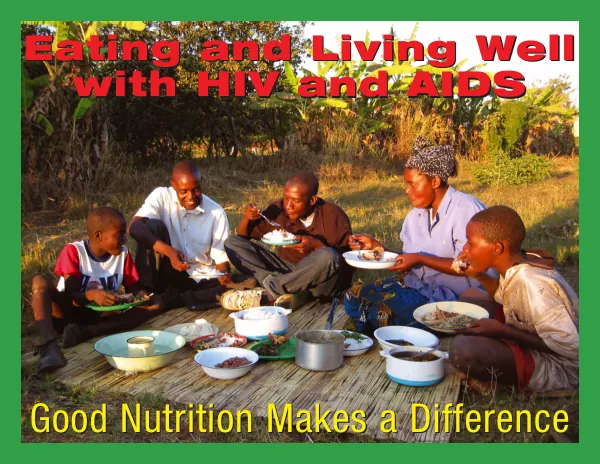
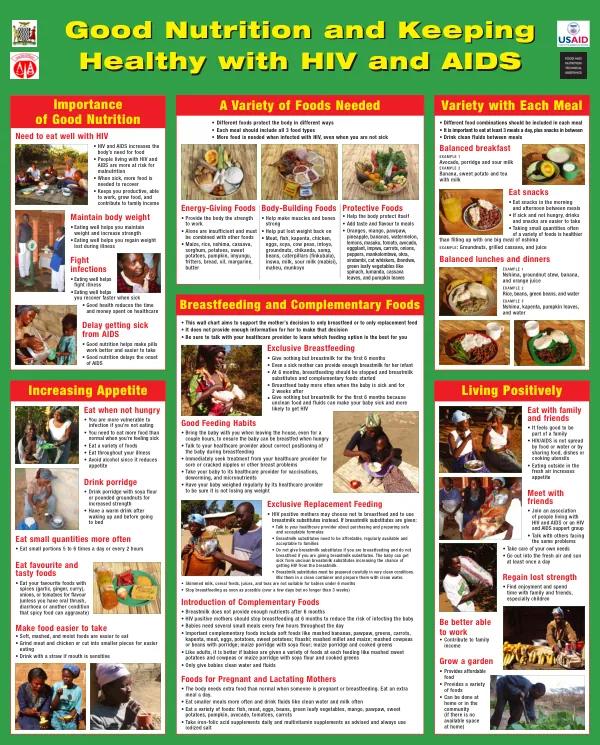
Good Nutrition and Keeping Healthy with HIV and AIDS
People living with HIV and AIDS require a diet rich in nutrients to maintain their health and prevent malnutrition.
1 pages
Sign in to readA free account is required to download.
Abstract
The body's need for food increases when infected with HIV, and more food is needed to recover from illness. Good nutrition helps maintain body weight, increase strength, and fight infections. Eating well also delays the onset of AIDS and reduces the time and money spent on healthcare. A balanced diet is essential for individuals living with HIV and AIDS. A variety of foods should be included in each meal, and at least three meals a day, plus snacks in between, are recommended. Drinking clean fluids between meals is also important. Balanced breakfasts, lunches, and dinners are crucial, and eating small quantities of food more often can help maintain energy levels. Good nutrition is particularly important for pregnant and lactating mothers, as the body requires extra food during this time. Eating a variety of foods, including fish, meat, eggs, beans, and green leafy vegetables, can help meet the increased nutritional needs. Iron-folic acid supplements and multivitamin supplements are also recommended. Exclusive breastfeeding for the first six months is advised, but HIV-positive mothers may choose to use breastmilk substitutes instead. In terms of nutrition, a variety of foods can help protect the body in different ways. Each meal should include all three food types: energy-giving foods, protective foods, and body-building foods. Energy-giving foods, such as maize, rice, and potatoes, provide the body with the strength to work. Protective foods, such as oranges and green leafy vegetables, help the body protect itself and add taste and flavor to meals. Body-building foods, such as meat and fish, help make muscles and bones strong. In Rwanda, the agricultural development initiative aimed to increase household income among program participants compared to the control group. The initiative also focused on increasing appetite and improving nutrition among program participants, with a goal of reducing the risk of malnutrition and improving overall health outcomes.