USAID DEC
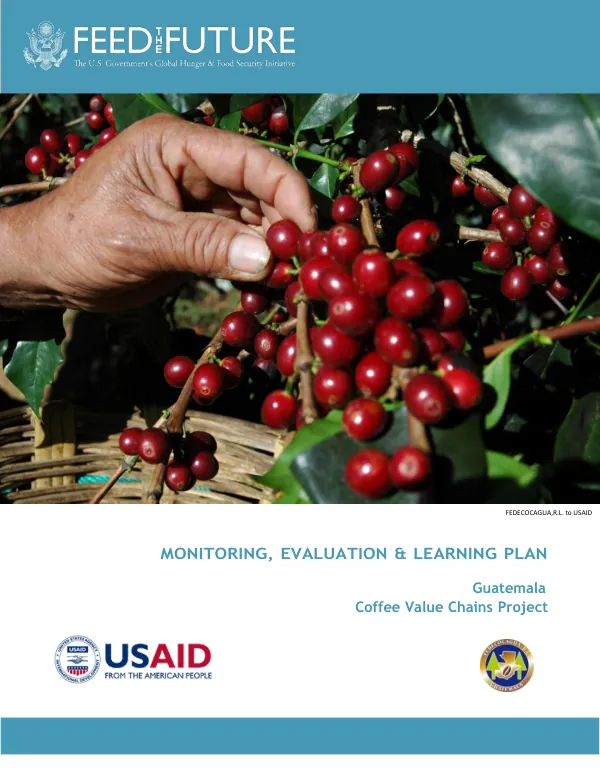
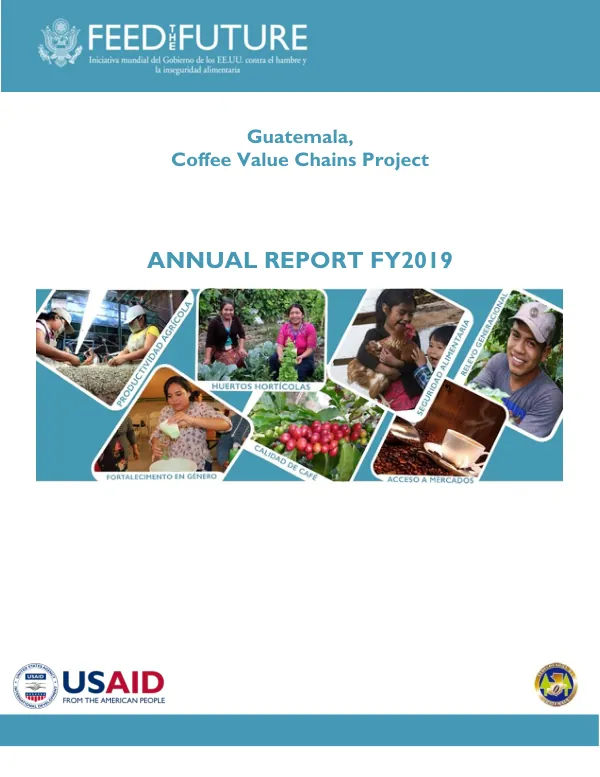
Guatemala, Annual Report FY2019 FY 2017-2022, Guatemala, Feed the Future, Coffee Value Chains Project
Sign inUSAID
Guatemala, Annual Report FY2019 FY 2017-2022, Guatemala, Feed the Future, Coffee Value Chains Project
The Coffee Value Chains Project in Guatemala aimed to improve levels of economic growth and social development in the Western Highlands.
2019 · 65 pages
Sign in to readA free account is required to download.
Abstract
The project was implemented by Federación de Cooperativas Agrícolas de Productores de Café de Guatemala, Responsabilidad Limitada (FEDECOCAGUA, R.L.) and the National Cooperative Business Association (NCBA) from November 16th, 2017 to November 15th, 2022. The project received funding of US$ 19,000,000 from the United States Agency for International Development (USAID) under the global Feed the Future initiative. The project's development objective was to improve agricultural productivity, expand markets, and improve nutrition. The project's geographic focus was on the Western Highlands, specifically in Huehuetenango, Quiché, and San Marcos. The project's population coverage included 15,000 participants, with 35% women and 15% youth. The project's main purpose was to improve agricultural productivity and diversification of income-generation alternatives. The project also focused on improving resilience through climate-smart and nutrition-sensitive agriculture practices. During FY 2019, the project registered a total of 4,181 small-scale coffee producers associated with 37 participating organizations. The project assisted 883 women and 210 youth through the implementation of the rural entrepreneurship strategy based on community banks to manage comprehensive livestock production units at family level. Additionally, the project assisted 763 women for the production and consumption of high-nutrient foods through the nutrition-sensitive agriculture strategy. The project achieved significant results in each of its three strategic results. In Result 1, Improve agricultural productivity and income-generation alternatives diversification, the project delivered 524,929 coffee plants to direct participants, including 34,929 Robusta variety plants and 490,000 Marsellesa variety plants to cover a total of 157.59 hectares of coffee plantations. The project also endowed 4,609 avocado trees to 242 producers, enriching 101 hectares of agroforestry systems of agricultural species with market potential. In Result 2, Access to markets expanded, the project established strategic alliances with 15 cooperatives, 4 pre-cooperative groups, and 2 private sector companies. The project also facilitated the sale of 1,200 tons of coffee, generating US$ 1,200,000 in revenue for participating farmers. In Result 3, Improve resilience through climate-smart and nutrition-sensitive agriculture practices, the project trained 2,500 farmers in sustainable agriculture techniques, including climate-smart agriculture practices. The project also assisted 763 women in the production and consumption of high-nutrient foods, improving their nutrition and health outcomes. The project's implementation was facilitated by 22 field technicians, 35 agricultural paratechnicians, and 24 food and nutritional security promoters. The project's progress was monitored and evaluated through the Monitoring, Evaluation & Learning Plan 2018-2022, which linked to the FY 2019 Annual Operating Plan. The project's achievements during FY 2019 were significant, with notable progress in each of its three strategic results. The project's results demonstrate its effectiveness in improving agricultural productivity, expanding markets, and improving nutrition in the Western Highlands of Guatemala.
Related documents