FAMILY HEALTH INTERNATIONAL 360
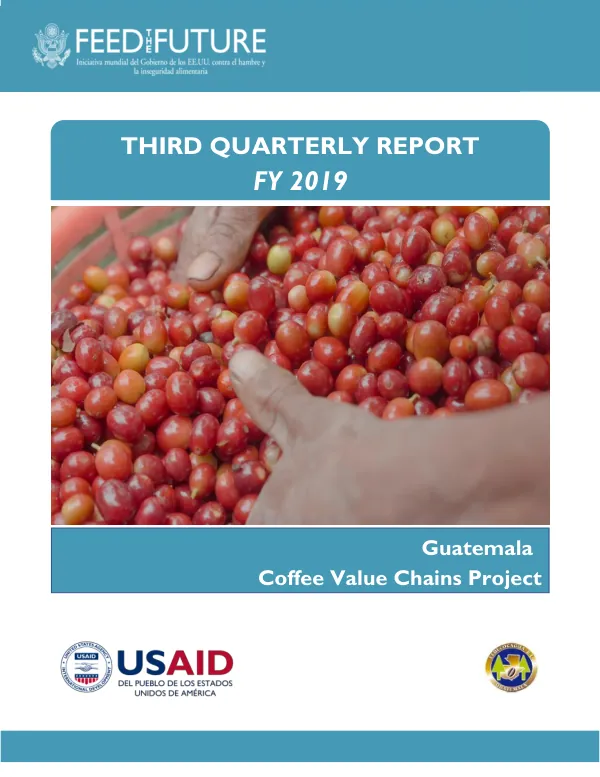
Third Quarterly Progress Report FY 2019: Coffee Value Chains Project
The Coffee Value Chains Project in Guatemala aims to improve levels of economic growth and social development in the Western Highlands.
2019 · 55 pages
Sign in to readA free account is required to download.
Abstract
The project is part of the Cooperation Strategy for the Development of Guatemala, established by the Government of the United States of America, with the goal of promoting greater socioeconomic development in the region and managing natural resources sustainably. The project's main objective is to increase income, improve resilience, and nutrition of small-scale producers and their families in 24 municipalities in the departments of Huehuetenango, Quiché, and San Marcos in Guatemala. To achieve this objective, the project focuses on improving agricultural productivity, expanding markets, and promoting climate-smart and nutrition-sensitive agricultural practices. The project's strategic results include improved agricultural productivity and income generation alternatives, expanded access to markets, and increased resilience through climate-smart and nutrition-sensitive agricultural practices. Intermediate results include the implementation of best agricultural and post-harvest management practices, adoption of technologies to improve agricultural productivity and income generation, and diversification of income-generating value chains. During the period from April 1 to June 30, 2019, the project achieved several key milestones. The final version of the Social and Behavior Change Communication Strategy was submitted, which contains suggestions based on comments from USAID, FEDECOCAGUA, and Breakthrough Action. The Training Program of Healthy Yard-Household System was also presented, which focuses on promoting changes through the adoption of behaviors in three main themes: hand washing, nutritious food, and spending on food. The project also implemented poultry production units, serving a total of 864 people associated with the Cooperatives, of which 827 are women who participate in the administration of its seed capital valued at $215. This aims to contribute to the consumption of animal protein and improve the food and nutritional security of families, as well as promoting the commercialization of surplus production and encouraging small entrepreneurships. The project's main activities during the period included progress in environmental compliance with standard 216, social inclusion considerations in the implementation, coordination with other United States Government partners, capacity building, and other relevant activities. The report also presents a summary of the administrative actions, lessons learned, risks and mitigation measures, and the main activities for the following quarter. The project's geographic focus is on the Western Highlands of Guatemala, specifically in the departments of Huehuetenango, Quiché, and San Marcos. The project's timeframes are from November 16, 2017, to November 15, 2022, with a total of $19,000,000 in federal funds from USAID. The project's population coverage is 15,000 participants, with 35% women and 15% youth.