USAID DEC
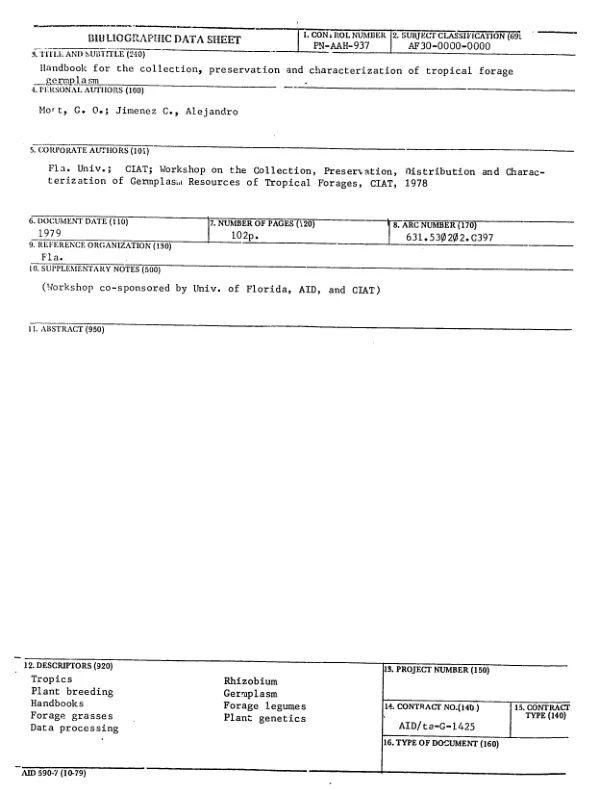
Handbook for the collection, preservation and characterization of tropical forage germplasm
Sign inINTERNATIONAL CENTER FOR TROPICAL AGRICULTURE (CIAT)
Handbook for the collection, preservation and characterization of tropical forage germplasm
It is vital for scientists to collect for experimentation a greater range of tropical legumes and grasses before the latter are eliminated through clearing, cropping, and land exploitation.
Mott, G. O., ed.; Jimenez C., Alejandro, ed. · 1979
Sign in to readA free account is required to download.
Abstract
Without a set of standardized procedures, an unmanageable mass of sample germ plasm could easily be accumulated. To avoid this situation, this handbook establishes such procedures for the collection, preservation, and characterization of tropical germ plasm resources. The following steps are outlined in individual chapters: preparation for the collection trip; germ plasm collection in the field; description of the collection site; soil sample collection and procedures; collection of Rhizobium strains; collection and preservation of insects and pathogenic organisms; characterization and preliminary evaluation; transfer of forage germ plasm; preservation of the germ plasm; and data management. General and technical equipment needed for a collection trip is discussed, as are basic considerations concerning where and when to look for germ plasms. It is suggested that changes in vegetation, topography, altitude, and land use serve as guides in determining whether a stop is advisable. In addition, collection sites should be described as accurately as possible. The system proposed for the description of collection sites consists of a list of descriptors, their code numbers, the number of characters (letters or numbers) allowed for that descriptor, and a dictionary of descriptor definitions. The handbook suggests that Rhizobium collections be undertaken routinely since legumes often fail to encounter effective native strains in new environments. Appendices include a list and a dictionary of descriptors used in forage germ plasm collection, characterization, and evaluation; procedures for shipping nodule samples to CIAT; a list of laboratories which isolate strains of Rhizobium; a sample seed export form (India); a list of countries/authorities issuing phytosanitary certificates; recommendations and conclusions of the International Board for Plant Genetic Resources Working Groups on the design and cost of seed storage facilities; recommended conditions for germination tests; and country-specific information exchange codes.