DAI GLOBAL, LLC
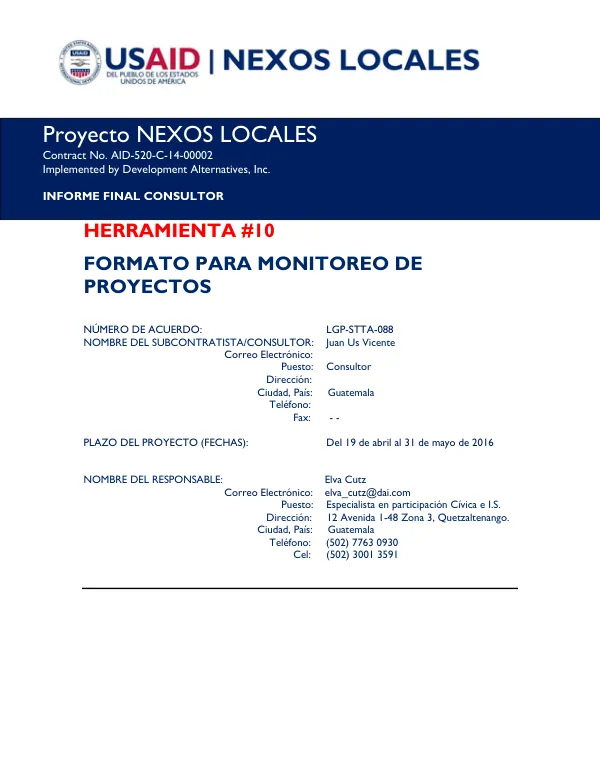
HERRAMIENTA #10 FORMATO PARA MONITOREO DE PROYECTOS
The HERRAMIENTA #10 is a format for monitoring projects, specifically designed for the municipal government of Guatemala.
2016 · 8 pages
Sign in to readA free account is required to download.
Abstract
The format is intended to facilitate the collection and analysis of data on project progress, allowing for informed decision-making and effective project management. The format is divided into several sections, including a matrix for data collection, a guide for users, and recommendations for general use. The matrix for data collection is a table with 20 columns, each representing a different aspect of project monitoring, such as project name, community, population benefiting, and source of financing. The guide for users provides instructions on how to use the format, including explanations of each column and how to fill it out. The guide also includes examples of how to complete the format for different types of projects. The recommendations for general use provide guidance on how to use the format effectively, including suggestions for how often to conduct monitoring and how to evaluate project progress. The format is designed to be used by the municipal government's planning department, which is responsible for monitoring and evaluating project progress. The format is intended to help the department make informed decisions about project management and resource allocation. The format is also intended to be used by other stakeholders, such as project managers and community leaders, who can use it to track project progress and provide feedback to the municipal government. The format is based on a matrix approach, which allows for the collection and analysis of data on multiple aspects of project monitoring. The matrix includes columns for project name, community, population benefiting, and source of financing, among others. The format is designed to be flexible and adaptable to different types of projects and communities. It can be used to monitor a wide range of projects, from infrastructure development to social programs. The format is also designed to be user-friendly and easy to understand, with clear instructions and examples provided in the guide for users. The format is intended to be used by a wide range of stakeholders, including project managers, community leaders, and municipal government officials. The format is based on a set of principles and guidelines for project monitoring and evaluation, which are designed to ensure that projects are managed effectively and efficiently. The principles and guidelines include recommendations for how often to conduct monitoring, how to evaluate project progress, and how to make informed decisions about project management and resource allocation. The format is intended to be used in conjunction with other tools and resources, such as project management software and data analysis tools. The format is designed to be integrated into existing project management systems and processes, allowing for seamless data collection and analysis. The format is also designed to be scalable and adaptable to different levels of project complexity and scope. It can be used to monitor small-scale projects as well as large-scale initiatives, and can be adapted to different types of projects and communities. The format is based on a set of best practices for project monitoring and evaluation, which are designed to ensure that projects are managed effectively and efficiently. The best practices include recommendations for how often to conduct monitoring, how to evaluate project progress, and how to make informed decisions about project management and resource allocation. The format is based on a set of principles and guidelines for project monitoring and evaluation, which