USAID DEC
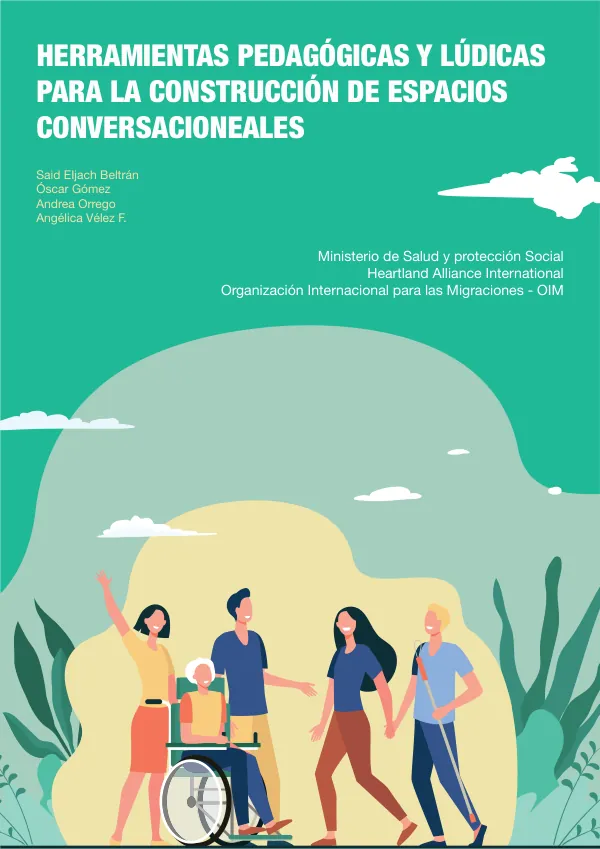
Herramientas Pedagógicas y Lúdicas para la Construcción de Espacios Conversacionales
Sign inMINISTERIO DE PREVISION SOCIAL AND SALUD PUBLICA
Herramientas Pedagógicas y Lúdicas para la Construcción de Espacios Conversacionales
The construction of conversational spaces is a critical aspect of community development, particularly in contexts where social cohesion and conflict resolution are essential.
2020 · 172 pages
Sign in to readA free account is required to download.
Abstract
The document "Herramientas Pedagógicas y Lúdicas para la Construcción de Espacios Conversacionales" provides a comprehensive framework for facilitating these spaces, emphasizing the importance of community participation and ownership. The document outlines a series of steps and strategies for facilitating conversational spaces, including the use of rituals, games, and other interactive activities to build trust and foster open communication. The facilitation process is centered around the concept of "convivencia" (coexistence) and "no repetición" (non-repetition of conflicts), with the goal of creating a safe and inclusive environment for community members to share their experiences and perspectives. One of the key components of the facilitation process is the use of "mapas comunitarios" (community maps), which are visual representations of the community's social, economic, and cultural dynamics. These maps are created through a participatory process, involving community members in the identification and mapping of key issues and challenges. The maps serve as a tool for community members to engage in dialogue and identify areas of commonality and conflict. The document also emphasizes the importance of community participation and ownership in the facilitation process. Community members are encouraged to take an active role in the design and implementation of the conversational spaces, ensuring that the process is tailored to their specific needs and concerns. This approach is grounded in the principles of participatory action research, which seeks to empower community members to take control of their own development and decision-making processes. The facilitation process is structured around a series of encounters, each with its own specific objectives and activities. These encounters are designed to build trust, foster open communication, and promote community ownership and participation. The process is iterative, with each encounter building on the previous one to create a cumulative effect. The document provides a detailed outline of the facilitation process, including the use of rituals, games, and other interactive activities to build trust and foster open communication. The process is grounded in a deep understanding of community dynamics and the importance of community participation and ownership. The implementation of the conversational spaces is a critical aspect of the facilitation process. The document provides a detailed outline of the steps involved in implementing the maps comunitarios, including the use of community members to identify and map key issues and challenges. The implementation process is designed to be flexible and adaptable, allowing community members to take ownership of the process and make decisions about how to proceed. The document concludes with a discussion of the importance of community participation and ownership in the facilitation process. The facilitation process is seen as a means of empowering community members to take control of their own development and decision-making processes, rather than simply imposing external solutions. This approach is grounded in a deep understanding of community dynamics and the importance of community participation and ownership. The document provides a comprehensive framework for facilitating conversational spaces, emphasizing the importance of community participation and ownership. The facilitation process is structured around a series of encounters, each with its own specific objectives and activities. The process is grounded in a deep understanding of community dynamics and the importance of community participation and ownership.