USAID DEC
How Missions are Incorporating Collaborating, Learning and Adapting into their CDCSes
Sign inUSAID
How Missions are Incorporating Collaborating, Learning and Adapting into their CDCSes
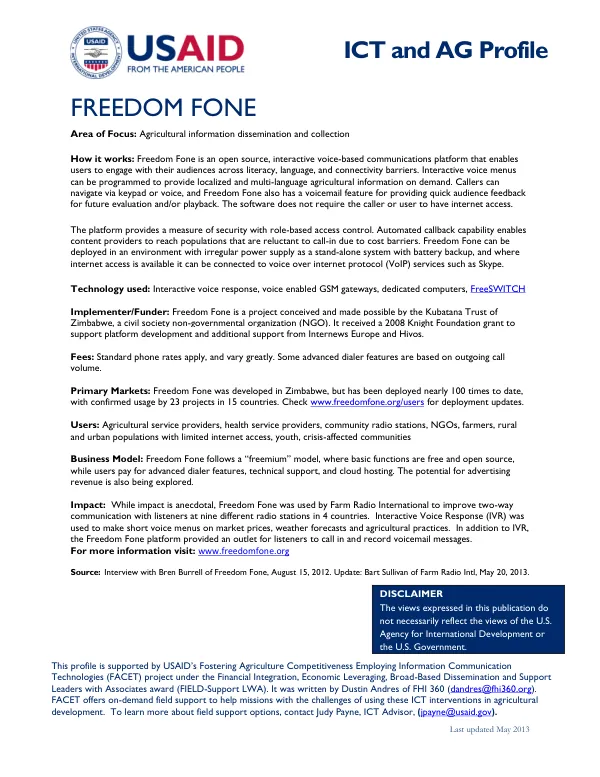
The Collaborating, Learning and Adapting (CLA) approach is a key component of the Program Cycle, tying strategy to project design, implementation, and monitoring and evaluation.
2012 · 4 pages
Sign in to readA free account is required to download.
Abstract
CLA involves collaborating with others to avoid duplication of efforts and outdated practices, learning from evidence and experience to develop strategies and design programs, and adapting to maintain relevance and accelerate effectiveness. Missions are encouraged to incorporate a strong CLA approach into their Country Development Cooperation Strategies (CDCS). This involves including a broad explanation and specific examples of how the mission can achieve sustainable development outcomes more effectively by collaborating strategically, learning continuously, and adapting iteratively. Missions are also required to identify priority CLA activities, outline roles, responsibilities, and resources needed to operationalize the CLA plan, and discuss the status of other enabling conditions that need to be in place. Several missions have already incorporated CLA components into their CDCS. Rwanda has a robust approach that embeds CLA activities throughout its programs and mission processes, including a research agenda and a knowledge continuity process. Liberia has hired a CLA Advisor and is focusing on monitoring game-changing political and security developments, as well as building capacity within the mission and with government counterparts. Zimbabwe has refined an adaptive approach in one Development Objective (DO) and is sharing lessons learned, while Uganda has hired a CLA Advisor and is implementing a strong multi-stakeholder collaboration through its pilot District Operational Plans. Rwanda has already achieved several CLA-related goals, including creating a collaboration map for each DO, planning for and prioritizing key participation in joint sector reviews, and instituting mission-wide innovation awards. The mission is also planning to institutionalize cross-DO ownership of three cross-cutting "lenses" that will help them achieve their goal through discussions and shared programming decisions. Resources dedicated to support CLA in Rwanda include a Mission Management Assessment and cross-mission knowledge exchange. Liberia has established a two-track plan for building mission, government, and implementing partner capacity, as well as pursuing development results. The mission has also identified two main game changers and noted a third, and established key indicators for tracking the game changers. New processes planned in Liberia include an analytic agenda to plug knowledge gaps, a plan for an annual "big picture" reflection with IPs and GOL counterparts, and a robust agenda for monitoring not only program performance but also context, risks, game changers, public perception, and activities undertaken by other development actors. Zimbabwe has responded to restrictions on GOZ engagement with highly synthesized and collaborative interaction with donors and partners, resulting in information and resource sharing and leveraging. The mission has also established a plan for testing some science and technology innovations, including a cheap and quick test for TB and drug resistance, and social media techniques for increasing voter awareness and participation in the upcoming election. New processes planned in Zimbabwe include testing and iteratively refining an adaptive management model, a DO2 FFP solicitation with a research component, and a mentoring program to build from existing peer support practices. Uganda has formed a Mission-wide Community of Practice to coordinate CLA efforts and build staff interest, held three large-scale CLA exercises with implementing partners, and revised the Mission Order on Project Design to have teams create more rigorous development hypotheses and evaluation plans, and include CLA questions. New processes planned in Uganda include working to map the activities of USG and stakeholders in USG development assistance and establishing a central repository of relevant information, and piloting "District Operational Plans" to bring together all USAID implementing partners and district government officials.
Related documents