FHI 360
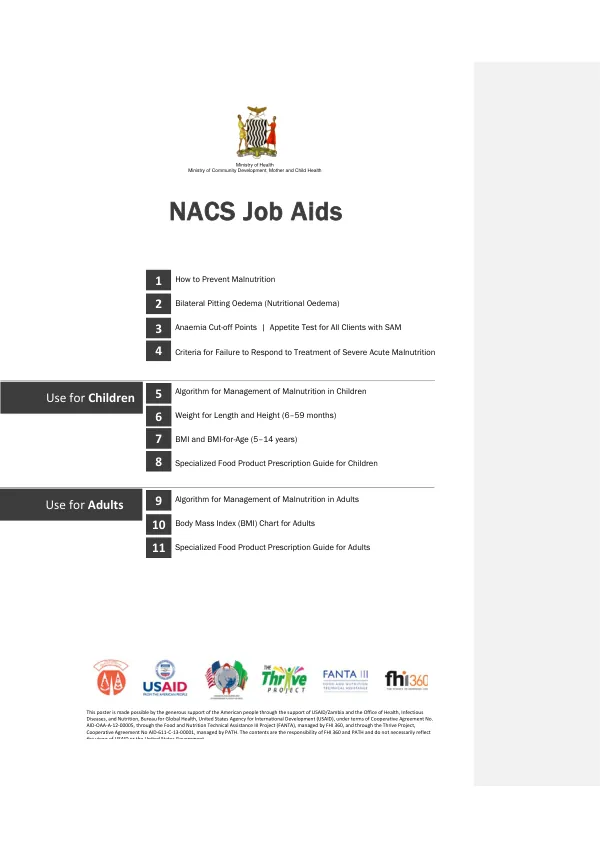
How to Prevent Malnutrition
Preventing malnutrition is crucial for maintaining overall health and well-being.
2017 · 12 pages
Sign in to readA free account is required to download.
Abstract
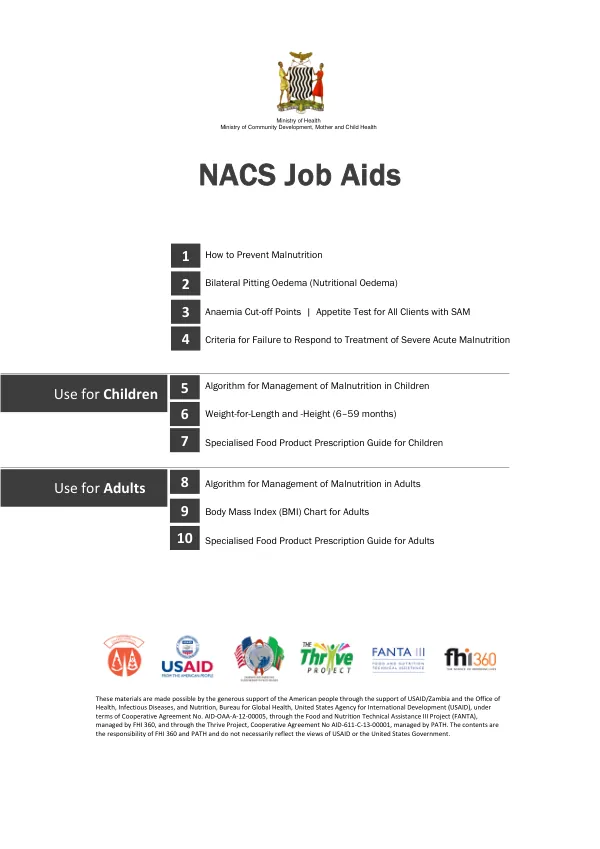
Regular weight monitoring is essential, with individuals weighing themselves regularly and tracking their weight. If overweight, a balanced diet and increased physical activity are recommended. Losing more than 6 kg in 2 or 3 months requires medical attention. A balanced diet is vital for preventing malnutrition. Breastfeeding is recommended for the first 6 months of life, followed by complementary foods introduced at 6 months. Three meals and two snacks per day are advised, with a focus on consuming foods from each food group to obtain necessary nutrients. Fruits and vegetables are essential for preventing illness and promoting recovery. Proper hydration is also crucial, with individuals drinking plenty of boiled or treated water. Germs can be killed by boiling water or adding chlorine. Drinking water should be stored in a covered container with a narrow neck. Poor habits can lead to malnutrition and poor health. Using condoms to prevent HIV, avoiding alcohol, and not smoking are essential. Getting enough rest, especially during pregnancy, and getting sufficient sleep to improve appetite and aid recovery from sickness are also vital. Good hygiene and sanitation practices can help prevent infection. Washing hands with soap and running water after using the toilet and before preparing and eating food or giving medicine is essential. Avoiding buying food on the streets that may not have been cooked or stored safely can also prevent diarrhoea and vomiting, which can remove nutrients from the body. Regular exercise is also important for maintaining overall health. Walking or doing chores every day can strengthen muscles, improve appetite, and manage stress. Malnutrition can be caused by various factors, including infections. Going to a health centre immediately if sick is essential, as illness can cause malnutrition. Informing healthcare providers about taking traditional remedies or nutrition supplements is also crucial, as they can affect how other drugs work. Managing food and drug interactions and side effects through diet is essential. Taking all medicines as prescribed, asking healthcare providers about taking medicines, and changing diets to manage side effects of drugs are all important. Bilateral pitting oedema is a sign of severe acute malnutrition (SAM) only if it is present in both feet or both legs. The skin stays depressed on both feet, indicating Grade + (mild) bilateral pitting oedema. Swelling in the face indicates Grade +++ (severe) bilateral pitting oedema. Anaemia cut-off points vary depending on age and sex. For children 6-59 months, haemoglobin levels of 11.0 g/dl or higher are considered normal, while levels of 10.0-10.9 g/dl are considered mild, 7.0-9.9 g/dl are considered moderate, and levels of 7.0 g/dl or lower are considered severe. The appetite test for all clients with severe acute malnutrition (SAM) involves offering RUTF and observing the client's appetite. The minimum amount to eat to pass the appetite test varies depending on weight, with clients weighing less than 4.0 kg requiring ⅛-¼ packets, and clients weighing 30.0 kg or more requiring more than 1 packet. Criteria for failure to respond to treatment of severe acute malnutrition (SAM) include primary failure to respond, which occurs when clients fail to regain appetite, start to lose oedema, or gain 3-5 g/kg/day and move to moderate malnutrition. Secondary failure to respond occurs when clients fail to gain 3-5 g/kg/day for 3 successive days, fail appetite test, lose 5% of body weight, or experience weight loss for two consecutive visits. The algorithm for management of malnutrition in children involves assessment, diagnosis, and action. Severe acute malnutrition (SAM) is diagnosed when clients have bilateral pitting oedema, or when their weight-for-height z-score (WHZ) is less than -3, or when their mid-upper arm circumference (MUAC) is less than 11.5 cm for children 6-59 months. Medical complications, including bilateral pitting oedema +++ or no appetite, require admission or referral to inpatient treatment. Appetite and bilateral pitting oedema 0, +, or ++, and no other medical complications, can be treated as outpatients, with counseling for caregivers on nutrition.
Related documents