FHI 360
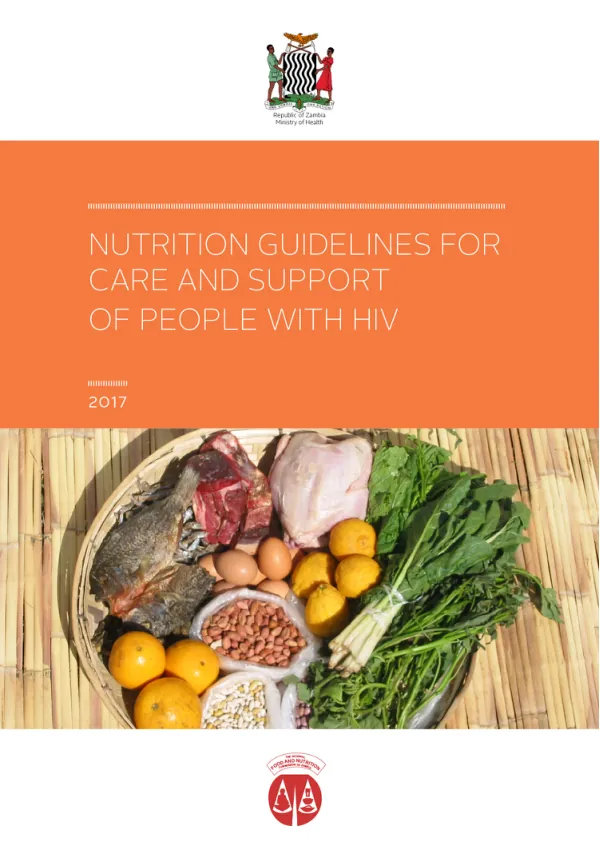
Nutrition Guidelines for Care and Support of People living with HIV
The Government of the Republic of Zambia recognizes the importance of nutrition in the provision of quality care and support to people living with HIV and AIDS.
2017 · 80 pages
Sign in to readA free account is required to download.
Abstract
In accordance with the National Health Strategic Plan 2017-2021, nutrition is identified as a crucial component in attaining middle income status by 2030. The plan aims to reduce morbidity and mortality due to HIV and AIDS through the provision of free comprehensive HIV prevention services and antiretroviral drugs in all public health facilities. Research has shown that there is a relationship between HIV and nutrition. In the presence of HIV infection, nutrient requirements increase, and HIV infection impairs nutrient intake and uptake. Poor nutrition increases the risk of opportunistic infections and accelerates the progression of HIV to AIDS. Maintaining good nutrition helps reinforce the effectiveness of antiretroviral drugs by improving their tolerance and safety. Malnutrition and HIV/AIDS are interdependent and create a vicious cycle. The guidelines were developed to define the necessary actions service providers need to take to include nutrition components at all sites providing HIV services and treatment, including maternal and child health (MCH) care services, services for orphans and vulnerable children (OVC), and home-based care (HBC) services. They seek to assist all categories of people infected with and/or affected by HIV. To successfully implement quality nutritional care and support services to people living with HIV, there is a need for an inferred partnership between those affected and the different levels of care providers, as well as a coordinated effort by all stakeholders. The guidelines outline the importance of nutrition assessment, education, and counseling for people living with HIV. They emphasize the need for service providers to ensure adequate nutrient and energy intake for people living with HIV, particularly pregnant and lactating women, infants, and young children. The guidelines also highlight the importance of food and water safety and hygiene, as well as food security in households with people living with HIV. The guidelines provide recommendations for nutrition care and support for people living with HIV, including the use of macronutrients and micronutrients, micronutrient supplementation, and dietary management of HIV-related symptoms. They also provide algorithms for the management of malnutrition in adults and children, as well as guidance on counseling people with HIV to maintain desirable weight and dietary management of HIV-related symptoms. The guidelines were developed in collaboration with the National Food and Nutrition Commission, the Ministry of Health, and the Food and Nutrition Technical Assistance III Project (FANTA). They aim to provide a comprehensive framework for the provision of quality nutritional care and support services to people living with HIV in Zambia.
Related documents