UNITED NATIONS
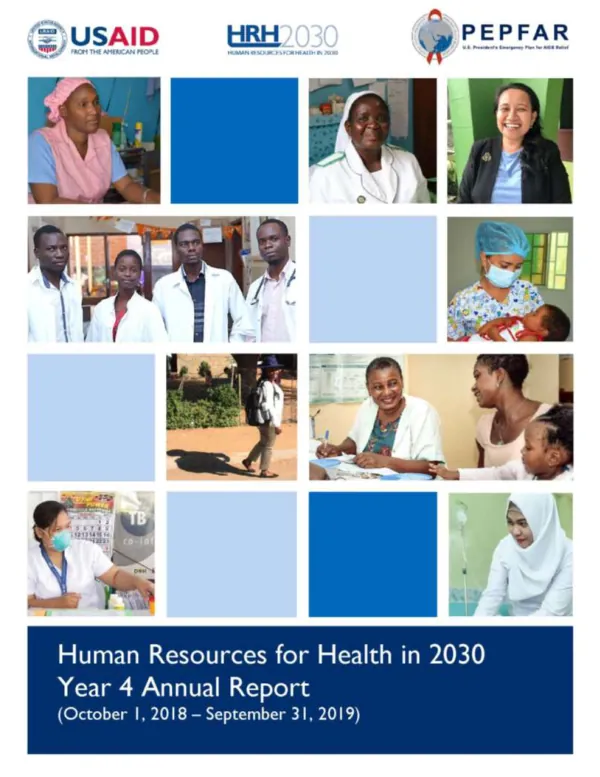
HRH2030 YEAR 4 ANNUAL REPORT
A strong health workforce is an essential component of high-performing health systems and achieving universal health coverage (UHC).
2019 · 91 pages
Sign in to readA free account is required to download.
Abstract
The Human Resources for Health in 2030 (HRH2030) program supports countries to develop the workforce needed to protect communities from infectious disease, meet their broader global health goals, and make strides toward UHC. HRH2030's Year 4 activities, covering the period of October 1, 2018-September 30, 2019, contributed to high-performing health systems across the framework of accessible, accountable, affordable, and reliable care. HRH2030 has furthered accessible care by extending the reach of services into rural communities in Cameroon and Mali. In Mali, HRH2030 works through women's groups to help foster care-seeking behavior and ensure that local residents understand when, how, and why to get the care they need. As a result, the number of women accessing antenatal care and family planning information and services increased by more than 200 percent in three regions. To support efforts to make healthcare more accountable, HRH2030 has worked with Ministries/Departments of Health in Ethiopia, Indonesia, the Philippines, and Senegal to strengthen data for improved HRH decision-making. This is critical to make evidence-based decisions on the number, distribution, and budget allocation of the health workforce in all countries. Health systems are more affordable when countries allocate adequate resources to meet priority needs. Furthering the evidence base on the return on investments in health workers, HRH2030 completed a study of Ethiopia's Health Extension Program (HEP), analyzing its health, social, employment, and equity impact. The study found the social return on investment is between $1.54 and $3.26 for every dollar invested, and that the HEP produces substantial economic benefits. Reliable healthcare requires skilled health workers. To that end, HRH2030 improves health workforce competencies through several activities. For example, in the Philippines, HRH2030 has been supporting the development of the national DOH Academy e-Learning portal that allows health workers to access flexible, practical skills building exercises so they can deliver high-quality care. In addition, HRH2030 has worked to strengthen the capacity of health systems in several countries, including Ethiopia, Indonesia, and Senegal. This has involved providing technical assistance to improve HRH management, developing HRH information systems, and supporting the development of HRH policies and strategies. HRH2030 has also made significant progress in improving the quality of care in several countries. For example, in Ethiopia, HRH2030 has been working with the Ministry of Health to improve the quality of care in public health facilities, including through the implementation of quality improvement initiatives and the development of guidelines for the management of common health conditions. Overall, HRH2030's Year 4 activities have made significant contributions to the development of high-performing health systems in several countries. By improving the accessibility, accountability, affordability, and reliability of healthcare, HRH2030 is helping to achieve universal health coverage and improve the health and well-being of millions of people around the world. HRH2030's work in improving the quality of care has also involved supporting the development of health workforce competencies, including through the provision of training and education programs for health workers. This has helped to improve the skills and knowledge of health workers, enabling them to deliver high-quality care to patients.