USAID
Human Resources for Health Indicators
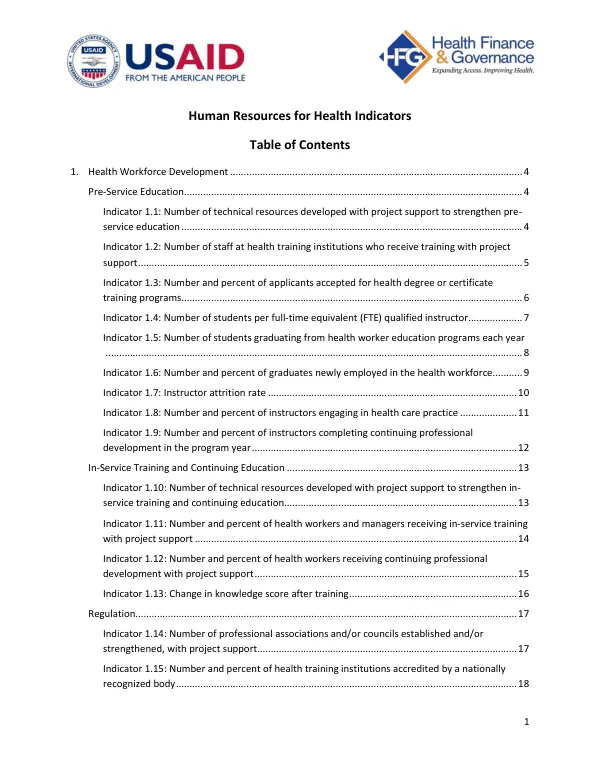
Health Workforce Development for Pre-Service Education began with the development of technical resources to strengthen pre-service education.
2015 · 47 pages
Sign in to readA free account is required to download.
Abstract
These resources included feasibility analyses, integrated curricula, costing analyses, retention policies for faculty, compensation policies, and training programs. The purpose of these resources was to increase the production of more and/or more qualified and skilled health workers. Indicator 1.1 measured the number of technical resources developed with project support to strengthen pre-service education. This indicator focused on the outputs of the project, such as the development of new curricula, training programs, and policies. The goal of this indicator was to assess the project's impact on the production of more and/or more qualified and skilled health workers. Pre-service education is a critical component of health workforce development, as it lays the foundation for the skills and knowledge that health workers will need to provide quality care. The development of technical resources to strengthen pre-service education is essential to ensuring that health workers have the necessary skills and knowledge to meet the needs of the population. The project's focus on pre-service education was part of a broader effort to strengthen the health workforce in the region. This included in-service training and continuing education, as well as regulation and policy development. By addressing the needs of the health workforce at all stages of their careers, the project aimed to improve the quality and availability of health care services. The development of technical resources to strengthen pre-service education was a key component of the project's strategy to increase the production of more and/or more qualified and skilled health workers. By providing health training institutions with the tools and resources they need to improve their programs, the project aimed to increase the number of health workers graduating from these programs and entering the workforce. The project's focus on pre-service education was also informed by the need to address the shortage of health workers in the region. By strengthening the pre-service education system, the project aimed to increase the number of health workers entering the workforce and reduce the shortage of health workers in the region. This, in turn, would help to improve the quality and availability of health care services, particularly in rural and underserved areas.
Related documents