USAID. BUR. FOR PROGRAM AND POLICY COORDINATION. CENTER FOR DEVELOPMENT INFORMATION AND EVALUATION (CDIE)
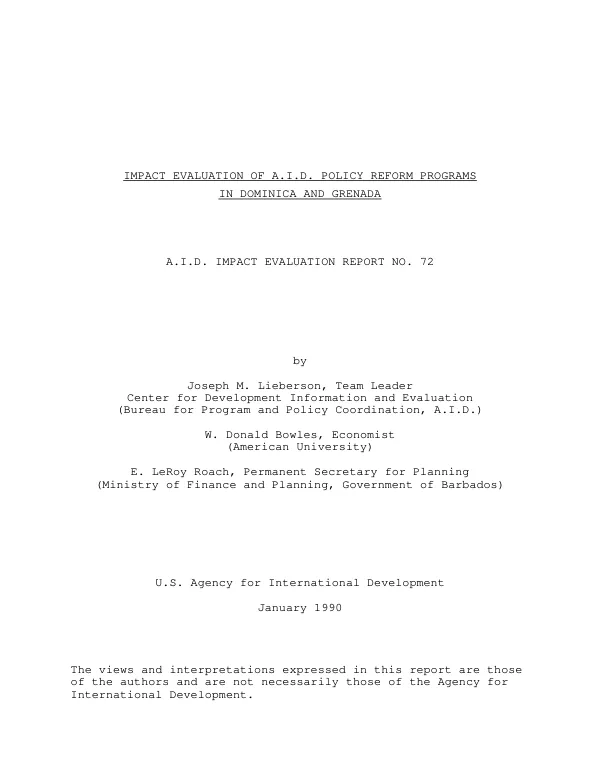
Impact evaluation of AID policy reform programs in Dominica and Grenada
During the period 1985-1989, A.I.D.
Lieberson, Joseph M.|Bowles, W. Donald|Roach, E. LeRoy · 1989
Sign in to readA free account is required to download.
Abstract
supported economic policy reforms in Dominica and Grenada -- island nations strikingly alike in their socioeconomic make-up. Despite their similarities, however, the countries' experiences with reform were drastically different. In Grenada, A.I.D. had the opportunity to implement a total reform package after the 1983 U.S. intervention toppled the country's Marxist government. Nonetheless, reform efforts, which focused on budget deficit reduction and private sector development, were far from successful. According to the report, these changes failed because they were implemented too rapidly and did not mesh with local business practices, government staff were inadequately trained to implement them, and public and government support and compliance were inadequate. In Dominica, A.I.D.'s approach was more gradual, first focusing on improving management of the existing tax system and only later working on incremental tax changes and new taxes. By any economic measure, the Dominica reform program was a success. It increased revenues, improved tax collection efficiency, and encouraged productive investment. Economic growth picked up sharply and remained strong throughout the reform period. Critical factors in guiding future planning and management of policy reform programs in these and other countries are identified.
Connected topics