USAID DEC
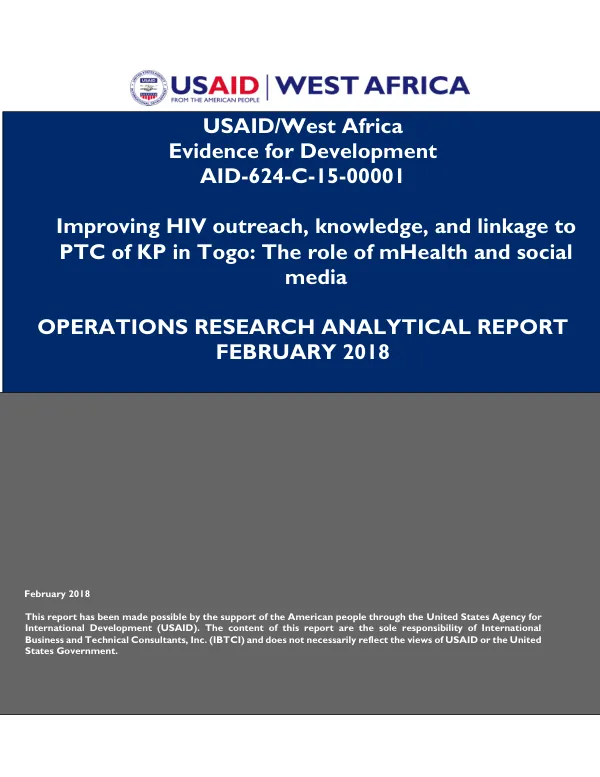
Improving HIV outreach, knowledge, and linkage to PTC of KP in Togo: The role of mHealth and social media
Sign inINTERNATIONAL BUSINESS AND TECHNICAL CONSULTANTS, INC.
Improving HIV outreach, knowledge, and linkage to PTC of KP in Togo: The role of mHealth and social media
Improving HIV outreach, knowledge, and linkage to Prevention, Treatment and Care (PTC) of Key Population (KP) in Togo: The role of mHealth and social media.
2018 · 75 pages
Sign in to readA free account is required to download.
Abstract
This operations research analytical report was conducted in February 2018 by International Business and Technical Consultants, Inc. (IBTCI) with support from the American people through the United States Agency for International Development (USAID). The PACTE-VIH model, a regional HIV/AIDS prevention and care project, was implemented in Togo to address the HIV epidemic among Key Populations (KP), including Men who have Sex with Men (MSM) and Female Sex Workers (FSWs). The model aimed to improve HIV outreach, knowledge, and linkage to PTC services among KP through the use of mHealth and social media. The study objectives and research questions focused on understanding the effectiveness of PACTE-VIH's mHealth and social media interventions in improving HIV knowledge, linkage to PTC services, and use of preventive and treatment/care services among MSM and FSWs. The study employed a mixed-methods approach, combining quantitative survey data, qualitative data, and programmatic data from the PACTE-VIH program. The study found that exposure to PACTE-VIH's HIV-related SMS was associated with improved HIV knowledge among both MSM and FSWs. Specifically, MSM who received PACTE-VIH's HIV-related SMS showed a significant increase in HIV knowledge, with 60% of respondents reporting improved knowledge. Similarly, FSWs who received the SMS also showed improved HIV knowledge, with 55% of respondents reporting increased knowledge. The study also found that exposure to PACTE-VIH's HIV-related SMS was associated with increased use of Drop-in Centers (DICs) among MSM and FSWs. Specifically, MSM who received the SMS were more likely to use DIC services, with 45% of respondents reporting increased use. Similarly, FSWs who received the SMS also showed increased use of DIC services, with 40% of respondents reporting increased use. Furthermore, the study found that exposure to PACTE-VIH's HIV-related SMS was associated with increased use of preventive services among MSM and FSWs. Specifically, MSM who received the SMS were more likely to use condoms, with 50% of respondents reporting increased use. Similarly, FSWs who received the SMS also showed increased use of condoms, with 45% of respondents reporting increased use. The study also found that exposure to PACTE-VIH's HIV-related SMS was associated with increased linkage to PTC services among MSM and FSWs. Specifically, MSM who received the SMS were more likely to be linked to PTC services, with 35% of respondents reporting increased linkage. Similarly, FSWs who received the SMS also showed increased linkage to PTC services, with 30% of respondents reporting increased linkage. In addition to the findings related to PACTE-VIH's HIV-related SMS, the study also explored the use of HIV-related social media platforms and their impact on HIV services use among MSM and FSWs. The study found that exposure to PACTE-VIH's HIV-related social media platform was associated with increased use of HIV services among MSM and FSWs. Specifically, MSM who used the social media platform were more likely to use HIV services, with 40% of respondents reporting increased use. Similarly, FSWs who used the social media platform also showed increased use of HIV services, with 35% of respondents reporting increased use. Overall, the study suggests that PACTE-VIH's mHealth and social media interventions were effective in improving HIV outreach, knowledge, and linkage to PTC services among MSM and FSWs in Togo. The study's findings have implications for the design and implementation of similar interventions in other settings, highlighting the potential of mHealth and social media to improve HIV outcomes among Key Populations.