ENCOMPASS, LLC
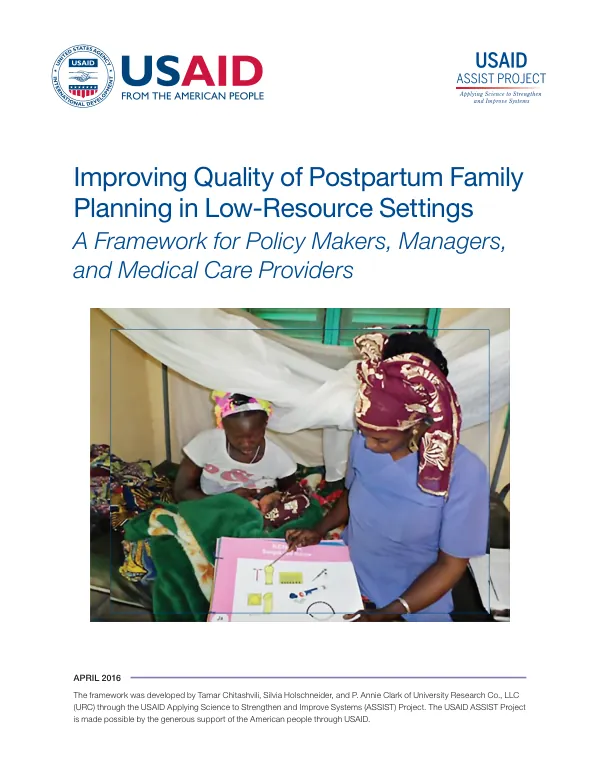
Improving Quality of Postpartum Family Planning in Low-Resource Settings
Family planning (FP) is an essential component of healthcare provided during the antenatal and postpartum period that can prevent maternal and child care complications and reduce premature mortality.
2016 · 28 pages
Sign in to readA free account is required to download.
Abstract
Closely spaced pregnancies within the first year postpartum are associated with higher risks of preterm births, as well as infants who are low birth weight or small for gestational age. If spacing between pregnancies were increased to 24 months, maternal and under-five mortality would decrease by 30% and 13% respectively. Postpartum Family Planning (PPFP), which aims to prevent the high risk of unintended and closely spaced pregnancies during the first year following childbirth, is one of the highest impact interventions to avoid increased risk of premature birth, low birth weight, fetal and neonatal death, and adverse maternal health outcomes. Despite monumental gains in training and family planning commodities distribution, persistent system and quality of care gaps continue to prevent many postpartum women from receiving effective PPFP services in low-resource countries. Major barriers include problems at the health facility level, barriers to demand for PPFP, and weaknesses in underlying systems. At the health facility level, common quality concerns include inadequate training for healthcare providers, insufficient commodities, and poor counseling skills. Barriers to demand for PPFP include lack of awareness, misconceptions about family planning methods, and limited access to services. Weaknesses in underlying systems include inadequate health information systems, insufficient supervision and monitoring, and limited resources for quality improvement. The Model for Improvement, a framework for quality improvement, can help overcome service delivery and systems gaps to improve PPFP services. The Model consists of three main components: Aim, Plan, and Study. The aim is to identify specific goals and objectives for improvement, the plan is to develop and implement strategies to achieve the aim, and the study is to evaluate the effectiveness of the plan and make adjustments as needed. A case study from Niger demonstrates the application of the Model for Improvement to strengthen integrated family planning into routine postpartum services. The study aimed to increase the percentage of postpartum women who received family planning counseling and services. The plan included training for healthcare providers, distribution of family planning commodities, and establishment of a quality improvement team. The study evaluated the effectiveness of the plan and made adjustments as needed. The framework for improving quality of postpartum family planning in low-resource settings provides a comprehensive approach to addressing the persistent system and quality of care gaps that prevent many postpartum women from receiving effective PPFP services. The framework includes strategies for improving service delivery, demand for PPFP, and underlying systems. By applying the Model for Improvement and implementing the strategies outlined in the framework, healthcare providers and policymakers can improve the quality of PPFP services and reduce the risk of unintended and closely spaced pregnancies in low-resource countries.
Related documents