USAID DEC
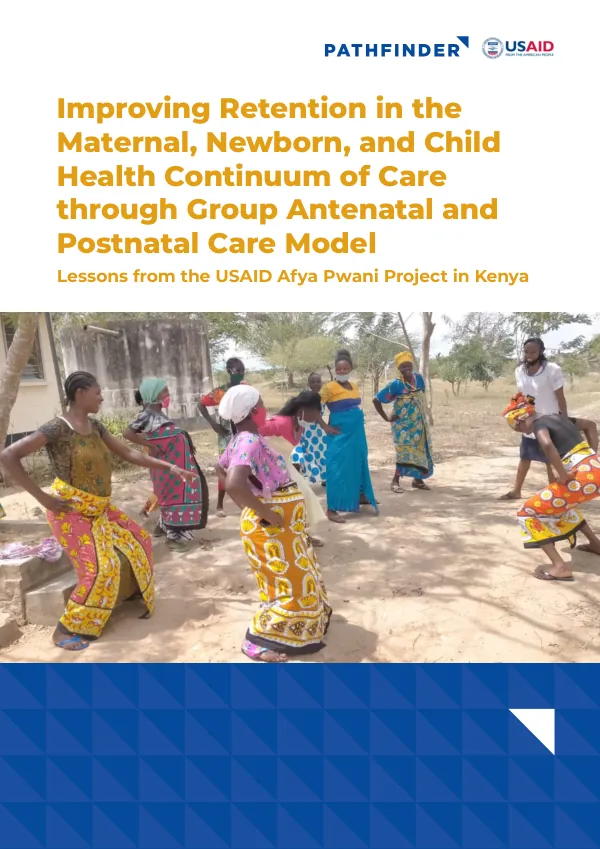
Improving Retention in the Maternal, Newborn, and Child Health Continuum of Care through Group Antenatal and Postnatal Care Model Lessons from the USAID Afya Pwani Project in Kenya
Sign inUSAID
Improving Retention in the Maternal, Newborn, and Child Health Continuum of Care through Group Antenatal and Postnatal Care Model Lessons from the USAID Afya Pwani Project in Kenya
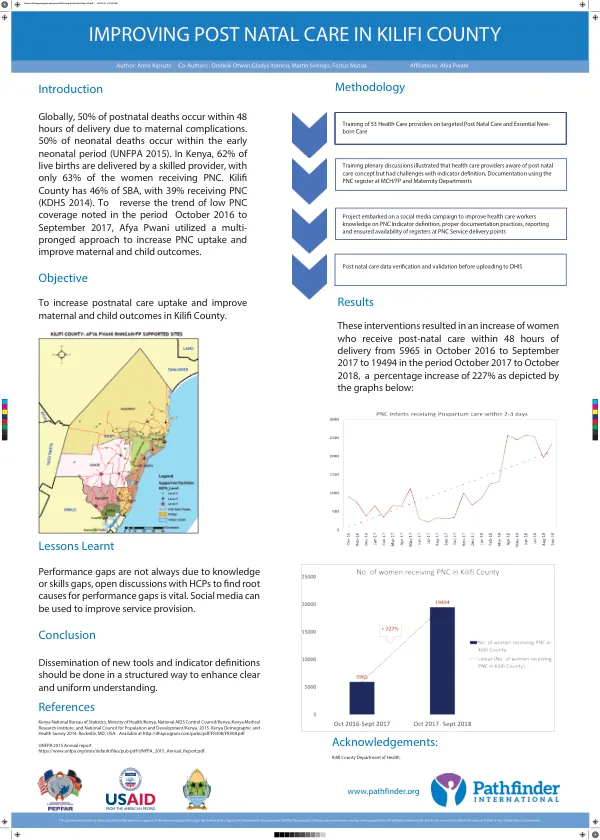
The maternal, newborn, and child health continuum of care is a critical component of maternal health care, particularly in low- and middle-income countries (LMICs).
2021 · 13 pages
Sign in to readA free account is required to download.
Abstract
In LMICs, antenatal care (ANC) services are often low, and the quality of care can be poor. The provision of high-quality ANC and postnatal care (PNC) optimizes the experiences of pregnant women and newborns. ANC provides an opportunity to offer appropriate clinical care and emotional support for pregnant women and is associated with increased utilization of subsequent health services, such as institutional delivery and PNC. Group ANC, which brings together pregnant women of similar gestational age for group learning and peer support, moves beyond the benefits of individual ANC and is associated with improved attendance, satisfaction with care, and health outcomes for pregnant women and newborns. The USAID Afya Pwani project, implemented in partnership with the county government of Kilifi, Kenya, enrolled 11,169 women in ANC groups between 2018 and 2020. The project focused on two types of groups: Mama Kwa Mama (MKM) groups for women aged 25 years and above, and Binti Kwa Binti (BKB) groups for adolescent girls and young women. The MKM groups consisted of between five and 30 women, and the BKB groups offered a targeted approach for adolescent and youth-friendly services. The groups integrated health assessments with tailored group educational activities and peer support, motivating behavior change among pregnant women and increasing women's satisfaction. The approach incorporated health promotion, clinical management, and social-economic empowerment, and fulfilled the critical elements for woman-centered care, including respect and safety, empowerment, involvement, and participation of women. The project achieved high retention rates, with 96% of enrolled women completing 13 monthly visits. Uptake of skilled deliveries stood at 97%, and 96% of children under one year were fully immunized as recommended by the Kenya Expanded Program of Immunization (KEPI). The groups also enhanced socio-economic empowerment by increasing income opportunities for women, supporting personal development, and expanding women's financial inclusion. The project supported 30 groups to register as self-help groups and five groups to register as community-based organizations (CBOs). The maternal, newborn, and child health continuum of care is critical for reducing maternal, neonatal, and child morbidity and mortality. In Kenya, the government has made significant progress in reducing maternal mortality, but challenges remain, particularly in Kilifi county, which has a high burden of maternal death. The USAID Afya Pwani project demonstrates the effectiveness of group ANC and PNC in improving health outcomes and experiences for pregnant women and newborns in LMICs. The project's approach, which incorporates health promotion, clinical management, and social-economic empowerment, has the potential to be scaled up and replicated in other settings. The use of group ANC and PNC can improve retention in the maternal, newborn, and child health continuum of care, increase utilization of health services, and reduce maternal, neonatal, and child morbidity and mortality. The project's findings highlight the importance of addressing the needs of pregnant women and newborns through a comprehensive and integrated approach that incorporates health promotion, clinical management, and social-economic empowerment.