USAID
Increase in Violence Against Aid Workers in Myanmar
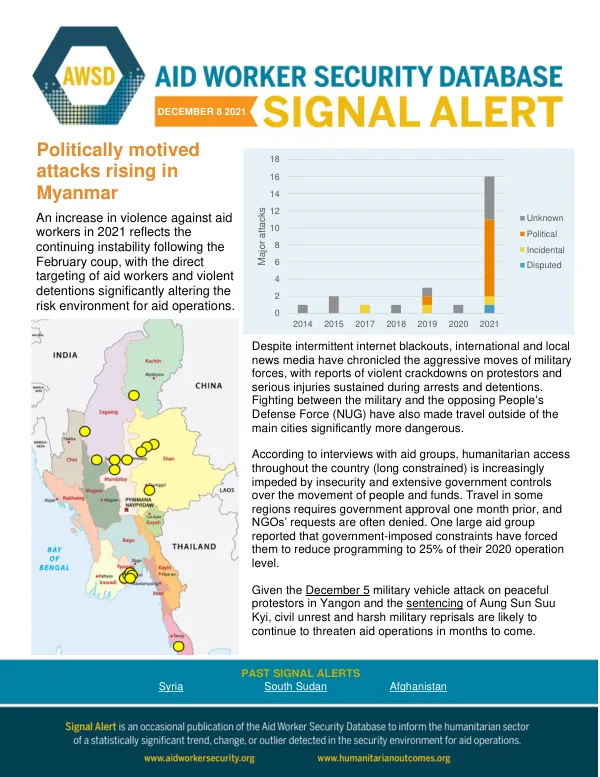
Violence against aid workers in Myanmar has increased in 2021, reflecting the ongoing instability following the February coup.
2021 · 1 pages
Sign in to readA free account is required to download.
Abstract
The direct targeting of aid workers and violent detentions have significantly altered the risk environment for aid operations. The military's aggressive moves have been chronicled by local and international news media, including violent crackdowns on protesters and serious injuries sustained during arrests and detentions. Fighting between the military and the opposing People's Defense Force (NUG) has made travel outside of main cities significantly more hazardous. Humanitarian access throughout the country is increasingly impeded by insecurity and government controls over the movement of people and funds. In some regions, travel requires approval one month prior, and NGOs' requests are often denied. As a result, one large aid group has been forced to reduce programming to 48% of their 2020 operation level. The December 5 military attack on peaceful protesters in Yangon and the sentencing of Aung San Suu Kyi have heightened the likelihood of continued aid operation disruptions. The threat of violence and harsh military reprisals is expected to persist in the coming months. The situation in Myanmar has been marked by a significant increase in violence and instability since the February coup. The military's actions have led to a substantial deterioration in the security environment, posing a substantial challenge to aid operations. The impact of the conflict on humanitarian access and humanitarian access has been substantial, with many aid groups facing significant constraints on their operations.
Related documents