USAID DEC
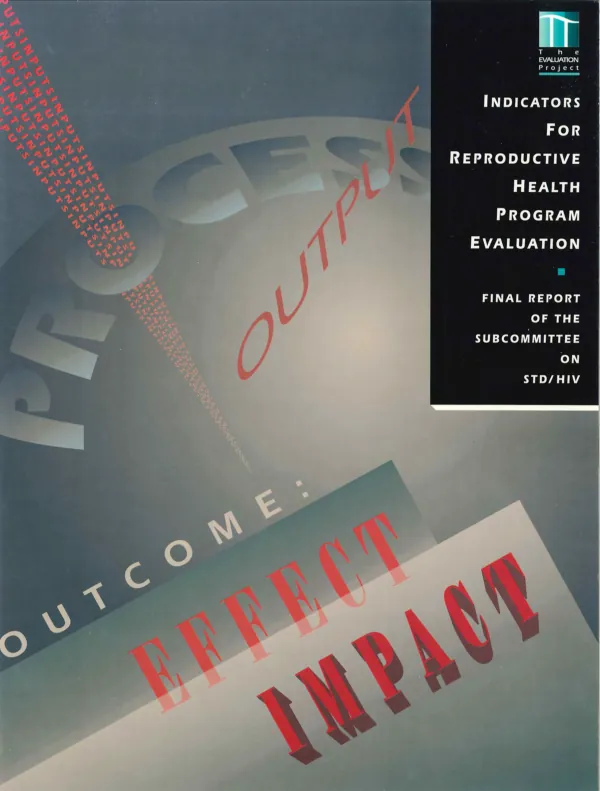
Indicators for reproductive health program evaluation : final report of the subcommittee on safe pregnancy
Sign inTULANE UNIVERSITY. SCHOOL OF PUBLIC HEALTH AND TROPICAL MEDICINE
Indicators for reproductive health program evaluation : final report of the subcommittee on safe pregnancy
In April 1994, USAID asked the Family Planning Evaluation Project to develop indicators for program evaluation for five kinds of reproductive health interventions.
Koblinsky, Marge, ed.; McLaurin, Katie, ed. · 1995
Sign in to readA free account is required to download.
Abstract
This document presents the project"s report on indicators for safe pregnancy. The report begins with background on the significance of safe pregnancy indicators for maternal/child health care and post-abortion care. Indicators for the woman and the newborn are then presented, linked by a common conceptual model. Lastly, indicators that address care after unsafe abortions are presented, informed by a similar model. Also included is a short list of primary indicators. The primary indicators for maternal and neonatal health are: (1) met need for emergency obstetric care; (2) perinatal mortality rate; (3) percentage of perinatal deaths contributed by stillbirth or early neonatal death; (4) case fatality rate for all complications; (5) percentage of adults knowledgeable about maternal complications of pregnancy and childbirth; (6) percentage of adults knowledgeable about neonatal complications; (7) percentage of pregnant women with at least two doses of tetanus toxoid immunization; (8) proportion of women attended at least once during pregnancy by trained personnel for reasons related to the pregnancy; (9) number of facilities providing essential obstetric functions per 500,000 population; (10) percentage of women with obstetrical complications treated within 2 hours of admission to a health facility; (11) existence and implementation of a safe pregnancy strategic or operational plan; (12) maternal mortality ratio and rate. Primary indicators for post-abortion care are: (1) existence of service and administrative policy on the elements of post-abortion care; (2) percentage of post-abortion care patients who receive counseling and referral or accept a family planning method at the time of service; (3) number, type, and geographic distribution of service delivery points; (4) knowledge of and willingness to use services; (5) facility case fatality rate; (6) total number of admissions for abortion-related complications; (7) compliance with provisions for confidentiality; and (8) compliance with provisions protecting against coercion. Includes references.