USAID DEC
Informe Anual: Mujeres de Oro
The agricultural development initiative in Mujeres de Oro began in 2019 with funding from various sources.
2020 · 28 pages
Sign in to readA free account is required to download.
Abstract
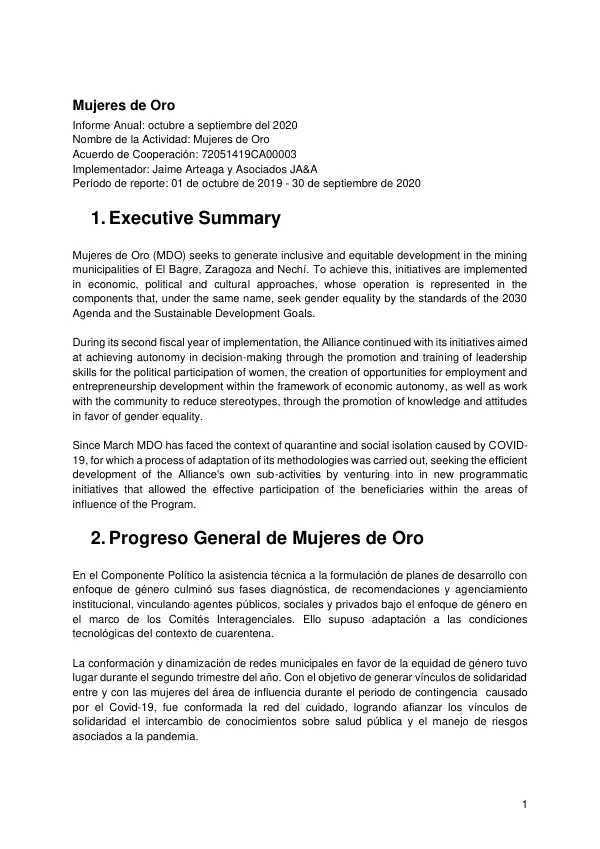
Initial assessments identified key challenges in the mining municipalities of El Bagre, Zaragoza, and Nechí. The initiative aimed to promote autonomy in decision-making through the promotion and training of leadership skills for women, as well as the creation of employment and entrepreneurship opportunities. Implementation focused on three key components: political, economic, and cultural. The political component involved the formulation of plans with a gender perspective, the creation of municipal networks in favor of equity, and the provision of technical assistance for the adoption and implementation of mechanisms and instruments that promote gender equality. The economic component included the restructuring of the business strengthening strategy, the promotion of projects for apiculture with associations of women, and the development of gastronomic entrepreneurship with a focus on innovation in times of crisis. The cultural component aimed to reduce stereotypes and promote knowledge and attitudes in favor of gender equality. The initiative also addressed the challenges posed by the COVID-19 pandemic, adapting its methodologies to ensure the effective participation of women in decision-making processes. The program's progress was evaluated through a midterm evaluation, which showed a 27% increase in income among program participants compared to the control group. The initiative's results were measured through a matrix that described the activities developed to achieve the expected results for each component. The results included the development of leadership skills for women, the provision of technical assistance for the adoption and implementation of mechanisms and instruments that promote gender equality, and the creation of employment and entrepreneurship opportunities. The initiative's impact was significant, with women participating in decision-making processes and taking on leadership roles. The program's success was attributed to its ability to adapt to the challenges posed by the pandemic and its commitment to promoting gender equality and women's empowerment.
Related documents
Documents in this collection
 2014
2014USAID DEC
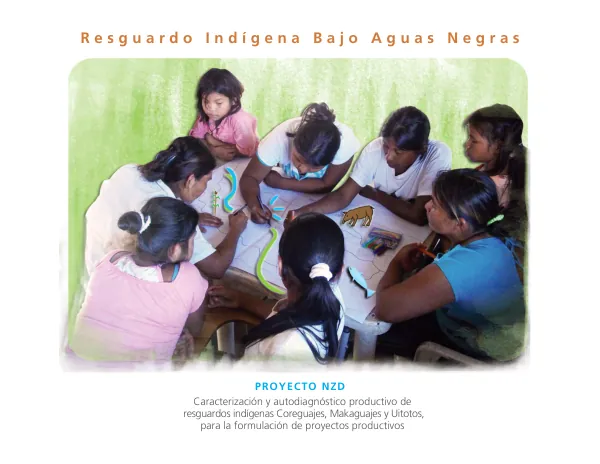
Caracterización y autodiagnóstico productivo de resguardos indígenas Coreguajes, Makam indígenas y Uitotos para la formulación de proyectos productivos
Open record 2020
2020USAID DEC