USAID
Informe Milestone # 2: DALE Equidad
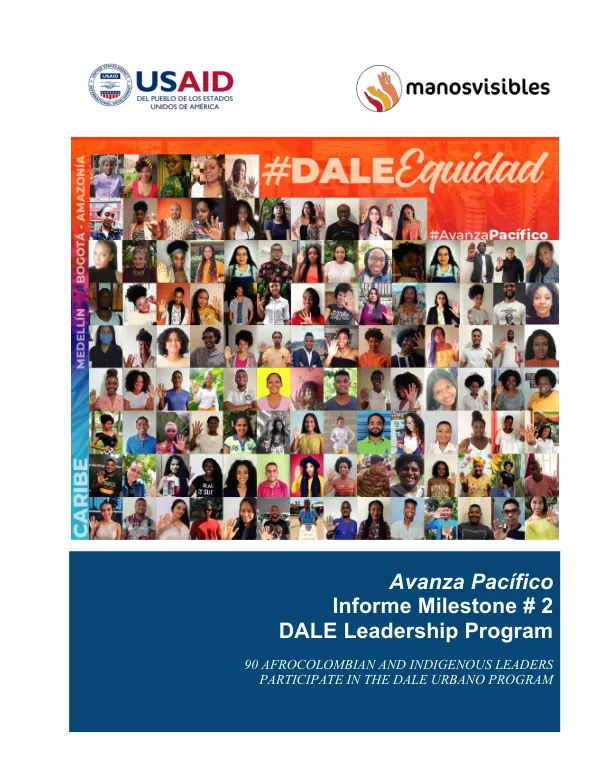
The DALE Leadership Program, a component of the Avanza Pacífico initiative, aims to contribute to the construction of inclusive and sustainable peace in the Pacific Coast of Colombia and other urban centers inhabited by Afro-Colombian and indigenous populations.
46 pages
Sign in to readA free account is required to download.
Abstract
The program is aligned with USAID's Country Development Cooperation Strategy (CDCS), which seeks to achieve a more stable, peaceful, and prosperous Colombia through inclusive governance and equitable development. DALE Equidad, a variant of the DALE program, is specifically designed to empower young leaders from ethnic communities in urban centers. The program builds on the success of DALE, which has trained over 500 young leaders and community leaders from the Pacific region since 2012. DALE Equidad aims to contribute to the construction of ethnic-racial and gender equity in urban centers, creating new references, narratives, and actions towards peace. The program operates under three lines of action: an educational ecosystem, empowerment of young people and communities, and organizational strengthening. DALE Equidad is part of the second line of action, focusing on strengthening young ethnic leaders through the DALE Urbano (Equity) and DALE Pacífico programs. The context of ethnic communities in Colombia is characterized by significant challenges. According to the National Administrative Department of Statistics (DANE), 4.4% of the national population belongs to the 115 identified indigenous peoples, with 21% living in urban centers. The indigenous population has the lowest literacy rate in the country, with three out of ten people unable to read or write. Over 63% of the indigenous population lives in poverty, with 47.6% living below the poverty line. Afro-Colombian communities also face significant challenges, with 10.12% of the national population identifying as Afro-Colombian. However, estimates suggest that the actual number may be closer to 25% of the population. Afro-Colombian communities experience high rates of victimization, with one in five people having suffered some form of victimization. The majority of Afro-Colombian people live in urban centers, with 29.2% residing in cities such as Cali, Cartagena, Barranquilla, Bogotá, or Medellín. The population of ethnic youth in urban centers is significant, with 14.6% of the national youth population belonging to Afro-Colombian and/or indigenous groups. One in four indigenous and/or Afro-Colombian people is a young person, representing the largest population group in their communities. The majority of Afro-Colombian youth migrate due to family reasons, lack of employment opportunities, or threats to their lives. The DALE Leadership Program aims to address these challenges by empowering young leaders from ethnic communities in urban centers. The program's methodology has been adapted to address the specific needs of urban communities, with a focus on building leadership skills, promoting social cohesion, and fostering inclusive governance. The program's impact is expected to contribute to the construction of inclusive and sustainable peace in the Pacific Coast of Colombia and other urban centers inhabited by Afro-Colombian and indigenous populations.