USAID DEC
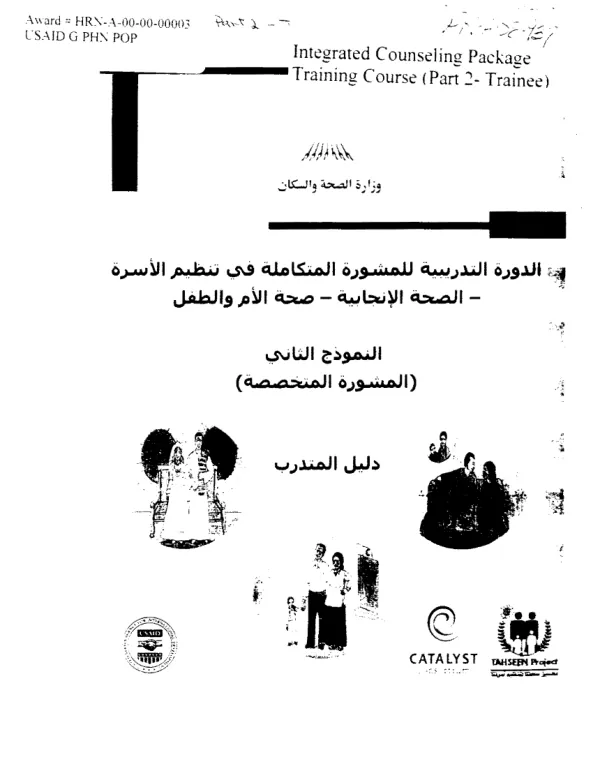
Integrated Counseling Package Training Course (Pan 2- Trainee)
The Integrated Counseling Package Training Course (Part 2 - Trainer) is a comprehensive training program designed to equip professionals with the necessary skills and knowledge to deliver effective counseling services.
255 pages
Sign in to readA free account is required to download.
Abstract
The program focuses on the development of counseling competencies, including assessment, goal setting, and intervention strategies. The training course is structured around a modular approach, with each module building on the previous one to provide a cohesive and integrated learning experience. The curriculum covers a range of topics, including counseling theories, communication skills, and cultural competence. Participants are expected to engage in active learning, including group discussions, role-playing exercises, and case studies. The training program places a strong emphasis on the development of counseling skills, including active listening, empathy, and problem-solving. Participants are taught how to conduct assessments, set goals, and develop intervention plans that are tailored to the individual needs of clients. The program also covers the importance of cultural competence and how to adapt counseling approaches to meet the diverse needs of clients from different cultural backgrounds. The training course is designed to be delivered in a face-to-face setting, with a minimum of 20 hours of instruction. The program is typically delivered over a period of 2-3 days, with participants expected to engage in active learning throughout the training period. The training program is designed to be flexible, allowing participants to adapt the training to meet the specific needs of their clients and work settings. The Integrated Counseling Package Training Course (Part 2 - Trainer) is designed to equip professionals with the necessary skills and knowledge to deliver effective counseling services. The program is designed to be delivered in a face-to-face setting, with a minimum of 20 hours of instruction. The program places a strong emphasis on the development of counseling skills, including active listening, empathy, and problem-solving. Participants are expected to engage in active learning, including group discussions, role-playing exercises, and case studies.