MINISTRY OF HEALTH
Introduction of the Rotavirus Vaccine in Tanzania
The Rotavirus Vaccine in Tanzania is a comprehensive initiative aimed at addressing the significant burden of diarrheal disease caused by rotavirus in infants and young children.
2012 · 2 pages
Sign in to readA free account is required to download.
Abstract
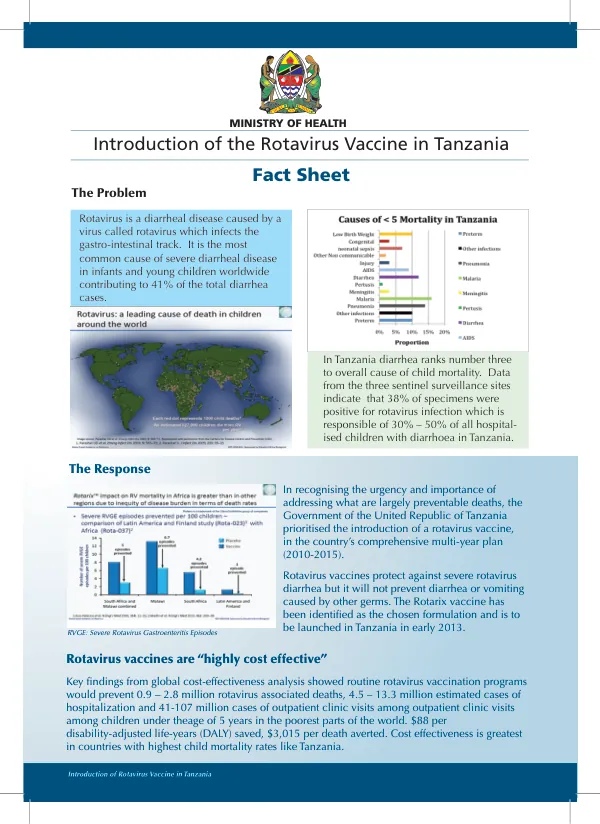
Rotavirus is the most common cause of severe diarrheal disease worldwide, contributing to 41% of total diarrhea cases. In Tanzania, diarrhea ranks as the third leading cause of child mortality, with 38% of specimens from sentinel surveillance sites testing positive for rotavirus infection. This virus is responsible for 30-50% of all hospitalised children with diarrhea in the country. The Government of the United Republic of Tanzania prioritised the introduction of a rotavirus vaccine as part of its comprehensive multi-year plan (2010-2015). The Rotarix vaccine has been identified as the chosen formulation and is set to be launched in Tanzania in early 2013. Rotavirus vaccines protect against severe rotavirus diarrhea but will not prevent diarrhea or vomiting caused by other germs. Key findings from global cost-effectiveness analysis indicate that routine rotavirus vaccination programs would prevent 0.9-2.8 million rotavirus-associated deaths, 4.5-13.3 million estimated cases of hospitalization, and 41-107 million cases of outpatient clinic visits among children under the age of 5 years in the poorest parts of the world. The programme aims to introduce the rotavirus vaccine to 100% of councils nationwide within the first three years of its introduction. Achieving 93% immunisation coverage of children receiving two rotavirus doses is also a key objective. The programme will provide local evidence on the burden of rotavirus diarrhoea in children under 5 years and the impact of the new vaccine by 2015. To achieve these targets, political commitment and increased resource allocation by government for immunisation programmes are essential. Community mobilisation and awareness raising are also crucial, as influencers and opinion leaders need to be informed of the scale of the problem and the importance of vaccination with the Rotavirus vaccine. The Rotavirus vaccine is safe and effective at preventing severe rotavirus diarrhea. It will be offered as part of the routine immunisation schedule at 6 and 10 weeks or any time when the child first visits the vaccination clinic, with an interval of four weeks between the two doses. The vaccine can be accessed free of charge in all health facilities. The programme's goal is for the Immunisation and Vaccine Development Programme (IVDP) to account for 8% of total health expenditure by 2015. By achieving these objectives, the programme aims to significantly reduce the burden of diarrheal disease caused by rotavirus in Tanzania and improve child health outcomes.
Related documents