USAID
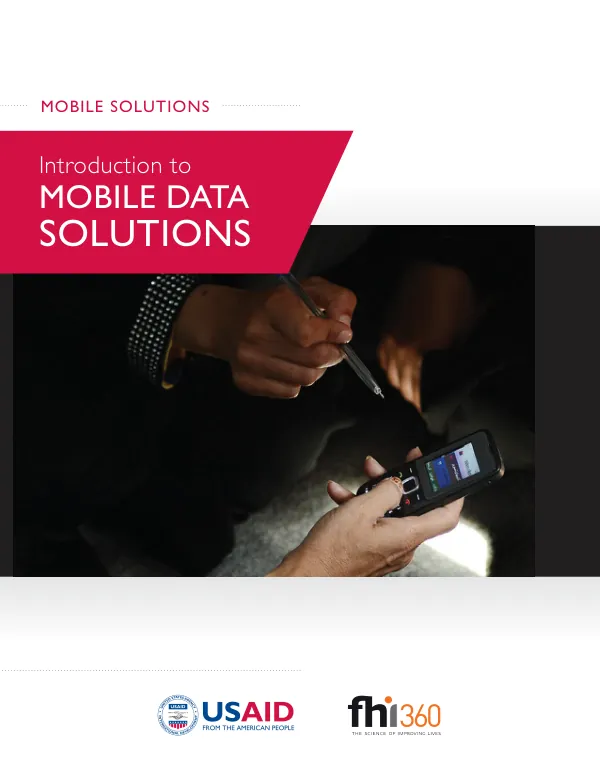
Introduction to Mobile Data Solutions
Mobile data solutions are transforming the way data is collected, analyzed, and reported.
2013 · 7 pages
Sign in to readA free account is required to download.
Abstract
Electronic data collection offers multiple benefits over traditional paper-based methods. Timeliness is a significant advantage, as stakeholders can access real-time data to monitor and understand project activities and outcomes. Dynamism is also a benefit, as electronic data allows stakeholders to manipulate, analyze, and visualize data in various ways. Transparency is also enhanced, as electronic data can be easily shared with implementers, governments, USAID, researchers, and the general public. Quality is improved, as electronic data collection instruments can be designed with mechanisms like range checks, skip logic, and calculated fields that improve data entry accuracy. Affordability is also a benefit, as the costs of data cleaning are significantly lower than traditional paper-based methods. Aggregation and scale are also facilitated, as data can be collected and shared across projects, countries, and regions. Mobile data solutions consist of four major components: mobile devices, mobile data collection clients, data transfer methods, and server-side administrative components. Mobile devices, such as mobile phones, tablets, and netbooks, are used to input and transfer data. Mobile data collection clients, such as SMS, electronic forms, and sensors, are used to capture data. SMS is a widely used data application, with 3.6 billion active users, or 78% of all mobile phone subscribers. Electronic forms are data collection tools that exist on computers, online, and on mobile devices. Sensors and instruments can also be used to collect data. Data transfer methods include SMS, email, and file transfer protocol (FTP). Server-side administrative components include database management systems, data analysis software, and data visualization tools. These components work together to enable the collection, analysis, and reporting of data. Mobile data solutions offer a range of benefits, including improved data quality, increased efficiency, and improved decision-making. Electronic data collection can be used to collect data on a wide range of topics, including health, education, and economic development. Mobile data solutions can be used in a variety of settings, including developing countries, where access to technology is limited. The use of mobile data solutions can also improve the efficiency of data collection. Electronic data collection can reduce the time and effort required to collect data, as well as reduce the risk of data loss or corruption. Additionally, electronic data collection can improve the accuracy of data, as data can be automatically validated and corrected. The use of mobile data solutions can also improve the quality of data. Electronic data collection can reduce the risk of human error, as data can be automatically entered and validated. Additionally, electronic data collection can improve the accuracy of data, as data can be automatically validated and corrected. The use of mobile data solutions can also improve the timeliness of data. Electronic data collection can provide real-time data, allowing stakeholders to make informed decisions in real-time. Additionally, electronic data collection can improve the speed of data collection, as data can be automatically uploaded and processed. The use of mobile data solutions can also improve the transparency of data. Electronic data collection can make data available to a wider range of stakeholders, including implementers, governments, USAID, researchers, and the general public. Additionally, electronic data collection can improve the transparency of data, as data can be easily shared and accessed. The use of mobile data solutions can also improve the affordability of data. Electronic data collection can reduce the costs of data collection, as data can be collected and analyzed more efficiently. Additionally, electronic data collection can reduce the costs of data storage and maintenance. The use of mobile data solutions can also improve the aggregation and scale of data. Electronic data collection can allow data to be collected and shared across projects, countries, and regions. Additionally, electronic data collection can facilitate the analysis and visualization of data, allowing stakeholders to make informed decisions. The use of mobile data solutions can also improve the impact of data. Electronic data collection can provide real-time data, allowing stakeholders to make informed decisions in real-time. Additionally, electronic data collection can improve the accuracy and reliability of data, allowing stakeholders to make informed decisions.
Related documents