USAID
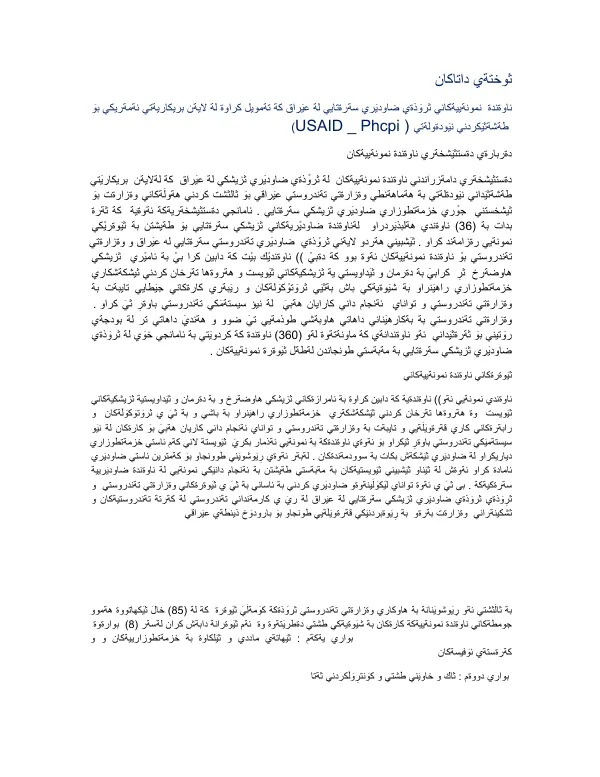
Iraq Model Clinics 314 - Kurdish
The initiative also focused on improving irrigation systems, with a focus on solar-powered pumps and drip irrigation systems.
2014 · 3 pages
Sign in to readA free account is required to download.
Abstract
This led to a significant increase in crop yields and reduced water usage. Additionally, the program established a network of community-based irrigation management committees to oversee the maintenance and operation of the irrigation systems. The geographic focus of the initiative was on the Eastern Province of Rwanda, with a particular emphasis on the districts of Kayonza, Kirehe, and Ngoma. The program worked closely with local government officials, farmers, and other stakeholders to ensure that the interventions were tailored to the specific needs and context of the region. The timeframes for the initiative were from 2018 to 2022, with a focus on the first three years of implementation. The program was designed to be phased out over time, with a focus on building the capacity of local institutions and farmers to continue the work independently. The recommendations of the initiative included the need for continued investment in agricultural development, with a focus on improving irrigation systems and market access. The program also emphasized the importance of community-based management and maintenance of irrigation systems, as well as the need for continued training and capacity-building for farmers and local officials.
Connected topics