USAID. MISSION TO PAKISTAN
Irrigation systems management
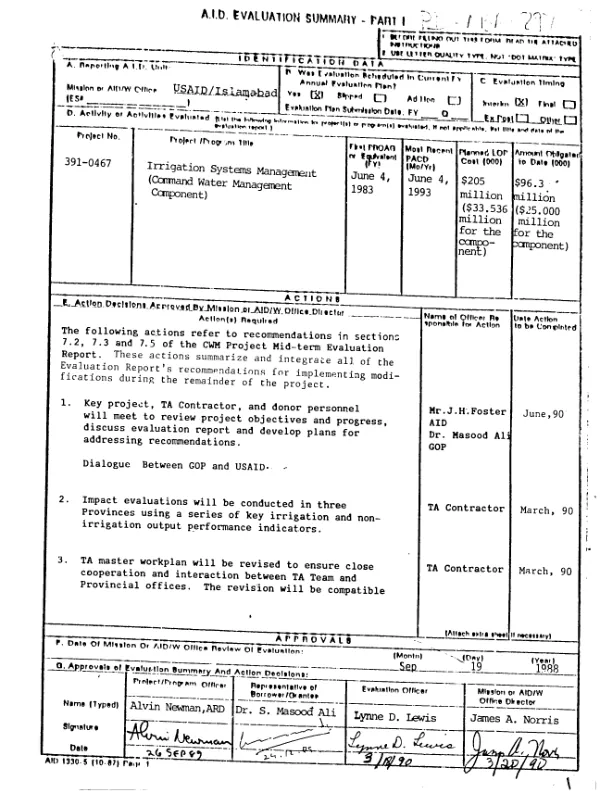
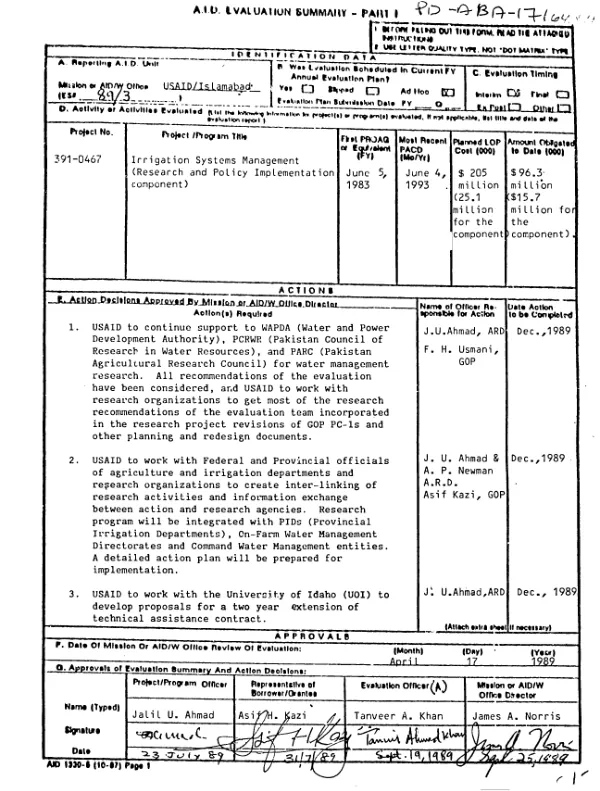
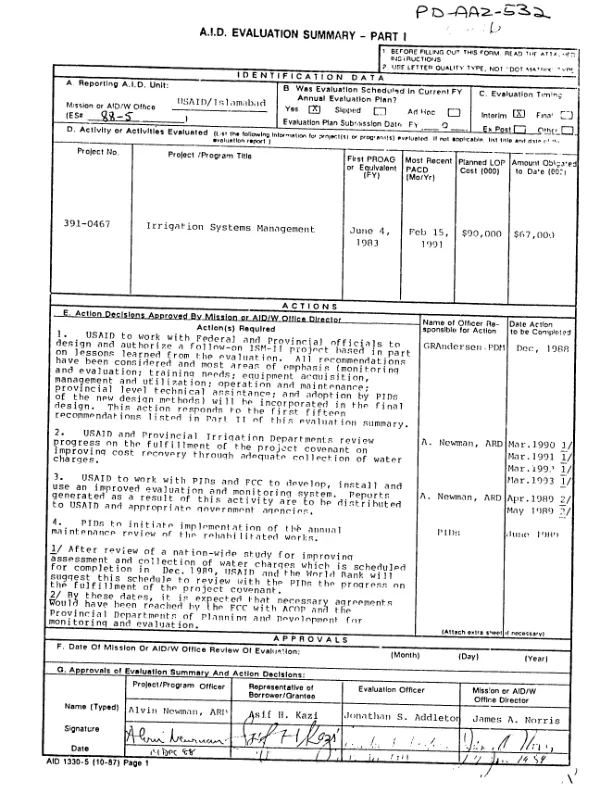
Summarizes mid-term evaluation (PD-AAY-392) of a project to help upgrade Pakistan"s irrigation systems.
1989
Sign in to readA free account is required to download.
Abstract
Evaluation covered the period 6/83 through the present. The team found that physical improvements have been easier to undertake than institutional improvements. Even though the project emphasized a systems approach to institutional development, the evaluation team remarked that the project seems to have adopted a "band-aid" approach to patch up most of the vulnerable parts of the system. They indicate however, that this implementation approach was justified and the effort successful. The team noted that much of the project management focus has been on establishing "yardsticks" to identify and respond to various management problems, and a lack of viable mechanisms to sustain improvements. The team concludes that, as a result, activities to date have primarily set in place a foundation for future initiatives. The team found that limited institutional impact results from management deficiencies; that implementation lacked a guiding force to sychronize inputs and outputs to obtain project objectives; and that given the quality of the project TA and lack of understanding of the Provincial Irrigation Departments (PID"s) as institutions, the overall outcome has been positive. First, a common ground has been established as a basis to address future institutional development, and second, PID"s and USAID/I are in a better position to identify specific areas in which assistance is needed. In sum, the evaluation team indicated that it is unrealistic to expect the project"s promises to have been fulfilled at this stage as they were exaggerated, overstated, and did not represent a common agenda at the outset. Nonetheless, some movement is evident and the overall results are consistent with the broad objectives. Most importantly, the team confirms the basic wisdom of project objectives and the appropriateness of A.I.D."s decision to pursue them in a more focused manner. The team indicates that the project strategy is sound and urges A.I.D. to signal such a commitment, develop a timetable, in conjunction with World Bank and the Government of Pakistan to fit the time and resources available, and identify reciprocal responsibilities and commitments. A number of recommendations regarding redesign of a follow-on project emphasize short-term and long-term sustainability objectives in both operation and maintenance as well as rehabilitation. (Author abstract) See also abstract of PD-AAY-392