USAID. MISSION TO PAKISTAN
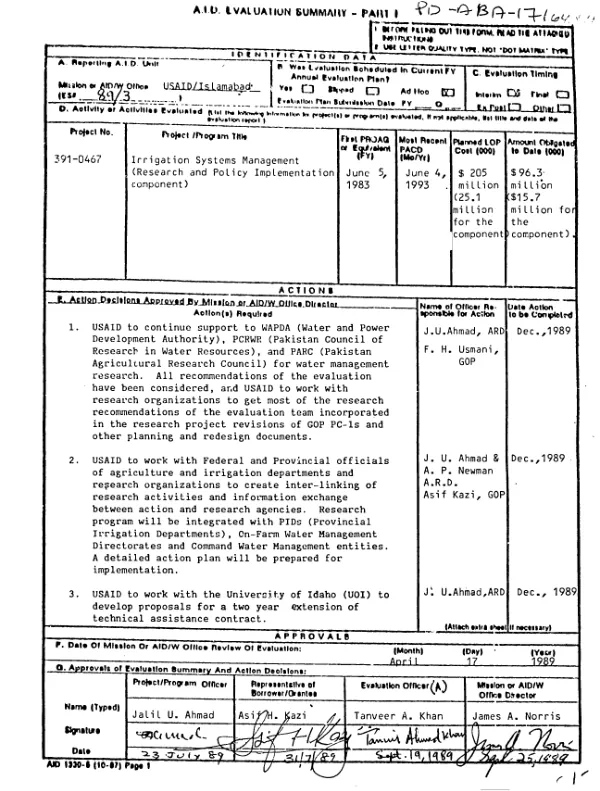
Irrigation systems management (command water management component)
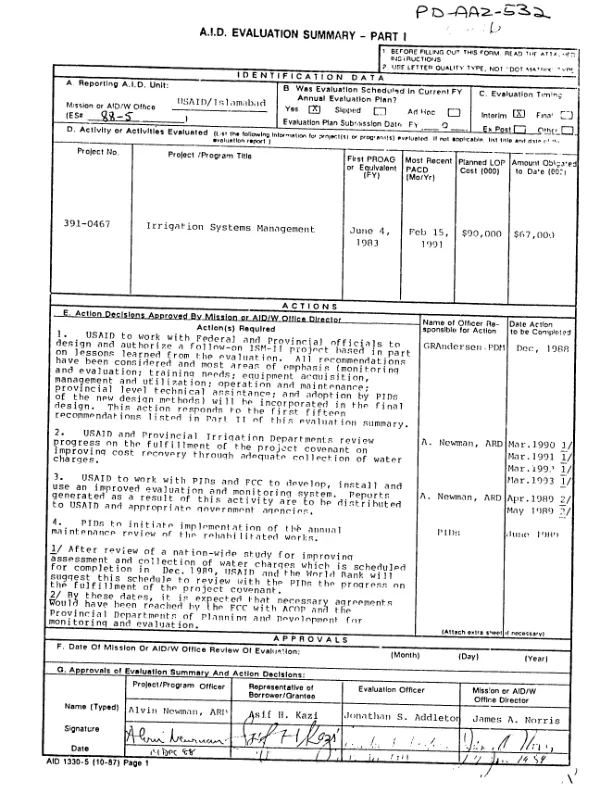
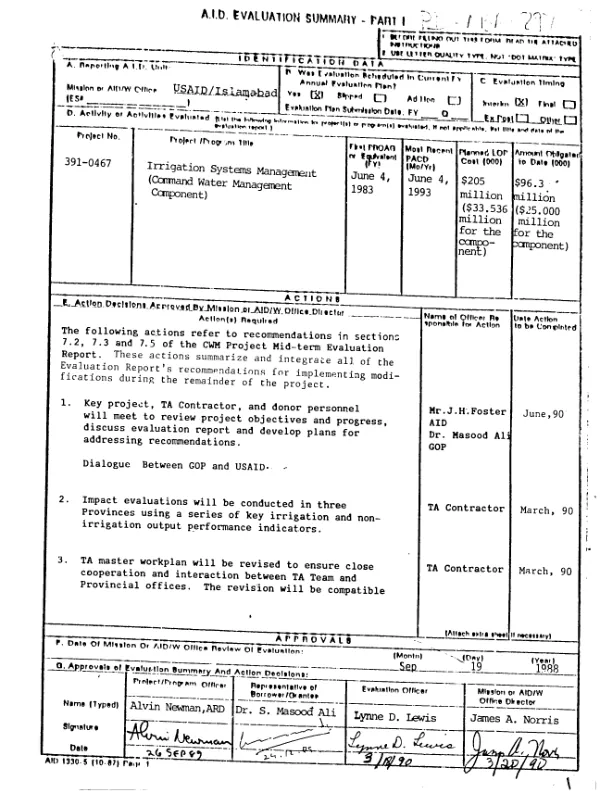
Summarizes mid-term evaluation (PD-AAZ-543) of a project to strengthen the institutional capacity within Pakistan for irrigated agricultural production.
1990
Sign in to readA free account is required to download.
Abstract
The evaluation covered the period 6/83-9/89. Despite a design focus on institutional development, funds were mostly budgeted for civil works and most project output indicators concerned civil works targets. Success was limited in institutionalizing improved government procedures and capabilities, in generating broad-based farmer participation, and in improving the appropriateness or availability of non-water inputs. Sustained productivity increases through improved management of water and non-water inputs was not demonstrated. The project"s shortcomings resulted from organizational and financial constraints to effective project management and farmer participation, inadequate understanding of long-term objectives, and the high demand of civil works on project resources. Sustainable non-civil works activities are constrained by low organizational, technical, and managerial skill levels and a lack of incentives for cooperative endeavors after watercourse rehabilitation. By committing significant attention and staff time to civil works, the project neglected to identify interventions that address the project"s long-term goals. Limited efforts in farmer organization, water management techniques, technology transfer, credit, etc. have yet to produce replicable, improved management models for irrigated agriculture. The main action decision is to convene a meeting of key project, TA contractor, and donor personnel to review project progress and objectives, discuss the evaluation report, and develop plans for addressing the report"s recommendations.
Related documents