USAID DEC
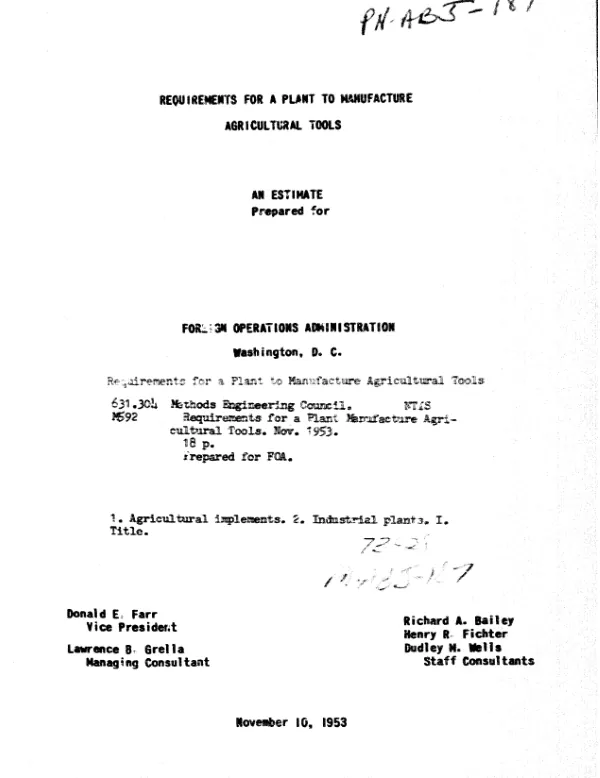
J U T E S T ! M A E I R W A R E S % F O R F . : . I * - P H M A F D E , F R R R Y I C E P R E A I W L ; T R I C H M D A M M I L A P & N A Y 8 . . F I & X E R L L N A M C E 8 - B R E L L A B D L E Y M U 9 1 K L L L A S H A G I N G C . C M U L T A ~ T S T A F F I L L O N S U R 4 T M T A R W - E R 10, 1953 R O D . .
Sign inUSAID DEC
J U T E S T ! M A E I R W A R E S % F O R F . : . I * - P H M A F D E , F R R R Y I C E P R E A I W L ; T R I C H M D A M M I L A P & N A Y 8 . . F I & X E R L L N A M C E 8 - B R E L L A B D L E Y M U 9 1 K L L L A S H A G I N G C . C M U L T A ~ T S T A F F I L L O N S U R 4 T M T A R W - E R 10, 1953 R O D . .
The agricultural development initiative in Rwanda began in 1953 with a focus on improving farming operations.
19 pages
Sign in to readA free account is required to download.
Abstract
The importance of irrigation systems has been recognized, and designs have been proposed through various publications to improve their efficiency. However, it appears that the implementation of these designs has been hindered by the lack of basic tools. The problem of irrigation in Rwanda is not simple, and it requires a comprehensive approach to be acceptable. Durable irrigation systems must be locally produced to ensure their effectiveness and sustainability. The use of locally produced materials can help to address the issue of tool availability and improve the overall efficiency of irrigation systems. Irrigation systems follow a design that takes into account the local climate and soil conditions. The design of these systems is crucial in ensuring that they are effective and can withstand the local weather conditions. The use of locally produced materials can also help to reduce the cost of irrigation systems, making them more accessible to farmers. The development of irrigation systems in Rwanda has been hindered by the lack of basic tools and equipment. The production of durable irrigation systems locally can help to address this issue and improve the overall efficiency of irrigation systems. The use of locally produced materials can also help to improve the sustainability of irrigation systems and reduce their environmental impact. The implementation of irrigation systems in Rwanda requires a comprehensive approach that takes into account the local climate, soil conditions, and available resources. The use of locally produced materials can help to improve the effectiveness and sustainability of irrigation systems, making them more accessible to farmers and improving food security in the region.