USAID. BUR. FOR PROGRAM AND POLICY COORDINATION
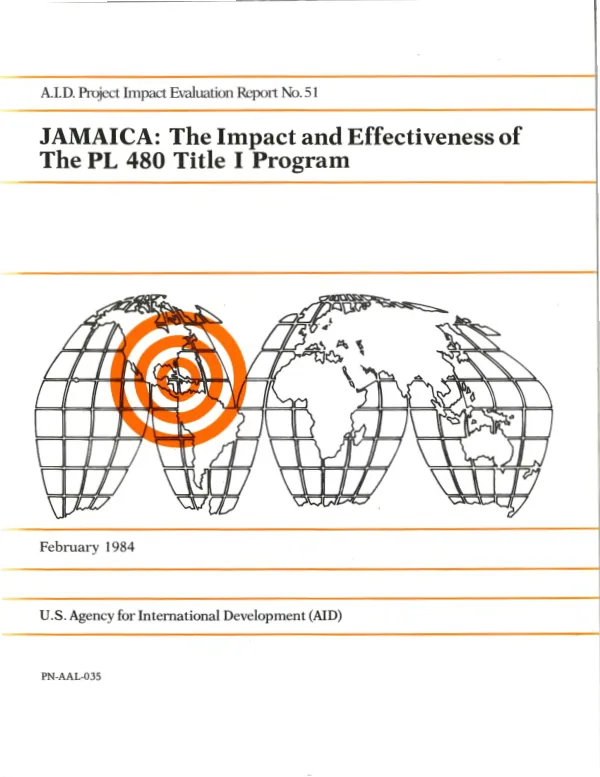
Jamaica : the impact and effectiveness of the PL 480 Title I program
The impact of A.I.D.'s P.L.
Sidman, Barry|Crosswell, Michael J.|Wilkinson, John|Blott, Fred|Fisher, Milton · 1984
Sign in to readA free account is required to download.
Abstract
480, Title I program in Jamaica during the period 1975-80 is evaluated. Despite increases in P.L. 480 and other direct and indirect forms of A.I.D. assistance, Jamaica's economy continued to decline during the period: the Gross Domestic Product fell 14%; unemployment rose 5% to 27%; and production remained overly dependent on imports with no increased export capacity. P.L. 480 food aid, which averaged $10 million annually (1977-80), at best alleviated the symptoms of economic crisis - while at the same time increasing the country's foreign debt. Positively, P.L. 480 aid did not increase food imports (although it may have affected their composition), because post-1975 Jamaican policies stimulated domestic food production and helped reduce food imports by 54%; this indicates the importance of host country food import policies in determining potential disincentive effects of food aid. Self-help measures had little if any effect on Jamaican development, although agreement on counterpart allocations stimulated line ministries to meet their implementation responsibilities to avoid forfeiting future P.L. 480 funds. Reports on self-help measures should be given importance in designing and implementing Title I programs. While generally consonant with P.L. 480 objectives, the program did not directly promote the key objectives of economic reform and structural adjustment; nor are these sufficiently ensured by agreements with the International Monetary Fund, agreements which USAID/J should scrutinize carefully. Further, the program's foreign policy and balance of payments justifications clashed and ultimately overcame market development objectives, although this was perhaps inevitable given the economic situation. Recommendations are that: school feeding be either phased out or supplied by counterpart funds and local commodity purchases; efforts be made to ensure that all parties participate in determining self-help measures and local currency uses; and Title I impacts be evaluated on the basis of economic indicators and policy concerns rather than such elements as institutional change, technology transfer, and small farmer benefits.
Related documents