KABUL MUNICIPALITY
Kabul City Initiative (KCI) Monthly Report: December 2011
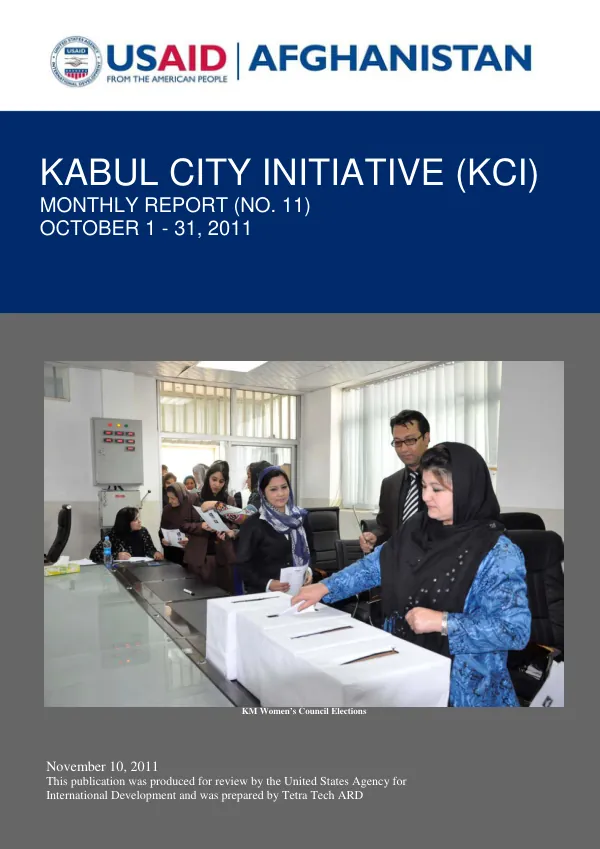
The Kabul City Initiative (KCI) is a technical assistance program aimed at providing support to the Kabul Municipality (KM) in creating effective, responsive, transparent, and accountable municipal governance in Kabul.
2011 · 21 pages
Sign in to readA free account is required to download.
Abstract
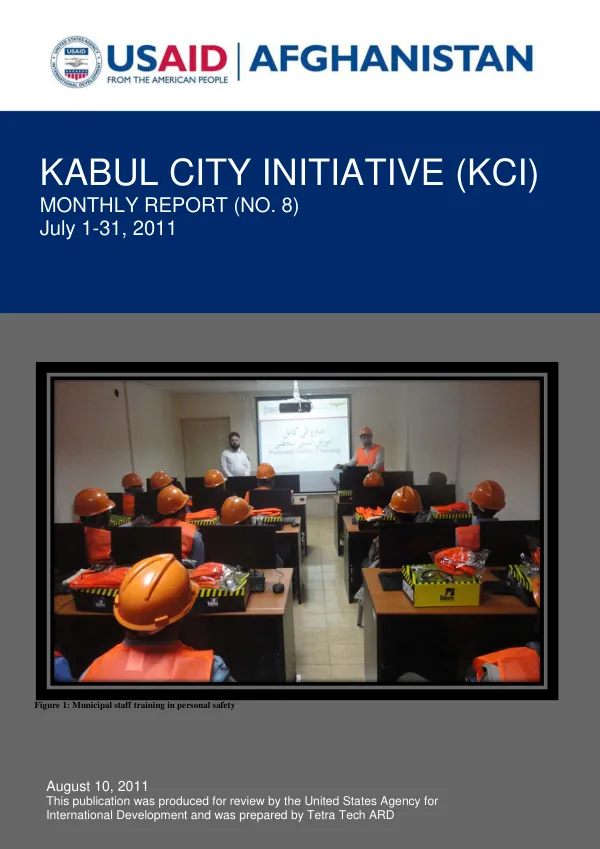
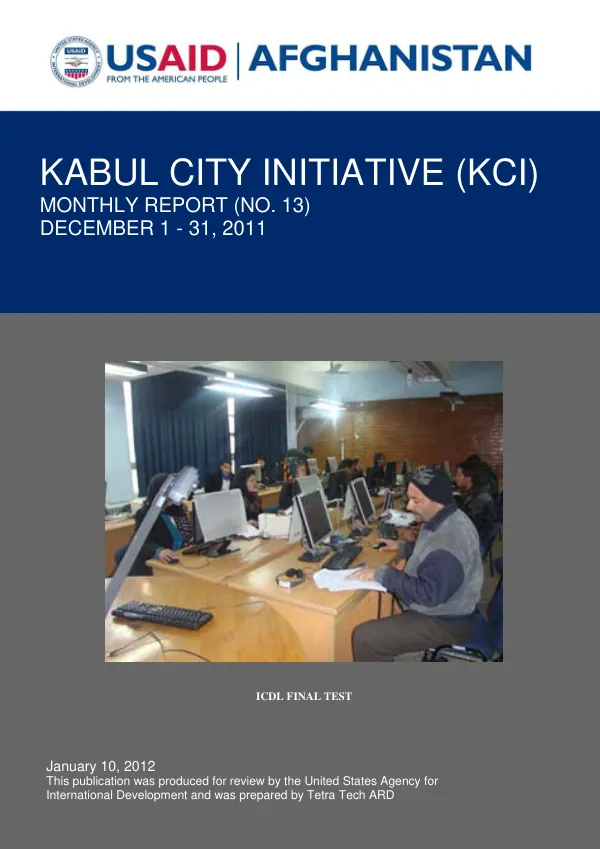
The program's goal is to increase the capacity of city officials, improve the delivery of municipal services to citizens, and increase municipal capacity to generate revenue and account for expenditures and revenue. KCI's objectives are to increase the capacity of city officials in Kabul, markedly improve the delivery of municipal services to citizens, and increase municipal capacity to generate revenue and account for expenditures and revenue. The program's anticipated outcomes include improved services for Kabul's citizens, increased understanding of municipal responsibilities among citizens, active participation of citizens in municipal decision-making, and legitimate local governance structures. The KCI program is implemented by Tetra Tech ARD/KCI, with Scott Johnson serving as the Chief of Party and Adrienne Raphael as the Project Manager. The program's progress is monitored through monthly reports, which summarize achievements, identify implementation issues, and provide a forecast of next month's activities. During the last month, KCI conducted safety training for 100 Greenery Department employees, drafted 44 new KM policies, finalized scopes of work for all four working groups, and distributed 28 desktop computers, 28 UPSs, 15 scanners, and 1 printer to KM. The program also began the ICDL Module 3 certification test, drafted Terms of Reference for the Women's Council committees, and conducted the third Women's Business Development Campaign in coordination with KM and female business owners. The KCI training team prepared scopes of work for five training programs, including Senior Leadership training for 20 KM senior staff, Urban Planning training for five Urban Department staff, and Driver Training for 22 newly hired drivers in the Sanitation Department. The program also completed scopes of work for the MCITP and Human Resources training, which will cover topics such as job analysis, recruitment, staff development, employee performance management, and filing management. In addition to the 1,000 staff who have already received safety training, KCI trained an additional 100 Greenery Department employees in December. The program plans to conduct ICDL training for an additional 200 staff members and resume training for 500 Future leaders after a three-week break. The KCI CLIN 1 team continued to produce brochures highlighting KM work in the areas of greenery, sanitation, and composting, and began a public education campaign on the Safa'i tax process and business licensing in coordination with CLIN 3 and the KM Revenue Department. The campaign aims to educate citizens on the importance of paying their Safa'i taxes and registering their small businesses with the municipality to increase revenue for the city. The program has contracted with the local subcontractor, Lapis, to conduct a follow-up Public Opinion Survey, which will be implemented in January and February and compared to the baseline survey conducted in January 2011 to measure increases or decreases in public attitudes to city service delivery.