CATHOLIC RELIEF SERVICES ORGANIZATION
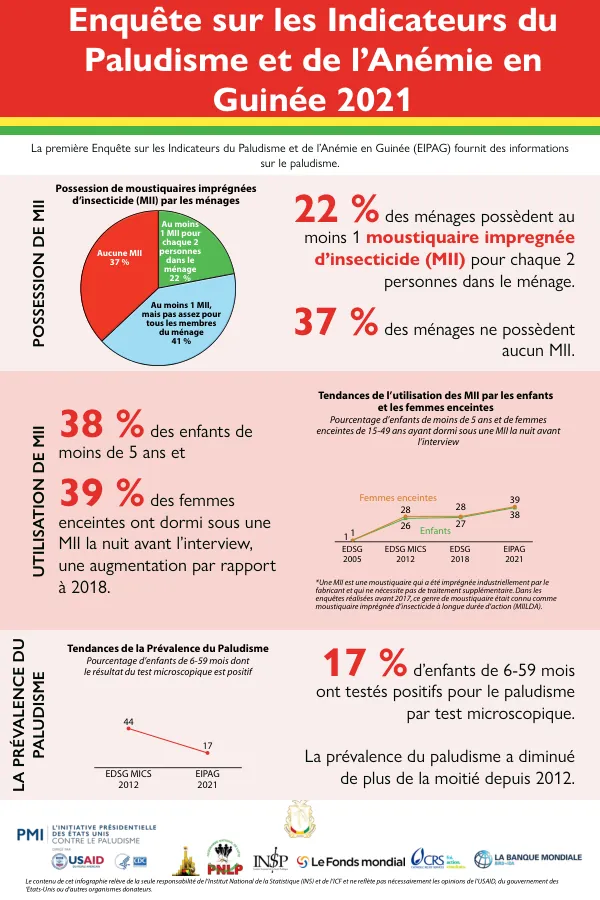
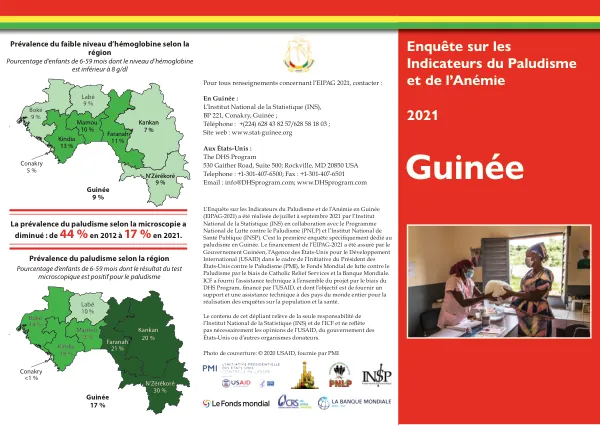
L’Enquête sur les Indicateurs du Paludisme et de l’Anémie en Guinée (EIPAG-2021)
The Enquête sur les Indicateurs du Paludisme et de l'Anémie en Guinée (EIPAG-2021) was conducted from July to September 2021 by the Institut National de la Statistique (INS) in collaboration with the Programme National de Lutte contre le Paludisme (PNLP) and the Institut National de Santé Publique (INSP).
2021 · 2 pages
Sign in to readA free account is required to download.
Abstract
The study is the first to focus specifically on malaria in Guinea. Funding for EIPAG-2021 was provided by the Guinean Government, the United States Agency for International Development (USAID) through the President's Malaria Initiative (PMI), the Global Fund to Fight AIDS, Tuberculosis and Malaria through Catholic Relief Services, and the World Bank. The study aimed to provide detailed information on malaria in Guinea. During EIPAG-2021, 3,985 households and 5,912 women aged 15-49 were successfully surveyed. All children aged 6-59 months were eligible for hemoglobin and malaria tests. The study found that the prevalence of malaria decreased from 44% in 2012 to 17% in 2021. The prevalence of malaria varied by region, with the highest rates found in N'Zérékoré (30%) and Kankan (20%). The study also found that 38% of children under 5 years and 39% of pregnant women slept under a bed net the night before the interview, an increase from 2018. The use of bed nets varied by region, with the highest rates found in Boké (49%) and Labé (43%). The study found that 22% of households possessed at least one bed net for every two people in the household. The study provides detailed information on malaria in Guinea, including trends in the possession of bed nets and the coverage of intermittent preventive treatment. The study found that the possession of bed nets increased from 44% in 2005 to 63% in 2021. The study also found that the coverage of intermittent preventive treatment increased from 3% in 2005 to 80% in 2021. The study found that 61% of children with fever who took an antimalarial took a chloroquine-based treatment. The study also found that 23% of children under 5 years had fever in the two weeks preceding the interview. The study found that 28% of children under 5 years with fever sought advice or treatment, while 23% had a blood sample taken for testing.
Related documents