USAID DEC
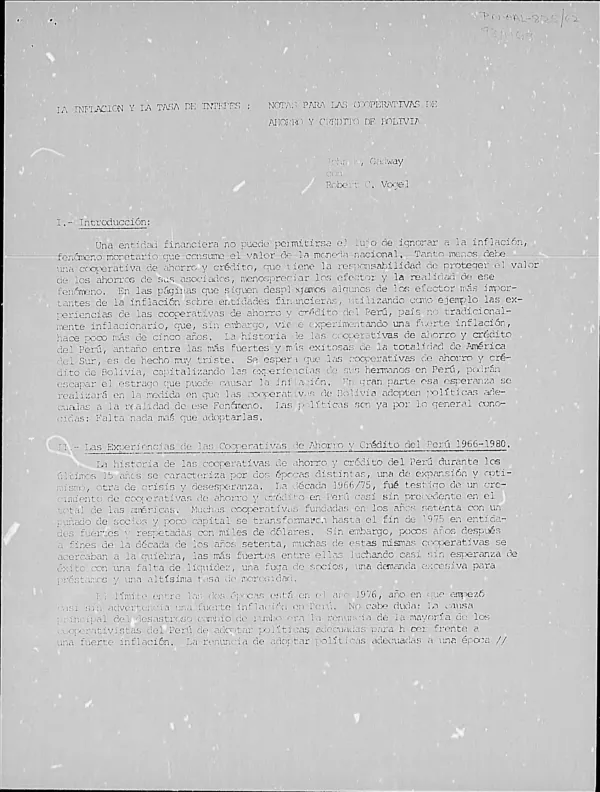
La inflación en el Perú: Una experiencia de cooperativas de ahorro y crédito
The inflationary crisis in Peru during the 1970s and 1980s had a profound impact on the country's economy and financial institutions.
2010 · 12 pages
Sign in to readA free account is required to download.
Abstract
The inflation rate soared to over 100% in 1985, making it one of the highest in the world at the time. The crisis was characterized by a sharp decline in the value of the Peruvian currency, the sol, and a significant increase in the cost of living. The cooperative sector, which had been growing rapidly in the 1960s and 1970s, was severely affected by the inflationary crisis. Many cooperatives, which had been established to provide financial services to their members, found themselves struggling to stay afloat due to the high inflation rate. The cooperatives' assets, which had been growing rapidly in the previous years, were rapidly devalued, making it difficult for them to maintain their financial stability. The government's response to the crisis was inadequate, and the cooperatives were left to fend for themselves. The cooperatives' leaders, who had been optimistic about the future, were forced to confront the harsh reality of the crisis. They realized that the cooperatives' traditional business model, which had been based on the assumption of a stable economic environment, was no longer viable. The cooperatives' experience during the inflationary crisis was marked by a series of challenges and setbacks. Many cooperatives were forced to close their doors, while others were forced to merge with other cooperatives in order to survive. The cooperatives' leaders were forced to adapt to the new economic reality, and they began to explore new business models and strategies that would allow them to thrive in the face of high inflation. One of the key challenges facing the cooperatives was the high interest rates imposed by the government. The interest rates were so high that they made it difficult for the cooperatives to attract new members and to maintain their existing ones. The cooperatives' leaders realized that they needed to find a way to reduce their costs and to increase their revenue in order to survive. The cooperatives' experience during the inflationary crisis also highlighted the importance of financial education and literacy. Many cooperatives' members were not aware of the risks associated with high inflation, and they were not equipped with the knowledge and skills necessary to manage their finances effectively. The cooperatives' leaders realized that they needed to provide their members with financial education and training in order to help them navigate the crisis. In the end, the cooperatives' experience during the inflationary crisis was a difficult and challenging one. However, it also provided an opportunity for the cooperatives to learn and to grow. The cooperatives' leaders emerged from the crisis with a newfound appreciation for the importance of financial stability and a commitment to providing their members with the financial education and training they needed to succeed. The cooperatives' experience during the inflationary crisis also highlighted the importance of government support and regulation. The government's failure to provide adequate support and regulation to the cooperatives during the crisis exacerbated the problem and made it more difficult for the cooperatives to survive. The cooperatives' leaders realized that they needed to work closely with the government to develop policies and regulations that would support the cooperatives and help them to thrive in the face of high inflation. In conclusion, the cooperatives' experience during the inflationary crisis in Peru was a complex and multifaceted one. It was marked by a series of challenges and setbacks, but it also provided an opportunity for the cooperatives to learn and to grow. The cooperatives' leaders emerged from the crisis with a newfound appreciation for the importance of financial stability and a commitment to providing their members with the financial education and training they needed to succeed.
Related documents