DEVTECH SYSTEMS, INC.
Latin America and the Caribbean Selected Economic and Social Data 2011
The 2011 Latin America and the Caribbean Selected Economic and Social Data Databook presents a comprehensive overview of the region's socioeconomic development.
2011 · 213 pages
Sign in to readA free account is required to download.
Abstract
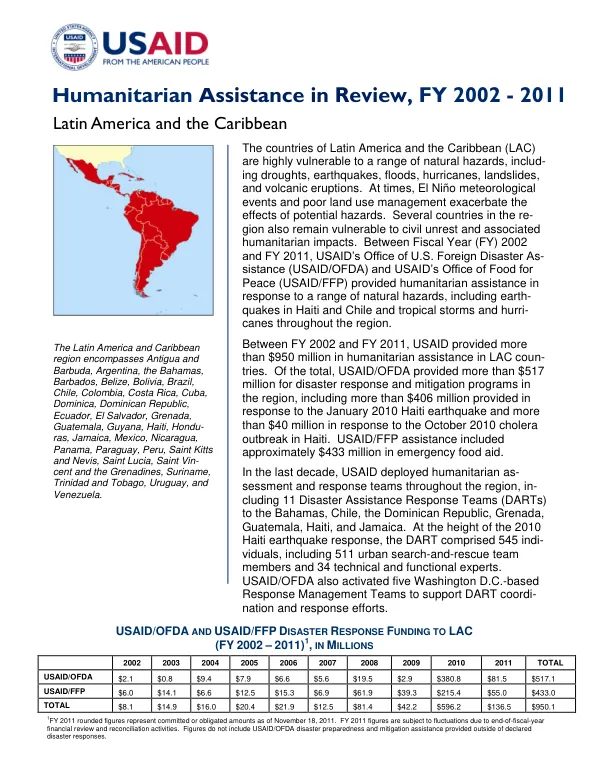
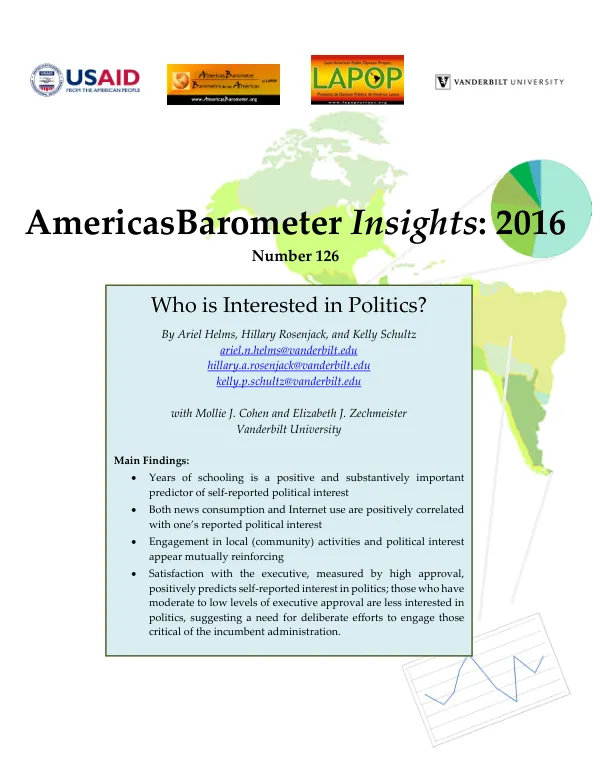
The publication is a collaborative effort between the USAID Economic Analysis and Data Services (EADS) team and the Bureau for Latin America and the Caribbean of the U.S. Agency for International Development. The databook includes a wide range of economic and social indicators, such as regional economic indicators, human development, population, poverty, health, education, environment, democracy, economy, U.S.-LAC trade, intra-LAC trade, investment, U.S. assistance, and bilateral and multilateral assistance. The data is sourced from official country sources and leading international institutions, providing a reliable and up-to-date picture of the region's socioeconomic development. Regional economic indicators show a mixed picture, with some countries experiencing rapid economic growth while others face challenges such as high inflation and unemployment. Human development indicators, including literacy rates and life expectancy, have improved in many countries, but significant disparities remain. Poverty rates have decreased in some countries, but remain high in others. The databook also highlights the importance of education, with gross and net enrollment ratios showing significant improvements in many countries. However, challenges remain in terms of access to education, particularly for disadvantaged groups. Environmental indicators, including adjusted net savings and threatened species, highlight the need for sustainable development practices in the region. The U.S.-LAC trade data shows a significant increase in U.S. exports to the region, with manufactured goods and agricultural products being major contributors. Intra-LAC trade has also increased, with many countries experiencing significant growth in their merchandise exports and imports. Investment data shows a significant increase in U.S. direct investment in the region, with many countries experiencing significant growth in their foreign direct investment inflows. The databook also provides an overview of U.S. assistance to the region, including assistance for conflict prevention and security, economic infrastructure and services, education, government and civil society, health and population programs, production sectors, and humanitarian aid. The data shows a significant increase in U.S. assistance to the region, with many countries receiving significant amounts of aid. Overall, the 2011 Latin America and the Caribbean Selected Economic and Social Data Databook provides a comprehensive overview of the region's socioeconomic development, highlighting both progress and challenges. The data presented in the databook can be used to inform policy decisions and support development efforts in the region. Regional economic indicators, such as gross national income and gross domestic product, show a mixed picture, with some countries experiencing rapid economic growth while others face challenges such as high inflation and unemployment. Human development indicators, including literacy rates and life expectancy, have improved in many countries, but significant disparities remain. Poverty rates have decreased in some countries, but remain high in others. The databook highlights the importance of education, with gross and net enrollment ratios showing significant improvements in many countries. However, challenges remain in terms of access to education, particularly for disadvantaged groups. Environmental indicators, including adjusted net savings and threatened species, highlight the need for sustainable development practices in the region. The U.S.-LAC trade data shows a significant increase in U.S. exports to the region, with manufactured goods and agricultural products being major contributors.