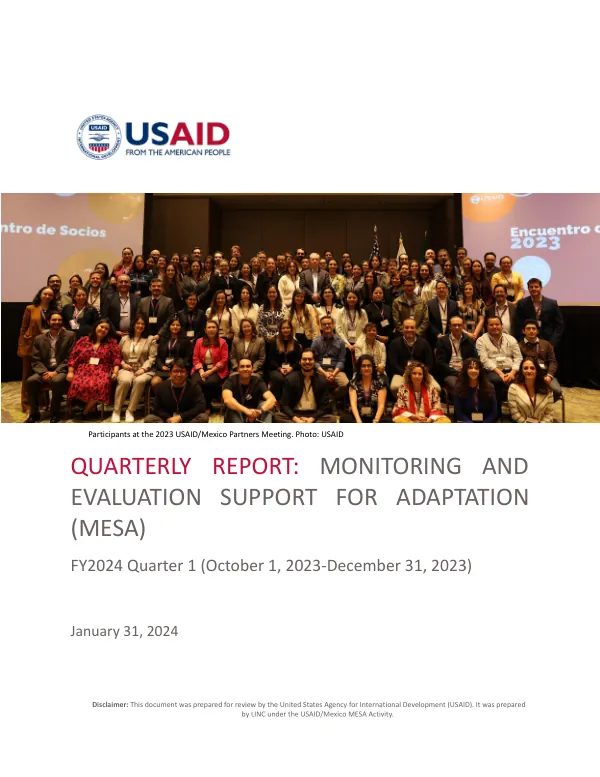
LINC LLC
Learning Brief: F-PAR Assessment and Localization
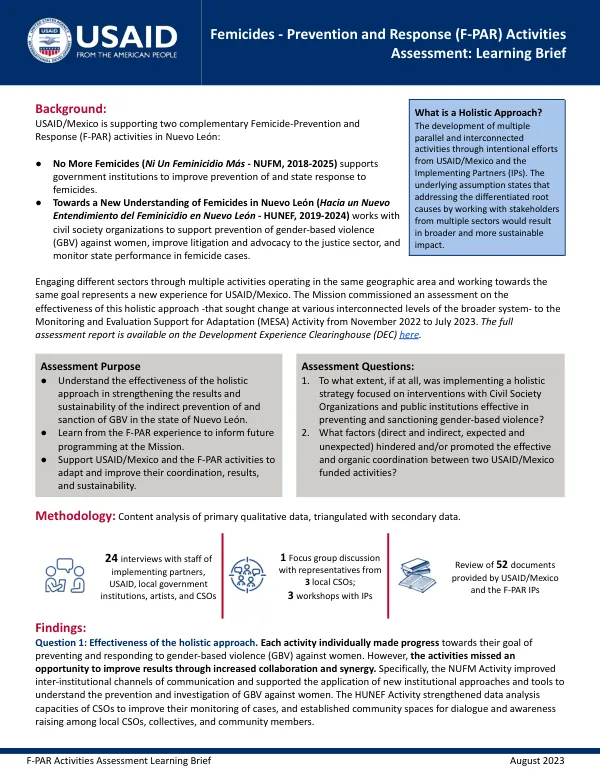
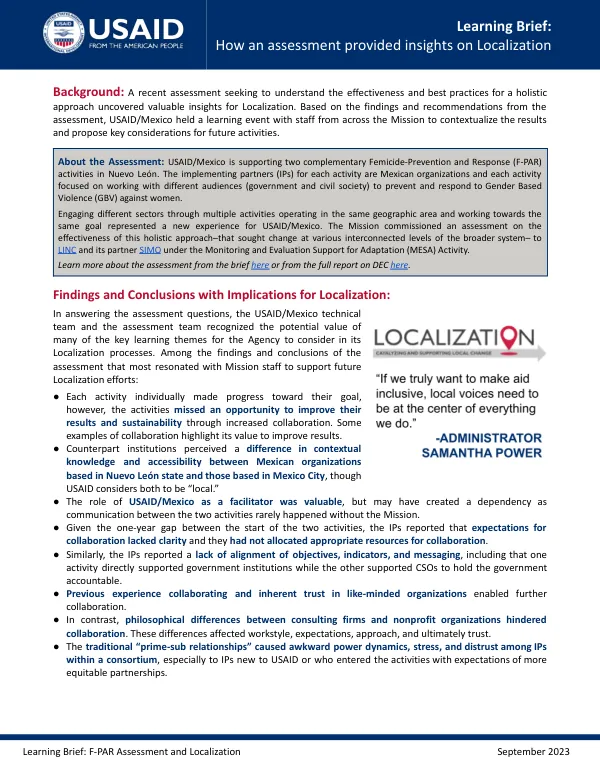
USAID/Mexico's support for two complementary Femicide-Prevention and Response (F-PAR) activities in Nuevo León state has provided valuable insights for Localization.
2023 · 2 pages
Sign in to readA free account is required to download.
Abstract
The activities, implemented by Mexican organizations, focused on working with different audiences to prevent and respond to Gender-Based Violence (GBV) against women. This holistic approach represented a new experience for USAID/Mexico, prompting an assessment on the effectiveness of this approach. The assessment, conducted by LINC and SIMO under the Monitoring and Evaluation Support for Adaptation (MESA) Activity, aimed to understand the effectiveness of the F-PAR activities and identify best practices for a holistic approach. The assessment findings and conclusions highlighted several key learning themes that resonated with Mission staff to support future Localization efforts. One of the primary findings was that each activity individually made progress toward its goal, but missed an opportunity to improve results and sustainability through increased collaboration. Counterpart institutions perceived a difference in contextual knowledge and accessibility between Mexican organizations based in Nuevo León state and those based in Mexico City, despite USAID considering both to be "local." The role of USAID/Mexico as a facilitator was valuable, but may have created a dependency as communication between the two activities rarely happened without the Mission. The IPs reported a lack of alignment of objectives, indicators, and messaging, including that one activity directly supported government institutions while the other supported CSOs to hold the government accountable. The assessment also highlighted the importance of collaboration and trust among IPs. Previous experience collaborating and inherent trust in like-minded organizations enabled further collaboration, while philosophical differences between consulting firms and nonprofit organizations hindered collaboration. The traditional "prime-sub relationships" caused awkward power dynamics, stress, and distrust among IPs within a consortium, especially to IPs new to USAID or who entered the activities with expectations of more equitable partnerships. The assessment findings and conclusions have informed a series of tips and guiding questions for USAID/Mexico to consider in its Localization processes. The guiding questions aim to remind and reinforce the shift in mindset as Mission staff design new activities, oversee existing ones, and work with both local and international implementing partners. The questions focus on assumptions and mental models about "local" partners, the role of USAID and international partners, planning for sustainability, reducing the administrative burden on national IPs, adapting USAID's role to facilitate success, listening locally, and supporting organic activities emerging locally. The guiding questions include recognizing bias in working with different types of partners, being clear in defining and identifying "local" partners, allocating adequate resources for collaboration, planning for sustainability, reducing the administrative burden on national IPs, adapting USAID's role to facilitate success, listening locally, and supporting organic activities emerging locally. These questions will serve as a catalyst for USAID/Mexico to re-examine its approach to Localization and consider new strategies for working with local partners to achieve development results.