MICHIGAN STATE UNIVERSITY FOUNDATION
Let's Talk: A Family-Centred Adolescent HIV Prevention Programme in South Africa
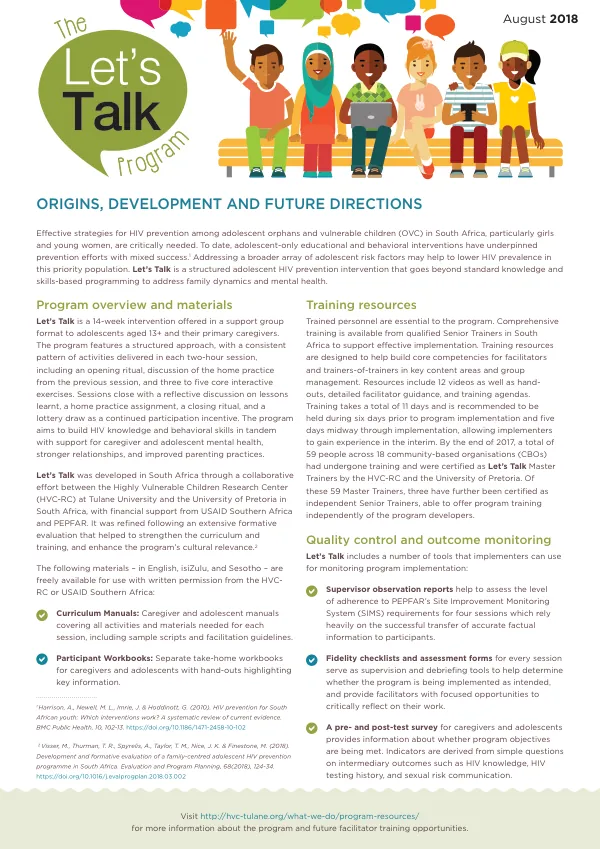
The Let's Talk program is a structured adolescent HIV prevention intervention developed in South Africa to address the critical need for effective strategies among adolescent orphans and vulnerable children, particularly girls and young women.
2018 · 4 pages
Sign in to readA free account is required to download.
Abstract
The program aims to go beyond standard knowledge and skills-based programming to address family dynamics and mental health. The Let's Talk program is a 14-week intervention offered in a support group format to adolescents aged 13 and above, along with their primary caregivers. The program features a structured approach, with a consistent pattern of activities delivered in each two-hour session, including an opening ritual, discussion of the home practice from the previous session, and three to five core interactive exercises. Sessions close with a reflective discussion on lessons learned, a home practice assignment, a closing ritual, and a lottery draw as a continued participation incentive. The program was developed through a collaborative effort between the Highly Vulnerable Children Research Center (HVC-RC) at Tulane University and the University of Pretoria in South Africa, with financial support from USAID Southern Africa and PEPFAR. The program was refined following an extensive formative evaluation that helped to strengthen the curriculum and training, and enhance the program's cultural relevance. The Let's Talk program includes a range of tools for monitoring program implementation, including supervisor observation reports, fidelity checklists and assessment forms, and pre- and post-test surveys for caregivers and adolescents. These tools help to assess the level of adherence to PEPFAR's Site Improvement Monitoring System (SIMS) requirements and provide facilitators with focused opportunities to critically reflect on their work. A mixed-methods study was conducted between June 2015 and November 2016 to examine the program's potential to improve HIV knowledge and self-efficacy, caregiver and adolescent mental health, and positive family dynamics. The study found statistically significant improvements on a range of key adolescent and caregiver outcomes following the intervention, including increased HIV transmission knowledge, condom knowledge, and self-efficacy to negotiate condom use, as well as lower levels of depression and anxiety. Caregiver participation was identified as a significant implementation challenge during the formative evaluation of the Let's Talk program. A study assessing the impact of varying incentive offerings on caregivers' attendance was conducted, which found that offering a full meal and transport reimbursement, along with the chance to win a lottery prize at each session, resulted in improved caregiver participation. The Let's Talk program has been shown to have a positive impact on adolescents' HIV knowledge and self-efficacy, as well as their mental health and relationships with their caregivers. The program's structured approach and focus on family dynamics and mental health make it a valuable resource for addressing the critical need for effective HIV prevention strategies among adolescent orphans and vulnerable children in South Africa.
Related documents
Documents in this collection
 2018
2018USAID DEC
Can family-centered programing mitigate HIV risk factors among orphaned and vulnerable adolescents? Results from a pilot study in South Africa
Open record 2019
2019USAID DEC